By BarathVector Editorial — 2026-05-27
Neutrality Was the Cheap Part: India and the Iran War's Endgame
The bombing phase is where neutrality costs nothing. The rebuild is where the bill arrives.
Since February 28, 2026 — the morning US and Israeli airstrikes opened the Iran campaign — India has held a studied, deliberate position: neutral. No naming of aggressors, no military posturing, no public alignment. As this desk argued in the mediator analysis, India is the only major capital that can still call Tehran and Tel Aviv in the same hour. As we argued in the cost-of-paralysis piece, maintaining that position through active bombing came at real domestic cost — diaspora anxiety, fuel price shocks, a rupee under pressure.
Both arguments addressed the war as a kinetic event. Something shifted on May 24.
Secretary of State Marco Rubio, in New Delhi for talks with External Affairs Minister S. Jaishankar, told a joint press briefing that "significant progress, although not final progress, has been made" toward resolution. A 60-day negotiation window on uranium and sanctions relief has since emerged as the framework; the ceasefire has broadly held since April 7 (CNBC, May 23–24, 2026).
The endgame is approaching. India's neutral posture must now become a strategy.
What neutrality actually bought
The standard critique is that Delhi sat on the fence while Pakistan positioned itself as the back-channel between Washington and Tehran — ferrying Washington's revised terms to Tehran and Iran's counter-proposals back, with Rubio himself calling Islamabad the primary mediator. That critique has merit. But it misses what neutrality, properly maintained, did purchase.
India is one of the few capitals Tehran will accept as a counterpart in post-conflict economic arrangements — not because Delhi was sympathetic to Iran's war conduct, but because it was not a belligerent. When the rubble settles, Iran needs port throughput, investment, and trade corridors. Washington will negotiate the nuclear framework. Beijing will bid on the infrastructure. Delhi — if it moves in the next sixty days — holds structural advantages neither can replicate. The question is whether it knows this and acts on it.
Three assets, one window
India's specific leverage in the post-conflict period rests on three concrete positions, each of which has a short activation window before others claim the space.
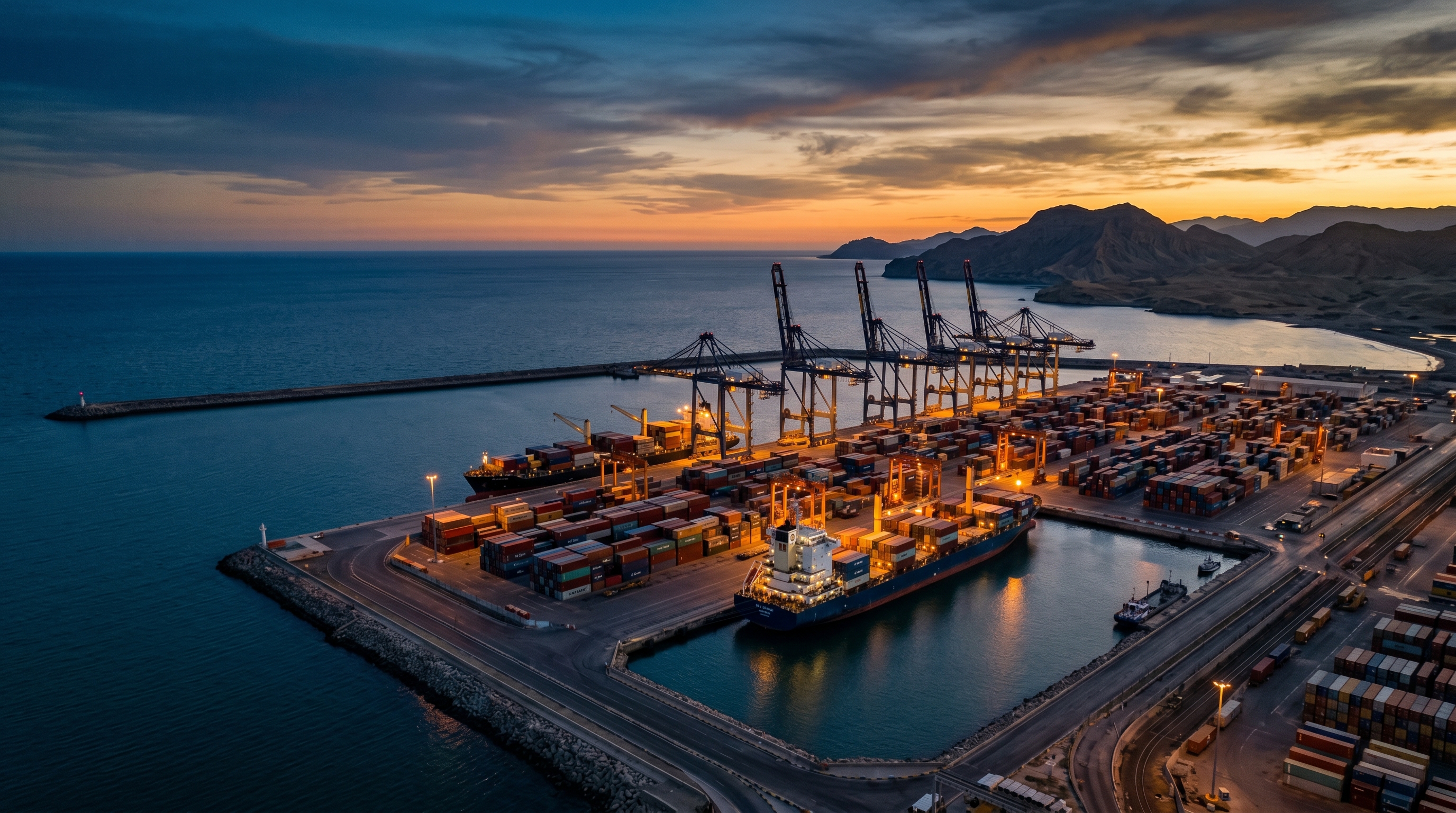
Chabahar, still breathing. The US sanctions waiver enabling India to operate the Shahid Beheshti terminal expired on April 26, 2026 — the Trump administration having revoked all Iran-related exemptions in September 2025. India has since been negotiating a holding arrangement: a local Iranian ports authority manages the facility on paper, with contractual reversion rights to India Ports Global Ltd once sanctions lift (Al Jazeera, April 29, 2026). The port functions, but is not commercially scalable. India has roughly $500 million invested — including a ten-year IPGL contract signed in May 2024 committing $370 million.
This is a frozen asset, not a dead one. Chabahar is the only land-accessible route to Afghanistan and Central Asia that bypasses both Pakistan and Chinese-controlled infrastructure — a fact Washington has accepted before when granting the original waiver. The Rubio-Jaishankar meeting was the moment to press for a new, defined waiver as part of the nuclear normalisation package, hard and by name.
INSTC, whose southern node just went quiet. The International North-South Transport Corridor — the 7,200-kilometre rail-road-maritime spine connecting Mumbai to Moscow via Tehran — hit a genuine milestone last November when a full cargo train ran end-to-end through the Eastern Corridor. Since March 2025, Indian freight has been moving from Mundra Port to Central Asia via Bandar Abbas. Then the war complicated everything: the Chabahar-Zahedan railway, the INSTC's critical southern segment, now faces indefinite delays. Studies by the Federation of Freight Forwarders' Associations in India estimate the full corridor cuts transit costs by 30 percent and transit time by 40 percent versus the Suez route. Every month that segment stays frozen is a month that Chinese corridors absorb the traffic India helped design the alternative for. India needs the corridor's reconstruction written explicitly into the Iran normalisation framework — not as a hoped-for side effect, but as a tabled condition.
Energy normalisation, timed right. The Hormuz supply question — half of India's crude, the refinery configurations, the payment-mechanism precedents — was covered in this desk's mediator piece. The endgame argument is different: India was Iran's second-largest oil customer before the 2018 sanctions reimposition. The commercial rails exist. What India needs now is a clear diplomatic signal to Washington that it wants a defined, compliant pathway back into Iranian crude — not a grey market, but a legal, sanctioned channel — secured as part of the normalisation package, not scrambled for after the deal is signed.
Jaishankar knows the ask. The question is whether the May 24 meeting produced a specific commitment or a general expression of goodwill.
The competition is not sleeping
India's window is real but narrow. Beijing sat out the war diplomatically while maintaining economic relationships with Tehran — its standard playbook. If the nuclear framework produces quick sanctions relief, Chinese construction firms will move on Iranian ports, railways, and energy infrastructure within months; the Belt and Road has had Iran proposals shelved and waiting. Gulf sovereign wealth funds are equally pragmatic: Abu Dhabi's relationship with Tehran may be fractured after months of drone strikes, but post-war Iran with hydrocarbons and capital needs will attract Gulf money regardless.
India cannot compete on volume with either. It can compete on specificity — port operations expertise, connectivity infrastructure, and a bilateral relationship that is acceptable to Washington in ways that China's is not. That specificity only has value if India stakes its claim before the reconstruction contracts are written.
Pakistan's emergence as the war's primary mediator — it brokered the April 8 ceasefire and now carries the messages between Washington and Tehran — is the least comfortable variable for Delhi. If Islamabad's role translates into formal inclusion in the post-war normalisation architecture, the anti-Pakistan rationale for Chabahar — bypassing Karachi, circumventing ISI interference in Central Asia trade — weakens. India should have no illusions: the endgame is a negotiation, not a reward for good wartime behaviour.
What cashing in looks like
The multi-alignment doctrine was never supposed to be an end in itself. It was designed to give India strategic options — not a permanent excuse to avoid exercising them. The endgame is the moment that doctrine either earns its keep or exposes its cost.
Concretely, cashing in means three moves in the next sixty days.
A bilateral commitment to Washington — quietly, specifically — that India will support the nuclear framework and not undermine sanctions architecture, in exchange for a defined Chabahar waiver and explicit US backing for Indian participation in INSTC reconstruction. This is a transaction. It should be offered as one.
A direct conversation with Tehran — for which India has both the access and the credibility — making clear that Chabahar and INSTC are on the table as part of Iran's normalisation dividend. Tehran needs reliable partners who are also acceptable to Washington. India is the only candidate that fits both conditions. That is leverage. It should be named.
Coordination with Oman — which holds the Hormuz southern shore and is already an INSTC corridor partner — to ensure post-war maritime arrangements preserve Indian port access. Oman's quiet diplomacy has been the Gulf's most undervalued asset throughout this war; India and Oman's interests here are complementary and underexploited.
The citizen's stake
For the nine million Indians in the Gulf, the endgame matters because it determines whether the region stabilises or slides back into episodic confrontation. Every ceasefire breach, every resumed strike, every uptick in war-risk insurance is a threat to the remittance flows that support families in Kerala, Tamil Nadu, and Andhra Pradesh. The reconstruction phase is the best chance in a decade for the Gulf's volatility premium to come off.
For the Indian kitchen — the LPG cylinder, the fuel pump — the endgame is the difference between a Hormuz premium that disappears from the import bill and one that becomes structurally permanent. A clean deal that puts Iranian crude back on a legal pathway to Indian refineries is worth tens of billions of dollars annually in reduced costs. That is the price of a gas cylinder, measured at scale.
India was right to stay out of the fighting. That call preserved relationships and left Delhi with a seat at the endgame table that combatants will not have. But the seat is not the prize. What India does with it is.
Neutrality was the cheap part. The test begins now.
BarathVector covers India's strategic interests across the global order. For the weekly briefing on West Asia and energy security, subscribe below.