By Ramachandran Rajeev Kumar — 2026-01-23
The Drill India Didn't Join: Reading New Delhi's BRICS Signal
By Ramachandran Rajeev Kumar
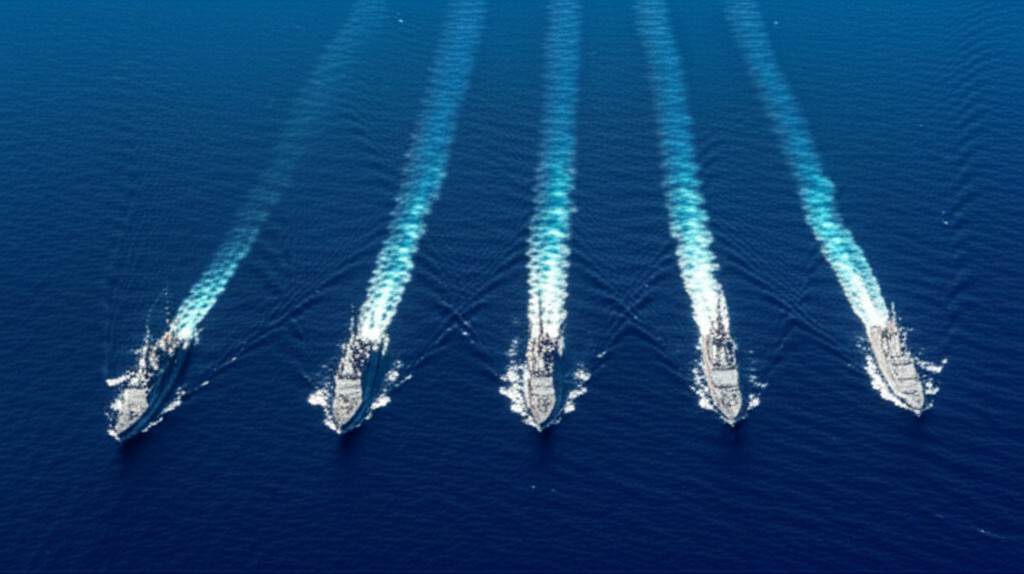
From January 9 to 16, warships from China, Russia, Iran, the UAE, and South Africa gathered off Cape Town for "Will for Peace 2026"—the first naval exercise conducted under the expanded BRICS Plus banner. Brazil, Egypt, Ethiopia, and Indonesia sent observers.
India sent no one.
Not a single ship. Not a single officer. Not even an observer with binoculars and a notepad.
This was not an oversight. India holds the BRICS chairmanship for 2026. It was formally invited by host nation South Africa. Its absence was, in the Ministry of External Affairs' careful phrasing, "a considered political decision."
That decision deserves unpacking.
What India Skipped
The exercise, originally planned as "Mosi III"—the third in a biennial series between South Africa, China, and Russia—was rebranded and expanded after scheduling conflicts with November's G20 summit. Under its new name and format, it became something more ambitious: a demonstration of BRICS Plus military coordination.
The participants were telling. China provided the largest contingent, including the Type 054A frigate Xuchang. Russia sent the frigate Gromky and support vessels. Iran dispatched the Dena frigate and the intelligence ship Makran—its first naval presence in South African waters. The UAE contributed a patrol vessel. South Africa, as host, deployed several surface combatants.
The symbolism was unmistakable: nations that the West considers adversarial or problematic, training together under a framework that claims to represent the Global South.
India wanted no part of it.
The Official Explanation
MEA spokesperson Randhir Jaiswal was precise in his framing: "The exercise in question was entirely a South African initiative in which some BRICS members took part. It was not a regular or institutionalised BRICS activity, nor did all BRICS members take part in it."
The emphasis on "not institutionalised" is crucial. India has participated in IBSAMAR—the trilateral naval exercise with India, Brazil, and South Africa—since 2008. That exercise, Jaiswal noted, had its last edition in October 2024. India is not opposed to naval cooperation with BRICS partners. It is opposed to naval cooperation that looks like bloc formation.
The distinction matters enormously in New Delhi.
What India Is Really Saying
Three strategic calculations underpin India's absence.
First: BRICS is not a military alliance, and India intends to keep it that way.
When BRICS was conceived, its purpose was economic coordination among major emerging markets. The original thesis—articulated by Goldman Sachs economist Jim O'Neill in 2001—was about growth trajectories and market potential, not geopolitical alignment. India has consistently pushed to maintain this character, even as China and Russia have sought to give BRICS sharper anti-Western edges.
As BRICS chair for 2026, India has a platform to reinforce this vision. Its presidency agenda emphasizes global institutional reform, development finance, and economic cooperation. Participating in a China-led naval exercise would undermine that messaging before the year's first summit.
Second: Trust with China remains broken.
The Galwan Valley clash of June 2020 killed at least 20 Indian soldiers and fundamentally altered India's approach to China. Despite recent diplomatic exchanges—border disengagement at some friction points, renewed dialogue mechanisms—New Delhi maintains that political trust must precede deeper security cooperation.
Joint military exercises are exercises in trust. They require interoperability, shared communications, coordinated maneuvers—intimacies that India is unwilling to extend to Beijing until the broader relationship is repaired. Sailing alongside Chinese warships while the border remains disputed would send precisely the wrong signal, both to China and to India's own military establishment.
Third: India will not be slotted into an anti-Western bloc.
This is perhaps the most important calculation, and the most misunderstood abroad.
Critics—particularly in Pakistan and some Western capitals—have framed India's absence as evidence of subservience to American pressure. This reading fundamentally misunderstands Indian strategic culture.
India's position is not pro-American. It is pro-Indian. Strategic autonomy means making decisions based on national interest, not alignment with any external power. Sometimes that means buying Russian oil despite American displeasure. Sometimes it means skipping a Russia-China naval exercise despite BRICS membership. The principle is consistency: India decides for India.
Participating in "Will for Peace" alongside China, Russia, and Iran—three nations currently in various degrees of confrontation with the United States—would have created an optic that India explicitly rejects: that of an emerging anti-Western military coalition. New Delhi has spent decades cultivating relationships across geopolitical divides. It has no intention of collapsing that complexity into a simple East-versus-West binary.
The Larger BRICS Question
India's absence exposes a tension at the heart of the expanded BRICS project.
The original BRICS—Brazil, Russia, India, China, South Africa—was always an awkward grouping: two democracies, three authoritarian states; one superpower rival to America, one superpower partner of America; competing territorial claims between two members. What held it together was a shared interest in reforming global institutions dominated by the West.
BRICS Plus, which added Egypt, Ethiopia, Iran, Saudi Arabia, and the UAE in 2024, has amplified these contradictions. Iran and Saudi Arabia in the same forum? India and China coordinating on anything? The centrifugal forces are obvious.
Naval exercises are a test of cohesion. They require not just diplomatic alignment but operational trust. That six of the eleven BRICS Plus members declined to send active participants—and that the bloc's 2026 chair stayed away entirely—suggests the cohesion may be more aspirational than real.
What India Gains from Absence
Strategic restraint is often more powerful than action. By declining to participate, India:
Preserves flexibility with the West. The EU-India FTA, expected to be announced within days, would be complicated by images of Indian warships training alongside Iranian and Russian vessels. India's absence keeps that track clean.
Signals to China. New Delhi is willing to engage Beijing economically and diplomatically. It is not willing to provide the legitimacy of military partnership while fundamental trust remains broken.
Defines BRICS on its terms. As chair, India can point to its own behavior as evidence of what BRICS should be: a forum for economic and developmental cooperation, not a proto-alliance system.
Maintains credibility with the Global South. Many smaller nations in Africa, Southeast Asia, and Latin America are wary of being drawn into great power competition. India's disciplined non-alignment reassures them that BRICS need not mean choosing sides.
The Non-Alignment Parallel
There is historical resonance here. In the 1950s and 1960s, Jawaharlal Nehru articulated a vision of non-alignment that refused the binary logic of the Cold War. That vision was often criticized as naive, sometimes hypocritical, occasionally both. But its core insight—that newly independent nations need not define themselves by superpower rivalry—proved durable.
India's current posture is non-alignment updated for multipolarity. The blocs today are less rigid, the pressures more diffuse, the choices more granular. But the underlying principle remains: India will not be anyone's junior partner, and it will not sacrifice long-term flexibility for short-term signaling.
Skipping a naval exercise may seem a small thing. In the grammar of great power politics, it is anything but.
What Comes Next
India's BRICS chairmanship will be closely watched. Will New Delhi steer the bloc toward its preferred vision of economic coordination? Or will the gravitational pull of China and Russia—and the presence of Iran and others—drag BRICS toward more explicit geopolitical positioning?
The early signal is clear: India will participate in BRICS on its own terms, or not at all. The empty berth at Simon's Town was a statement of intent.
Whether the rest of BRICS listens is another question entirely.
India hosts the BRICS Summit later this year. BarathVector will cover how New Delhi shapes the bloc's agenda—and its limits.
Related Coverage: