By Ramachandran Rajeev Kumar — 2026-01-22
The $1 Billion Question: Why India Is Silent on Trump's Board of Peace
By Ramachandran Rajeev Kumar
At the World Economic Forum in Davos today, President Donald Trump unveiled his Board of Peace with the theatricality of a man who believes he has invented diplomacy. Twenty-five nations signed the charter. Representatives from Bahrain and Morocco were first to the stage. Pakistan was there. The UAE was there. Even Belarus—under Western sanctions—was there.
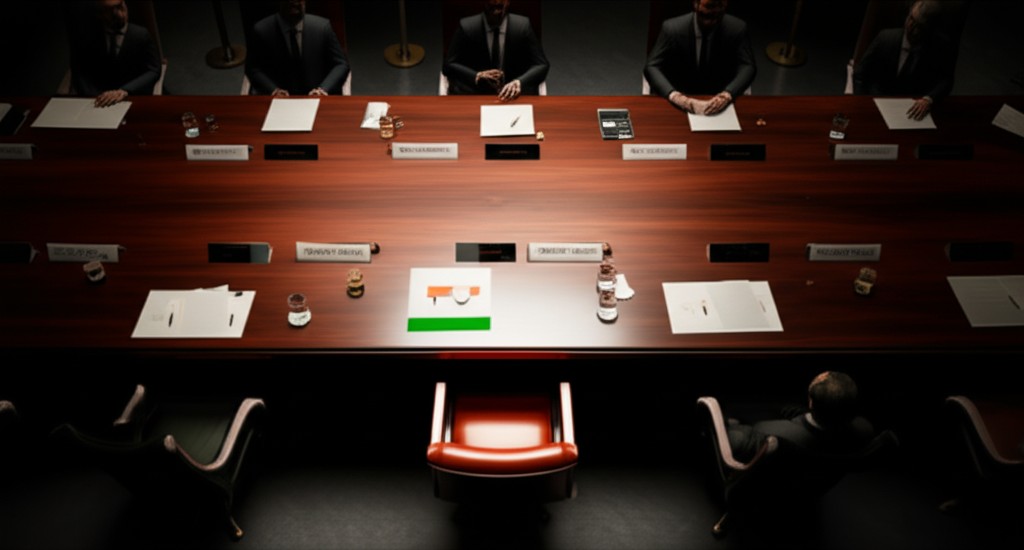
India's seat remained empty.
In the peculiar grammar of international relations, this silence is a complete sentence.
What Trump Built
The Board of Peace, first proposed in September 2025 and formally launched today, was originally conceived to oversee Gaza's reconstruction. Its 11-page charter, however, doesn't mention Gaza once. What emerged in Davos is something far more ambitious: a conflict resolution body with global scope, $1 billion membership fees, and one man as Chairman for life.
That man is Donald Trump.
The structure is remarkable in its candor. Trump serves as permanent Chairman with unilateral veto power. He can adopt resolutions without consulting the board. The executive council includes Secretary of State Marco Rubio, Jared Kushner, former UK Prime Minister Tony Blair, and—notably for India—World Bank President Ajay Banga.
Critics call it a privatized United Nations with American characteristics. Trump, characteristically, agrees: "The United Nations never helped me," he said Monday. The Board "might" replace it.
The $1 Billion Membership
Permanent membership costs $1 billion, payable to a fund controlled by Chairman Trump. Those unwilling or unable to pay serve three-year terms at Trump's pleasure.
India can afford it. The question is whether India should.
As one analyst noted this week: "Delhi rarely pays to join someone else's club unless the return is concrete and immediate."
What would India get for a billion dollars? A seat at a table where Trump holds all the cards, surrounded by nations that signed up for reasons ranging from genuine belief (few) to transactional necessity (many) to sheer opportunism (most).
The Pakistan Problem
Pakistan signed.
This fact alone complicates India's calculus. Islamabad joining any international body automatically raises questions in New Delhi about that body's utility. But the deeper issue isn't Pakistan's presence—it's the company Pakistan keeps on the Board.
The signatory list reads like a tour of authoritarian-adjacent governance: Belarus, Hungary, Azerbaijan, Kazakhstan, Uzbekistan. The Gulf monarchies are there for obvious reasons—Gaza's reconstruction is their neighborhood. Turkey joined, presumably to have a seat wherever Erdogan isn't being lectured about human rights.
The Western democracies? Conspicuously absent.
France said no. The UK said no—specifically citing discomfort with Vladimir Putin's potential involvement (Moscow has offered its own $1 billion, contingent on unfreezing Russian assets). Germany stayed home. So did Canada, Norway, and Sweden.
India finds itself in an unusual position: aligned with Western Europe in skepticism, while its regional rival sits at Trump's table.
The UN Question
India has been a consistent advocate for UN reform, including a permanent seat on the Security Council. New Delhi's position has always been that the post-1945 order needs updating—but through reform, not replacement.
The Board of Peace represents replacement.
If India joins an organization explicitly designed to circumvent the United Nations, it undermines decades of diplomatic positioning. Every speech at the General Assembly about reforming the Security Council, every bid for permanent membership, every appeal to rules-based international order—all of it becomes harder to sustain while sitting on Trump's alternative.
This is not abstract principle. India's entire foreign policy architecture—from BRICS to the Quad to bilateral relationships—rests on the premise that multilateral institutions matter, even when they're flawed. Joining a body where one man has lifetime veto power contradicts that premise at its foundation.
The Gaza Complication
India has consistently supported a two-state solution for Israel and Palestine. The Board of Peace charter, despite originating from Gaza reconstruction, makes no mention of Palestinian statehood. It makes no mention of Gaza at all.
For India to sign a charter that erases the very issue it claims to address would require diplomatic contortions that even New Delhi's skilled foreign service might struggle to execute.
The humanitarian situation in Gaza continues to deteriorate—eleven Palestinians were killed Wednesday, including three journalists. Signing a "peace" charter while the underlying conflict remains unaddressed risks associating India with outcomes it cannot control and may not endorse.
The Ajay Banga Factor
One element works in the Board's favor from India's perspective: Ajay Banga, the Indian-American President of the World Bank, sits on the executive council.
Banga's presence suggests the Board isn't purely a Trump vanity project—serious institutional figures are involved. It also provides India with an informal channel to the organization's inner workings without formal membership.
This may be exactly the arrangement New Delhi prefers: proximity without commitment, influence without signature.
The Strategic Calculus
India's silence is not indecision. It is decision.
By neither accepting nor declining, Modi preserves maximum optionality. He avoids antagonizing Trump while maintaining distance from an untested organization. He keeps faith with UN-centric multilateralism while watching how the Board of Peace actually functions.
If the Board succeeds—if it genuinely mediates conflicts and delivers reconstruction—India can join later, when the terms are clearer and the risks are lower. If it fails or becomes a vehicle for Trump's personal diplomacy, India will have been wise to stay away.
The empty chair at Davos is not absence. It is presence of a different kind: the presence of a nation confident enough to wait, strategic enough to watch, and experienced enough to know that in diplomacy, the first signature is rarely the smartest one.
What Happens Next
Trump has made clear he wants India on the Board. The personal letter to Modi, the public invitations, the prominent role for Ajay Banga—all signal that Washington sees New Delhi as a prize worth pursuing.
India will likely continue its studied silence until several questions are answered:
What does the Board actually do? Charter language is vague. Implementation will reveal true purpose.
How does it interact with the UN? Parallel operation is different from replacement.
What happens to Gaza? If the Board delivers meaningful reconstruction, its legitimacy grows. If not, early members look foolish.
What does Trump want from India specifically? The invitation is flattering. The price—whether financial or political—remains unclear.
For now, India watches. The world's largest democracy has seen enough American administrations come and go to know that patience is often the best policy.
The billion-dollar question can wait.
The Board of Peace signing ceremony continues in Davos. India's response, when it comes, will say much about how New Delhi sees its place in Trump's reordered world.
Related Coverage: