By Ramachandran Rajeev Kumar — 2026-01-21
By Ramachandran Rajeev Kumar
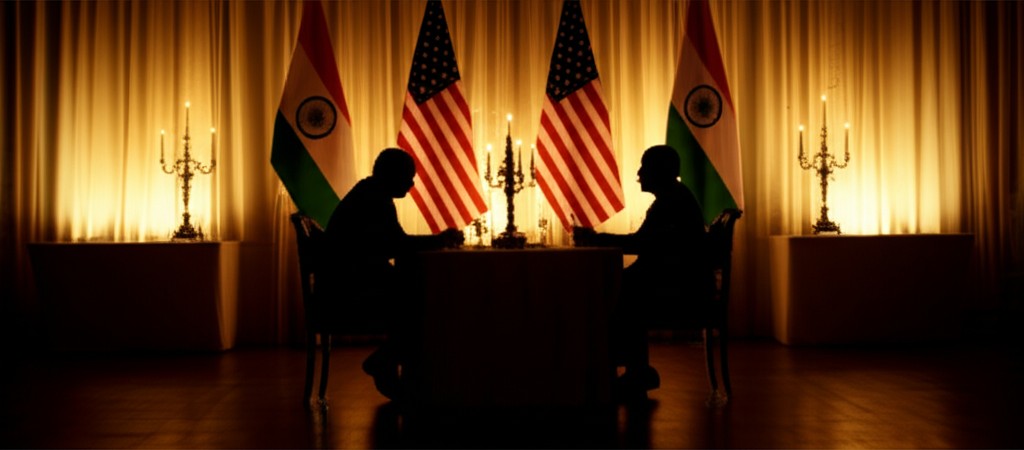
On January 18, 2025, Mukesh Ambani and his wife Nita sat at a candlelit dinner with Donald Trump, two days before his inauguration as the 47th President. The guest list numbered approximately one hundred—the innermost circle of Trump's America, the people who matter in the transactional universe the new president inhabits.
India's richest man, at the American king's coronation table.
The optics triggered predictable reactions. Critics saw subservience—an Indian billionaire genuflecting before American power. Skeptics questioned what Ambani wanted—surely this was about Reliance's interests, not India's. Nationalists worried about the message: does Indian business speak for India?
These concerns miss the point.
In the peculiar world of Trump diplomacy, where personal relationships trump institutional channels and businessmen are trusted more than bureaucrats, Ambani's presence at that dinner may be the most useful thing any Indian has done for the bilateral relationship in months.
How Trump Actually Works
Understanding Trump requires abandoning the frameworks that explain conventional leaders.
Trump does not think in terms of strategic partnerships, alliance architectures, or long-term institutional relationships. He thinks in terms of deals, relationships, and respect. Who treats him well? Who can deliver? Who does he enjoy talking to?
Politicians, in Trump's worldview, are unreliable. They speak in diplomatic hedges, make commitments they can't keep, and answer to constituencies that constrain them. Trump's first term was marked by visible frustration with foreign leaders who couldn't simply "make a deal" because their parliaments, coalitions, or constitutions wouldn't allow it.
Businessmen are different. Businessmen speak Trump's language. They understand transactions, leverage, and the art of negotiation. They can commit and deliver without checking with committees. When Trump wants to understand a country's intentions, he often trusts its business leaders more than its diplomats.
This isn't how international relations should work. But it is how Trump's international relations do work.
The MAGA Paradox
The MAGA movement carries strains of nativism that should concern Indian observers. "America First" rhetoric often shades into hostility toward immigration, outsourcing, and the economic relationships that have benefited India enormously. Indian-Americans have faced increased scrutiny; H-1B visas remain politically contested; the tech industry's reliance on Indian talent is framed as a problem to be solved.
And yet.
Trump himself has consistently shown a personal affinity for the Indian community that transcends the movement's more xenophobic elements. His first-term rally in Houston with Modi—"Howdy Modi"—drew 50,000 people. His real estate empire has multiple Indian partners. His personal physician for years was of Indian origin. The Indian-American executives and entrepreneurs he encounters in business contexts have, by most accounts, left positive impressions.
Trump's warmth toward Indians is transactional, like everything else about him. Indians he knows have made him money, treated him with respect, and demonstrated competence. This personal experience overrides whatever ideological hostility the broader MAGA movement might hold.
Ambani, sitting at that dinner table, reinforces the pattern. India's most successful businessman, treating the American president with evident respect, demonstrating that India's elite takes Trump seriously. This matters to a man for whom being taken seriously is the highest currency.
The Ego Problem
The India-US relationship is currently stuck—not because of irreconcilable strategic differences, but because of an ego collision at the highest level.
The specifics are almost embarrassing to recount. Trump believes he deserved a Nobel Peace Prize for his various diplomatic initiatives. He did not receive one. The perceived slight festers. Meanwhile, Modi—a leader with his own considerable ego—has not performed the public admiration rituals that Trump rewards. The relationship that should be deepening based on shared interests regarding China, defense cooperation, and economic complementarity has instead stalled.
Neither man will back down. Neither man will publicly defer to the other. Neither man will admit that personal pique is obstructing national interest.
This is where Ambani becomes useful.
Businessmen operate in a different register. Ambani can praise Trump without the political costs that would attach to Modi doing so. He can explore understandings, test propositions, and convey messages that official channels cannot. He can be the back channel that allows both leaders to save face while moving forward.
Is this how diplomacy should work? Perhaps not. Is this how diplomacy with Trump does work? Absolutely.
What Ambani Wants
Let's be clear: Ambani is not at Trump's dinner purely out of patriotic duty. Reliance has interests in America—telecom partnerships, retail ambitions, energy investments. Access to the Trump administration is commercially valuable.
But this doesn't negate the broader benefit. Ambani's interests and India's interests are not identical, but they overlap substantially. A functional India-US relationship benefits Reliance. Trade flows benefit Reliance. Stable diplomatic channels benefit Reliance. When Ambani cultivates Trump, he cultivates conditions favorable to his business—conditions that also happen to be favorable to India.
This is how business-government relationships work in every country. American CEOs advocate for policies that benefit their companies and, incidentally, America. Korean chaebols are instruments of national strategy as much as private enterprises. The question isn't whether Ambani has self-interest—of course he does. The question is whether his self-interest, in this instance, aligns with national interest.
The answer is yes.
The Bridge
The most optimistic reading of Ambani's Trump access is as a bridge—a channel through which the current Indo-US impasse might be navigated.
Official diplomacy has stalled. The trade deal that has been "almost done" for years remains undone. Tariff threats loom. Rhetoric has sharpened. The bureaucratic machinery of both countries grinds forward, but without the political will at the top to close agreements, the machinery produces nothing.
Ambani can operate outside this machinery. A conversation at dinner. A follow-up call. A business proposal that happens to advance bilateral interests. The suggestion that perhaps there's a deal to be made, if only the right people talk.
Trump responds to this. He enjoys the deal-making, the sense that he personally has unlocked something that the bureaucrats couldn't. If Ambani can frame opportunities in terms Trump finds appealing—jobs for Americans, wins he can announce, respect from a major power—progress becomes possible.
This is not guaranteed. Trump is mercurial; today's friend is tomorrow's target. But the odds of progress through Ambani's channel are better than the odds through official channels currently frozen by ego.
The Discomfort
There is something uncomfortable about this analysis. India's foreign policy should not depend on a billionaire's dinner invitations. The world's largest democracy should not need to route its most important bilateral relationship through a private citizen, however wealthy.
But foreign policy is the art of the possible, not the ideal. The ideal would be two mature governments managing their relationship through institutional channels. The possible, given Trump, is something messier.
India works with the president America elects, not the president we might prefer. This president trusts businessmen. This president rewards personal relationships. This president responds to flattery that democratic politicians cannot easily provide.
Ambani can provide it. Ambani is providing it. And if the result is a functional channel between Delhi and Washington—one that allows both governments to navigate their relationship despite the egos at the top—then the discomfort is worth enduring.
The Bottom Line
Mukesh Ambani at Trump's dinner table is not subservience. It is strategy.
In a world where the American president distrusts politicians and trusts dealmakers, sending India's greatest dealmaker makes sense. In a relationship stuck on ego, a back channel that bypasses ego has value. In a moment when official diplomacy has stalled, unofficial diplomacy may be the only diplomacy available.
Ambani is not India's ambassador. But he may, for this peculiar moment in history, be India's most effective one.
The bridge is open. Whether both governments choose to cross it remains to be seen.