By Ramachandran Rajeev Kumar — 2025-12-16
The numbers tell one story. India faces 50% tariffs—the highest Trump has imposed on any major trading partner. Pakistan faces 19%. The message seems clear: America's "strategic partner" is being punished more harshly than a nation that harbored Osama bin Laden.
But the numbers don't tell the real story. The real story is about two leaders who both fumbled an opportunity, a political opposition that forced an unnecessary confrontation, and—paradoxically—a silver lining that India is only beginning to recognize.
Trump's Three Mistakes
Let's be clear: Donald Trump could have emerged from Operation Sindoor as a hero. He could have had Modi's gratitude, international acclaim, perhaps even a Nobel Peace Prize nomination. The path was there. He chose to blow it up.
Mistake One: Hyphenating India with Pakistan
For two decades, American foreign policy carefully distinguished between India and Pakistan. India was the strategic partner, the democratic ally, the counterweight to China. Pakistan was... complicated. Trump erased this distinction with a single sentence: "I threatened them both with 350% tariffs."
To Indian ears, this was an insult. It placed a nuclear-armed democracy of 1.4 billion people on the same footing as a failing state that had sheltered terrorists. It undid years of careful American diplomacy that recognized India's unique status. It was, as one Indian diplomat reportedly said, "like being told you're no different from your problematic neighbor."
Mistake Two: Declaring Victory Before Getting the Nod
A shrewder operator would have called Modi first. "Prime Minister, I'm going to take some credit for this publicly. You don't have to confirm it, just don't deny it. In return, let's talk about those tariffs."
Instead, Trump rushed to the microphones. He declared victory sixty times before anyone in New Delhi had agreed to the narrative. He left Modi no room to quietly acquiesce. He forced a binary choice: validate Trump's fiction or deny it publicly.
Mistake Three: Taking Modi for Granted
Trump assumed that the personal chemistry of "Howdy Modi" and "Namaste Trump" meant he could say anything and India would go along. He forgot that Modi is a nationalist leader with his own political constraints. He forgot that India's strategic autonomy isn't a negotiating position—it's a core belief. He forgot that in international relations, you cannot publicly embarrass a partner and expect them to thank you for it.
Modi's Fumble
But let's not pretend Modi played this perfectly. He didn't.
When Trump first made his claims, Modi maintained silence. For several days, there was no official Indian response. This was wise. In diplomacy, strategic ambiguity is often the best policy. Let Trump have his moment. Neither confirm nor deny. Move on.
Then came the pressure from home.
The opposition, sensing an opportunity, demanded answers. Was Trump telling the truth? Did India capitulate to American threats? Was the government hiding something? The questions grew louder. The silence that had been strategic began to look like weakness.
And so Modi was maneuvered into a corner. The official denial came—firm, categorical, leaving no room for face-saving ambiguity. India had not been threatened. There was no American mediation. The implication was unavoidable: Trump was lying.
A more Machiavellian politician might have played it differently.
The Netanyahu Playbook
Consider how Benjamin Netanyahu would have handled the identical situation.
Netanyahu, whatever his flaws, understands Trump's psychology with surgical precision. He knows that Trump's ego is not an obstacle to be confronted but a lever to be pulled. He has mastered the art of giving Trump symbolic victories while extracting substantive concessions.
Imagine Netanyahu in Modi's position. Trump claims credit for stopping a war. The claim is exaggerated, perhaps entirely fabricated. What does Netanyahu do?
He calls a press conference. He praises "the great President Trump" for his "decisive leadership" in bringing peace to the region. Then—and here's the masterstroke—he adds: "And President Trump has assured me that as a gesture of this new era of peace, India will enjoy zero tariffs on our exports to America."
Think about it. Trump never promised zero tariffs. But now he's on camera being praised as a peacemaker AND a generous trade partner. Does he contradict his new best friend? Does he say "actually, I'm planning 50% tariffs"? Of course not. His ego won't permit it. He nods along, basks in the praise, and suddenly India has locked in a trade advantage that would have taken years of negotiation to achieve.
Netanyahu would then nominate Trump for the Nobel Peace Prize. The nomination costs nothing—anyone can nominate anyone. But Trump would dine out on it for months. And every time India needed something from Washington, there would be a marker to call in.
Nothing lost. Everything gained. The lie becomes reality. The fiction becomes leverage.
But Modi is Modi. His political instincts are domestic, not international. His strength lies in understanding the Indian voter, not the American president. He could not bring himself to publicly validate what he knew to be false, even if the validation was essentially free—or rather, even if the validation could have been turned into a weapon that benefited India.
Instead of zero tariffs extracted through strategic flattery, India now faces 50% tariffs imposed through wounded pride.
The difference between these two outcomes—zero and fifty—is the difference between a politician who understands Trump and one who does not.
Pakistan's Short-Term Win
While India and America were busy wounding each other, Pakistan seized the moment.
The 19% tariff rate—compared to India's 50%—was a diplomatic coup. The White House lunch for Army Chief Asim Munir was salt in the wound, given that many Indians hold him responsible for the Pahalgam attack that triggered the crisis. For a few months, it appeared that Pakistan had successfully exploited the US-India rupture.
But history will likely judge this a pyrrhic victory. Pakistan's fundamental weaknesses—economic fragility, political instability, dependence on Chinese debt—remain unchanged. A temporary American smile does not alter the structural realities that have made Pakistan increasingly marginal to great power competition.
India, by contrast, is too large, too economically significant, and too strategically located to be sidelined for long. The American establishment—Pentagon, State Department, business community—understands this even if the current president does not.
The Unexpected Gift
Here is the paradox that few in India are yet willing to acknowledge: Trump may have done India a favor.
For years, Indian foreign policy has operated on an assumption—sometimes explicit, sometimes unspoken—that the American partnership was the cornerstone of India's rise. The nuclear deal, defense cooperation, technology transfers, the Quad—all pointed toward an ever-deepening embrace with Washington.
This assumption bred complacency. Why diversify when America was delivering? Why accelerate indigenous capabilities when American technology was available? Why take risks when the American security umbrella was expanding?
Trump's tariffs shattered this complacency.
The Reality Check India Needed
The 50% tariffs were a brutal reminder: American friendship is conditional, transactional, and subject to the whims of whoever occupies the White House. A relationship built on one nation's goodwill is not a relationship—it's a dependency.
This realization is painful but valuable. It has forced Indian policymakers to ask questions they had been avoiding:
- What if America is not reliable?
- What if the next president is worse?
- What happens if we must stand alone?
The Friend We Almost Lost
In pursuing the American dream, India had begun to distance itself from Russia—a partner that stood with India when America imposed sanctions, supplied weapons when America refused, and vetoed UN resolutions when America abstained.
Trump's hostility has reminded India why that friendship matters. Modi's hour-long ride in Putin's limousine wasn't just symbolism. It was a statement: we have options, and we will use them.
The Urgency That Was Missing
Perhaps most importantly, Trump has injected urgency into Indian strategic thinking.
The typical Indian approach—laid-back, incremental, improvised solutions to structural problems—is no longer adequate. When your largest trading partner can impose 50% tariffs overnight, you cannot afford complacency. You must build alternatives. You must accelerate timelines. You must prepare for scenarios you previously dismissed as unlikely.
This acceleration is already visible. Trade negotiations with the European Union have gained momentum. Defense indigenization programs are being fast-tracked. The rupee internationalization agenda has new energy. BRICS coordination has intensified.
None of this would have happened—at least not at this pace—without Trump's shock therapy.
The Road Ahead
Is everything lost? Far from it.
The framework trade deal will likely succeed. Trump needs a "win" before the next election cycle intensifies. Modi needs relief for Indian exporters. Both sides have incentives to find a face-saving compromise—lower tariffs on American almonds and apples in exchange for reduced duties on Indian goods.
But the relationship will never return to the naive optimism of "Howdy Modi." And that may be healthy.
India is learning to deal with America as it is, not as Indians wished it to be. It is building redundancies into its strategic relationships. It is reducing single points of failure. It is growing up.
The Determined Indian Nation
There is a confidence emerging in New Delhi that was absent before this crisis—not the false confidence of assuming American support, but the harder confidence of knowing that India can manage without it if necessary.
The world's largest democracy does not need validation from the world's oldest democracy. It needs only to believe in itself.
And here is what Trump, in his ego-driven flailing, does not understand: there is nothing that a determined Indian nation cannot achieve. The country that built a space program on a shoestring budget, that created a digital payments infrastructure that handles more transactions than America and Europe combined, that produces more engineers than any nation on earth—this country does not need American permission to rise.
Trump's tariffs were meant to bring India to heel. Instead, they may have lit a fire.
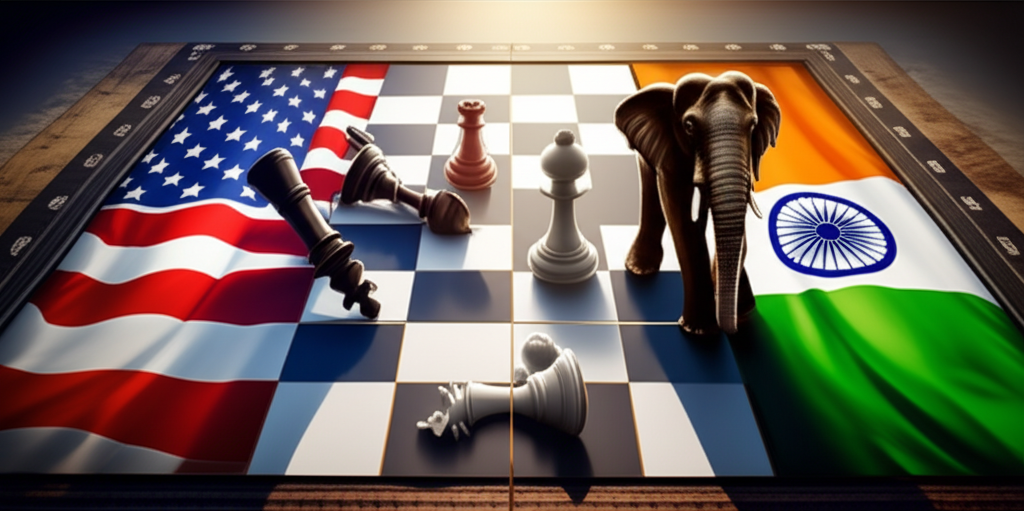
The elephant in the room isn't India. It's Trump's wounded ego. And elephants, as they say, never forget.
But neither do they remain still. They move forward. And when 1.4 billion people decide to move forward together, the world rearranges itself around them.
That is the gift—unexpected, unwanted, but perhaps invaluable—that Donald Trump has given India.
History has a sense of irony. The president who sought to punish India may end up being remembered as the catalyst for its rise.