By Ramachandran Rajeev Kumar — 2025-12-17
What happens in the moment before you remember who you are?
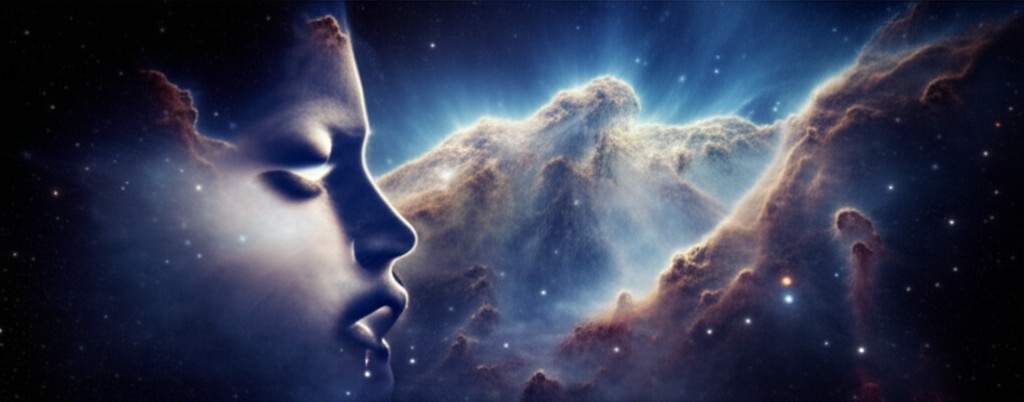
There's a moment, just before you fully wake up, when you don't know who you are.
Your eyes are still closed. The world hasn't assembled itself yet. You're not your name, not your job, not your worries from yesterday. You're just... aware. A point of light in darkness. Something experiencing something.
Then it floods back. Your room. Your life. Your body. You become you again.
But for that one instant - what were you?
This is the question that has haunted humanity's greatest minds for three thousand years. And here's the strange part: we're no closer to answering it than the sages who first asked it in the Himalayas, the philosophers who debated it in Athens, or the neuroscientists who study it today in their labs.
We have split the atom. We have decoded the genome. We have photographed black holes. But we cannot explain why there is something it feels like to be you.
The Moment the Mystery Hit
In 1994, a young Australian philosopher named David Chalmers stood up at a conference in Tucson, Arizona, and said something that would split the scientific world.
He drew a line.
On one side, he placed what he called the "easy problems" of consciousness. How does the brain process information? How do we recognize faces? How do we pay attention? These are hard engineering problems, sure. But in principle, they're solvable. We can build machines that do these things.
On the other side, he placed the "hard problem."
Why does any of this processing feel like anything at all?
Think about it. You're reading these words right now. Photons are hitting your retina. Signals are racing through your visual cortex. Neurons are firing in patterns that somehow mean "words" and "meaning" and "understanding."
But why is there a you in there, experiencing all of this? Why isn't it just processing - like a calculator, or a thermostat, or the automatic door that opens when you walk toward it?
The door doesn't experience anything when it opens. (We assume.) Your computer doesn't feel the weight of this paragraph. (We hope.)
But you do.
Why?
The Scientist's Answer
Let me introduce you to Stanislas Dehaene.
He runs a lab in Paris where they study consciousness the way other scientists study earthquakes or cancer cells - with scanners, electrodes, careful experiments. When he slides a person into an fMRI machine and flashes an image on a screen, he can watch consciousness happen in real time.
First, the visual cortex lights up - the back of the brain processing raw data.
Then, if the image is shown long enough (about 300 milliseconds), something remarkable occurs. A wave of activity sweeps forward across the brain. The signal "ignites" - broadcasting to multiple regions simultaneously. The frontal cortex. The parietal lobe. Language areas.
And at precisely that moment, the person can report: "I saw something."
Before the ignition: no awareness. After the ignition: consciousness.
"We can predict," Dehaene says, "whether someone saw an image just by looking at their brain activity."
This is extraordinary. We are watching consciousness switch on and off like a light.
But here's what Dehaene can't explain - and he admits this openly:
He can show you when consciousness happens. He can show you where in the brain it happens. He can show you what neural patterns accompany it.
But he cannot explain why those patterns feel like anything.
Imagine you had a complete map of every neuron in my brain. Every synapse. Every firing pattern. You would know exactly what my brain is doing as I write this sentence.
You still wouldn't know what it feels like to be me.
The map shows the territory. But the territory is having an experience. The map doesn't explain why.
The Mystic's Answer
Now let me take you somewhere else entirely.
Eight centuries ago, in the mountains of southern India, a philosopher named Adi Shankara made a radical claim. He said you're asking the question backwards.
Consciousness isn't the mystery, he argued. Consciousness is the one thing you know for certain. Everything else - this body, this world, this entire physical universe - that's what needs explaining.
Think about it his way:
How do you know the physical world exists? Because you see it, touch it, measure it.
But seeing, touching, measuring - these are experiences. They happen in consciousness.
You've never encountered anything outside consciousness. You can't. Even your concept of "outside consciousness" is a thought - happening inside consciousness.
The physical world, Shankara said, is like a dream. Not fake - dreams are real experiences. But dependent. The dream doesn't create the dreamer. The dreamer dreams the dream.
What if the universe is the same?
This sounds mystical. Unscientific. Perhaps crazy.
But here's the strange thing: some of the most cutting-edge neuroscience is arriving at something similar.
The Interface
Donald Hoffman is a cognitive scientist at UC Irvine. He studies perception - how we see, hear, feel the world.
His conclusion, backed by mathematical models and evolutionary game theory, is unsettling:
We don't see reality as it is. We're not designed to.
"Evolution," he says, "shaped our perceptions to hide the truth and guide adaptive behavior."
Imagine a desktop computer. You see icons - a folder, a trash can, a document. These are useful. You can click them, drag them, organize them.
But they're not true. There's no actual folder inside your computer shaped like a manila folder. The icon is an interface - a user-friendly fiction that lets you interact with something far more complicated (voltage changes, transistor states) without needing to understand it.
Hoffman argues that your entire perception of reality works the same way.
Space? An icon. Time? An icon. Physical objects? Icons.
Useful for survival. Not descriptions of what's really out there.
"If I take perception seriously," Hoffman says, "I cannot take physicalism seriously. The physical world is not the foundation. It's the interface."
But here's where it gets vertiginous:
If the physical world is an interface... what's running the interface?
Your brain, you might say. But your brain is a physical object. It's part of the interface. It's an icon too.
So what's behind the icons?
Hoffman's answer: consciousness. All the way down.
The Butterfly's Question
Twenty-three centuries ago, a Chinese philosopher named Zhuangzi woke up from a nap and wrote one of the most famous paragraphs in the history of thought:
"Once, Zhuangzi dreamed he was a butterfly, fluttering about, happy with himself, unaware he was Zhuangzi. Suddenly he woke up - there he was, solid and unmistakable Zhuangzi. But he didn't know if he was Zhuangzi who had dreamed he was a butterfly, or a butterfly now dreaming he was Zhuangzi."
It sounds like a riddle. But it's actually a question about the foundations of reality.
When you're in a dream, you don't know you're dreaming. The dream feels like waking. Only when you wake up do you realize: that was the dream, this is real.
But how do you know this isn't the dream?
Right now, as you read these words, you feel awake. Alert. Certain.
But you felt that way in last night's dream too. Until you woke up.
What if waking up isn't the end of the chain?
I'm not suggesting you're literally dreaming. The point is subtler: the feeling of certainty about what's "real" and what's "appearance" is generated by consciousness. It's a feature of experience, not a guarantee of truth.
The butterfly doesn't know it's dreaming. Neither did you, last night. What makes you so sure now?
The Awe
Let me tell you what stops me cold when I actually let myself think about this.
Right now, the universe is looking at itself.
Atoms that were forged in dying stars - carbon, oxygen, nitrogen, iron - have arranged themselves into patterns so complex that they experience. They ask questions. They wonder.
You are the cosmos wondering what it is.
This isn't metaphor. It's literal.
Every particle in your body was manufactured in the heart of a star billions of years ago. Those particles drifted through space, collected into planets, became part of an ocean, became life, became you.
And now they're reading this sentence. And understanding it. And feeling curious, or skeptical, or awed.
How is that possible?
The standard scientific story says: complexity. Neural networks. Information processing. Evolution over billions of years.
Fine. But that explains the mechanism. It doesn't explain the mystery.
Why does complexity feel like anything?
Why doesn't the universe just process - why does it also experience?
There is no obvious reason. The laws of physics don't require it. You could, in principle, have a universe of silent machinery - atoms moving, galaxies spinning, chemistry happening - with nobody home to witness any of it.
But that's not our universe.
Our universe has witnesses.
And you are one of them.
The Unknown Symphony
Here's where I'm supposed to give you the answer.
I don't have one.
Neither does anyone else - not honestly.
Thirty years after Chalmers drew that line, the debate continues. Brilliant scientists think consciousness emerges from matter. Brilliant philosophers think matter appears within consciousness. Both sides have sophisticated arguments. Neither side can prove the other wrong.
And maybe that's the point.
Maybe the question isn't a puzzle to be solved but a mystery to be inhabited. Maybe asking "what is consciousness?" is like asking "what is music?" - the answer isn't a sentence, it's the experience of listening.
Or maybe we'll crack it. Maybe some future breakthrough in neuroscience or physics or mathematics will make consciousness as clear as digestion, as explicable as weather.
I don't know.
But here's what I do know:
Tonight, you will fall asleep. Your consciousness will dissolve. Dreams will come - vivid, strange, forgotten. And then, tomorrow morning, you'll have that moment again. The moment before you remember who you are.
A point of light in darkness. Something experiencing something. The universe, looking at itself.
What is that?
We still don't know.
And maybe that not-knowing is the most honest, awe-filled place to stand.
You exist. You're aware of existing. And nobody can explain why.
That's not a failure. That's a wonder.