By Ramachandran Rajeev Kumar — 2026-02-15
The Rs 3.6 Trillion Shopping Spree: India's Biggest Defence Haul in a Single Day
By Ramachandran Rajeev Kumar
This article follows up on our previous coverage of India's record 15% defence budget increase.
Three days ago, we wrote about India's defence budget leaping to Rs 7.85 lakh crore -- a 15% surge that signalled the country was finally willing to match its strategic ambitions with its chequebook. What we did not anticipate was how quickly that signal would translate into action.
On February 12, the Defence Acquisition Council -- chaired by Defence Minister Rajnath Singh -- met in New Delhi and did something that would have been inconceivable a decade ago: it granted Acceptance of Necessity for Rs 3.6 trillion -- approximately $39.6 billion -- in procurement proposals in a single sitting. Not over a fiscal year. Not across a five-year plan. In one meeting.
To put that figure in perspective: it exceeds Pakistan's entire annual defence budget several times over. It is larger than the GDP of more than a hundred countries. It is 3.4 times larger than the previous record for a single DAC session. And the timing is not coincidental -- French President Emmanuel Macron arrives in New Delhi on February 17, and the Rafale deal is the centrepiece of his visit.
Acceptance of Necessity is the first formal step in India's defence procurement process, not the final contract. Cabinet Committee on Security approval and contract negotiations lie ahead. But AoN is the point of no return in bureaucratic intent -- the government declaring, on the record, that it needs these capabilities and intends to acquire them.
India is no longer window-shopping. It has walked into the store with a trolley.
The Headliners
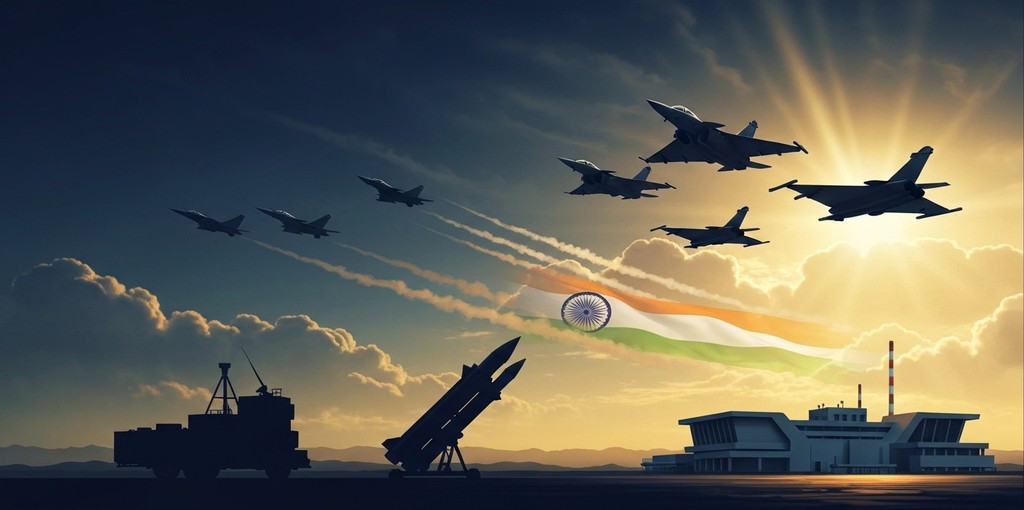
The centrepiece is the Multi-Role Fighter Aircraft programme -- 114 Rafale jets from Dassault Aviation, valued at Rs 3.25 lakh crore alone. Eighty-eight single-seat and twenty-six twin-seat variants, of which 18 will arrive as fly-away units directly from France. The remaining 96 will be manufactured in India -- likely at the Dassault Reliance Aerospace Limited facility in Nagpur, with Tata Advanced Systems in Hyderabad producing fuselage sections -- with up to 60% indigenous content, under a technology transfer arrangement that makes this not merely a purchase but an industrial transplant. The aircraft will come in the F4 standard, with an option for 24 units in the future F5 configuration. Deliveries are expected to commence around 2030, with the full fleet delivered within six years of contract signing.
This is not a repeat of the 2016 Rafale deal. That purchase of 36 aircraft was, by any honest assessment, a stopgap -- enough to demonstrate capability, not enough to transform the air force. The MRFA programme is the transformation. When combined with the indigenous Tejas Mk2 programme and the Advanced Medium Combat Aircraft under development, India's fighter fleet will undergo the most significant upgrade since the induction of Su-30MKIs in the early 2000s.
Six Boeing P-8I Poseidon maritime patrol aircraft round out the aerial acquisitions. India already operates twelve P-8Is -- the backbone of its maritime surveillance architecture. Six more will extend coverage across the Indian Ocean, where Chinese naval activity has expanded from occasional forays to persistent presence.
The S-400 Expansion
The council also cleared the procurement of 288 additional S-400 surface-to-air missiles -- 120 short-range and 168 long-range interceptors -- valued at approximately Rs 10,000 crore. Procured under the Fast Track Procedure, these are replenishment stocks. India's S-400 batteries, known in Indian service as "Sudarshan Chakra," saw combat deployment during Operation Sindoor in May 2025, and the stocks need rebuilding.
The S-400 remains among the most capable long-range air defence systems in the world. Its engagement envelope spans 40 to 400 kilometres, and its ability to track and engage multiple aerial targets simultaneously -- from cruise missiles to stealth aircraft -- gives India a layered defence architecture that most of its neighbours cannot match. The additional missiles ensure that India's S-400 regiments can sustain operations during an extended conflict, rather than running dry after the first salvoes.
The Quiet Revolution Below the Headlines
The glamorous platforms attract attention. The less visible items reveal strategy.
The Autonomous High-Altitude Pseudo-Satellite -- AS-HAPS -- cleared at Rs 15,000 crore, is a solar-powered unmanned platform designed to operate in the stratosphere at 18-20 kilometres altitude for extended periods. India's National Aerospace Laboratories in Bengaluru tested a scaled-down prototype at Challakere in 2024; the full-scale version targets a 30-metre wingspan and 90-hour endurance by 2027. Positioned in the stratosphere, it functions as a low-cost alternative to satellites: persistent ISR, electronic intelligence, communications relay, and intelligence gathering over contested areas without the vulnerability of orbital assets. In a neighbourhood where satellite-killing capabilities are proliferating, a pseudo-satellite that can be replaced cheaply and repositioned quickly is not a luxury. It is insurance. For the Ladakh and Arunachal borders, where terrain makes conventional surveillance difficult, AS-HAPS is a solution purpose-built for India's geography.
A 4-megawatt Marine Gas Turbine has been cleared for development. India's naval vessels have historically relied on imported propulsion systems -- a dependency that creates both supply-chain risk and strategic leverage for supplier nations. An indigenous gas turbine programme, if successful, would give India the ability to power its next generation of warships without asking anyone's permission.
The Vibhav anti-tank mine system, designed for rapid deployment along India's borders, addresses a specific lesson from recent standoffs: the ability to deny territory to armoured formations requires more than troops standing in the cold. It requires physical barriers that can be laid quickly and managed intelligently.
And then there are the upgrades. T-72 main battle tanks, BMP-II infantry combat vehicles, and Armoured Recovery Vehicles will all receive modernisation packages. These are not new purchases -- they are investments in extending the life and capability of platforms that form the numerical bulk of India's armoured forces. Glamorous they are not. Operationally essential they are.
The Make-in-India Calculus
The DAC clearance reinforces the pattern established in the budget: a decisive tilt towards domestic procurement. The 114 Rafale programme, despite being a French design, will generate a massive domestic manufacturing ecosystem. Over 50% indigenous content means Indian companies will produce airframe components, avionics subsystems, and weapons integration packages. Dassault's technology transfer commitments, if honoured in full, would make India one of a handful of countries capable of producing fourth-generation-plus fighters.
The sceptic's objection writes itself: India has a long history of technology transfer agreements that produced less capability than promised. The Sukhoi Su-30MKI programme delivered a formidable aircraft but never achieved full indigenous production of all critical subsystems. HAL's track record on production timelines has improved but remains uneven.
The counter-argument is that India's defence manufacturing base in 2026 is fundamentally different from what existed even a decade ago. Private sector participation has expanded dramatically. Companies that were building automotive components are now producing aerospace-grade materials. The Defence Production Index has grown consistently. And the competitive pressure created by the government's 75% domestic procurement mandate means that Indian industry cannot afford to deliver late or substandard.
Whether the optimists or the sceptics prove correct will become apparent over the next five years. What is not in dispute is that the intent -- to build rather than merely buy -- has never been more clearly stated.
From Budget to Battlefield
A budget allocation creates fiscal space. A DAC clearance creates procurement authority. Neither puts equipment in a soldier's hands.
The gap between clearance and delivery has historically been India's Achilles heel. Programmes cleared in one decade have delivered in the next. Contracts negotiated under one government have been renegotiated under the successor. The bureaucratic machinery of defence procurement, designed to prevent corruption, has often functioned primarily to prevent procurement.
The Rafale MRFA programme, in particular, faces a gauntlet of negotiations. Price, offset obligations, technology transfer specifics, production timelines, and maintenance arrangements must all be agreed before a single airframe is cut. The original 36-Rafale deal took years to finalise after political clearance. And the lineage is even longer: this programme is, in essence, the successor to the 2007 MMRCA tender for 126 fighters that was scrapped, reborn, and has now returned at roughly three times the original estimated cost. Twenty-five years of detours, deadlocks, and political hesitation have delivered India to a point where it is ordering what it should have ordered a generation ago, at a price that reflects the cost of delay.
But there is a difference this time. Operation Sindoor demonstrated that India can fight -- and that when it fights, it discovers precisely which capabilities it lacks. The political cost of delayed procurement is no longer abstract. It is measured in operational gaps that adversaries can exploit.
The DAC clearance of February 12 is not, by itself, a transformation. It is a statement of intent backed by the largest single-day commitment of defence resources in Indian history. Whether that intent survives contact with India's procurement bureaucracy will determine whether the next crisis finds the armed forces better equipped than the last.
The Rs 3.6 trillion question is not whether India can afford this shopping spree. The budget says it can. The question is whether India can execute it -- on time, on specification, and at scale.
For a country that has spent decades discussing what it might someday buy, February 12 was the day it placed the order.
The views expressed are those of the author and do not necessarily reflect the editorial position of BarathVector.