By Ramachandran Rajeev Kumar — 2026-01-21
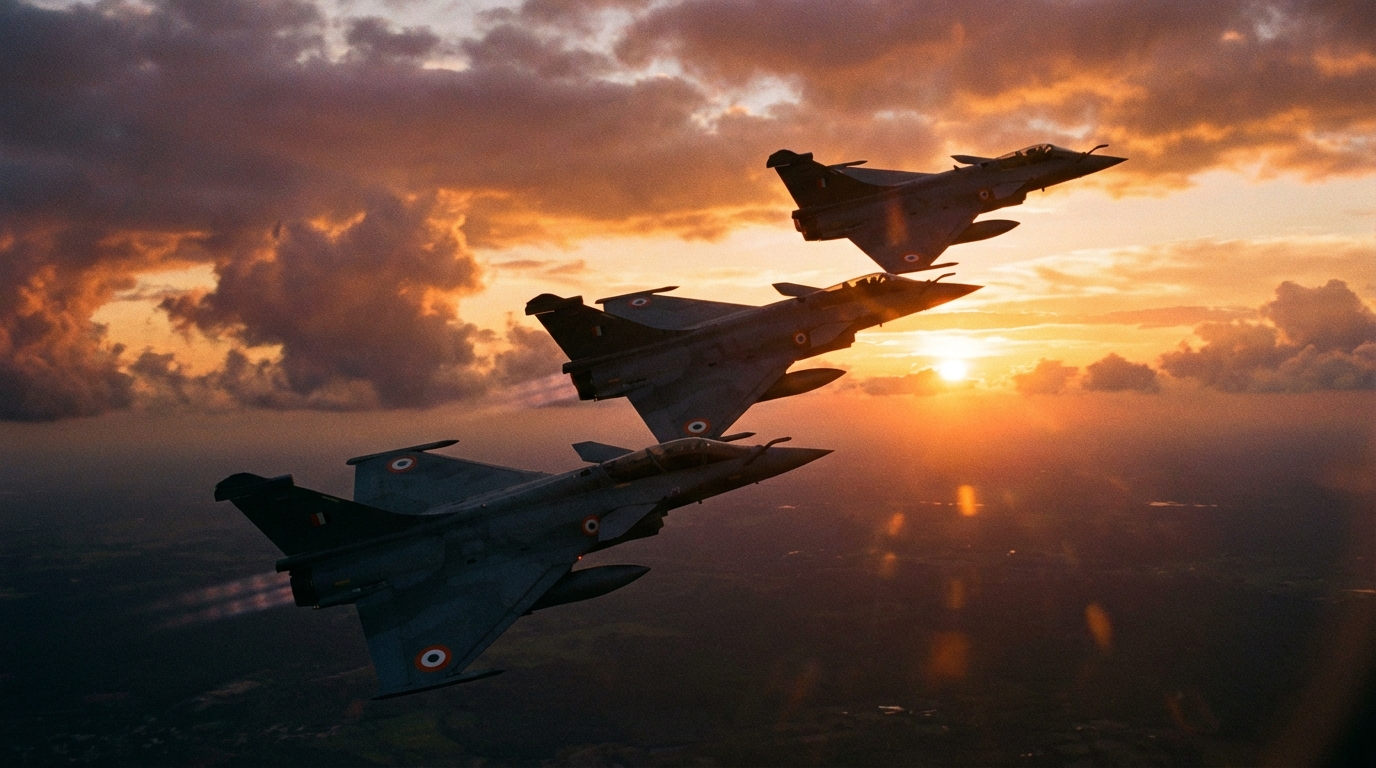
When the Defence Procurement Board cleared the Rs 3.25 lakh crore deal for 114 Rafale fighter jets last week, it marked more than a procurement decision. It marked a strategic verdict: France has become India's most reliable defense partner.
Not America. Not Russia. France.
The deal is historic—India's largest defense purchase ever, with 18 aircraft arriving ready-to-fly and 96 more manufactured in India with up to 60% indigenous content. The jets will come in the advanced F4 configuration, with an option to upgrade to F5 when available.
But let us be clear about what this deal represents. The Rafale is a bridge, not a destination. It is a stop-gap arrangement born of necessity—a way to arrest the Indian Air Force's alarming squadron depletion while India builds what it truly needs: fighters designed, developed, and manufactured entirely at home.
Why France, Not America
The contrast with American defense partnership could not be starker.
The United States, despite two decades of strategic embrace, has never offered India the kind of technology transfer that France provides. The F-35, America's crown jewel, remains off-limits—partly due to cost, partly due to India's Russian ties, but mostly due to Washington's reflexive reluctance to share critical technologies with anyone.
Consider the terms America offers. No source code access. No licensed production. No integration of indigenous weapons without American approval. Every software update, every modification, every bullet fired requires American blessing. This is not partnership. This is dependency dressed in alliance language.
France operates differently.
The Rafale deal includes technology transfer, indigenous manufacturing, and integration of Indian weapons systems. Dassault has agreed to work with Indian firms—TATA, Mahindra, Dynamatic Technologies, and others—to build aircraft components locally. The assembly line at Nagpur will employ Indian workers and develop Indian capabilities.
More importantly, France has never weaponized defense cooperation for political leverage. When India tested nuclear weapons in 1998, the United States imposed sanctions. France did not. When India bought Russian S-400 missiles, Washington threatened CAATSA penalties. France voiced no objection. When India refused to condemn Russia over Ukraine, American officials lectured. France understood.
This reliability matters. Defense procurement is not a one-time transaction—it is a multi-decade relationship involving maintenance, upgrades, spare parts, and training. A fighter jet purchased today will serve for thirty years. India cannot afford a supplier that might turn hostile with every change of administration.
France has proven it will not.
The Squadron Crisis
The urgency of the Rafale deal reflects a grim reality: the Indian Air Force is shrinking.
The IAF's sanctioned strength is 42 fighter squadrons. Current strength stands at 29—a gap of 13 squadrons, each representing approximately 18 aircraft. Retired MiG-21s and aging Jaguars have not been replaced fast enough. The indigenous Tejas program, while successful, has not scaled to fill the void.
Meanwhile, the threat environment has intensified. China has deployed over 1,500 fourth and fifth-generation fighters, with the J-20 stealth fighter now operational in significant numbers. Pakistan, though smaller, fields a modern fleet including JF-17s and F-16s. A two-front war scenario—however unlikely—requires an air force that can establish superiority on both fronts simultaneously.
The current fleet cannot do this.
The 114 Rafales, added to the 36 already in service and 26 ordered for the Navy, will bring India's Rafale count to 176. This represents roughly ten squadrons of a proven, multi-role aircraft with air superiority, ground attack, and nuclear delivery capabilities.
It buys time. But time for what?
The SU-57 Question
Russia's offer hangs in the background, tantalizing and complicated.
During President Putin's December 2025 visit, Moscow made its most ambitious military pitch in decades: full licensed production of the Su-57E fifth-generation stealth fighter in India, with technology transfer, source code access, and assistance with India's own AMCA program.
The offer is unprecedented. No other country has been offered source code for a fifth-generation fighter. The Su-57E would give India immediate access to stealth technology, supercruise capability, and advanced avionics—capabilities the Rafale, for all its excellence, lacks.
Yet India has not said yes.
The hesitation is understandable. India pulled out of the joint Fifth-Generation Fighter Aircraft (FGFA) program in 2018, citing cost overruns, delivery delays, and over 40 design changes that went unaddressed. The Su-57's combat record in Ukraine has been limited, raising questions about its stealth characteristics and reliability. Russian industry, under sanctions, may struggle to deliver on ambitious promises.
But here is the strategic logic India should consider: the Su-57 offer deserves continued pursuit, even if not immediate acceptance.
Russia, like France, has never weaponized defense supplies. Through sanctions, wars, and diplomatic crises, Moscow has delivered what it promised. The S-400 arrived on schedule despite American threats. Spare parts for India's massive Russian fleet continue flowing. This reliability has value.
More critically, the Su-57 offer includes something the Rafale does not: fifth-generation technology that India can study, adapt, and ultimately improve upon for its indigenous programs. Even a limited purchase—two squadrons in fly-away condition, as reportedly under consideration—would provide the IAF with stealth capability while Indian engineers learn from the design.
The SU-57 may not arrive in the timeframe India needs to address the immediate squadron crisis. Production has been slow; Russia's own air force has received fewer than 30 aircraft. But as a medium-term complement to the Rafale, and as a bridge to indigenous fifth-generation capability, the offer should remain on the table.
India should not reject Russia's hand. It should hold it loosely while building its own strength.
The Indigenous Imperative
The true goal is neither French nor Russian. It is Indian.
The Advanced Medium Combat Aircraft (AMCA) represents India's most ambitious aerospace project—a 5.5-generation stealth fighter designed entirely by Indian engineers, built by Indian industry, and operated without foreign permission.
The timeline is set. DRDO Chairman Dr. Samir V. Kamat confirmed in January 2026 that the AMCA will roll out by end of 2028, with first flight in early 2029 and induction expected by 2035. Twenty-eight private sector firms have expressed interest in partnering with HAL. The Rs 15,000 crore prototype development program is underway.
The aircraft's specifications are formidable: 25 tonnes, internal weapons bays for stealth operations, super-cruise capability, and the Uttam AESA radar developed indigenously. The Mk-1 variant will use American GE F414 engines—an acceptable interim dependency—while the Mk-2 will fly on a 120-kilonewton engine co-developed with France's Safran.
This is the destination. The Rafale is the bridge. The SU-57 could be a parallel path of learning.
India's modernization roadmap envisions 120 AMCA fighters across six squadrons, complementing the Tejas Mk-2 (first flight expected June 2026) and the naval TEDBF. Within two decades, the IAF could operate a fleet that is majority indigenous—designed for Indian requirements, built by Indian workers, maintained without foreign approval.
This is strategic autonomy in its truest form.
The Dependency Trap
The Rafale deal, for all its merits, carries risks that India must acknowledge.
Sixty percent indigenous content still means forty percent foreign content—engines, avionics, certain components that India cannot yet produce. This creates supply chain vulnerabilities. It requires continued good relations with Paris. It means French approval for modifications and upgrades.
The GE engines in the AMCA Mk-1 create similar dependencies with America—dependencies that become dangerous when Washington threatens 500% tariffs and questions whether allies deserve protection.
Every foreign component is a potential chokepoint. Every licensed technology is a constraint on sovereign action. Every maintenance contract is a relationship that must be managed.
India learned this lesson painfully during the 1998 sanctions, when American components in Indian systems suddenly became unavailable. It is learning again as American rhetoric turns hostile despite decades of partnership-building.
The only permanent solution is indigenous capability. Not just assembly, not just licensed production, but design, development, testing, and manufacturing—the full stack of aerospace competence.
This takes time. It takes money. It takes patience through inevitable failures and delays. But it is the only path that leads to true independence.
The French Model
There is a reason France succeeds where America fails as a defense partner, and it is worth understanding.
France itself pursued strategic autonomy during the Cold War. De Gaulle withdrew from NATO's integrated command, built an independent nuclear deterrent, and created a domestic defense industry that could equip French forces without American permission. France understands, in a way America does not, that sovereignty requires self-reliance.
This experience shapes French export policy. Paris does not view technology transfer as a threat to French security—it views it as a tool for building lasting partnerships. A customer who can maintain and modify French equipment is a customer for life. A customer who depends entirely on French technicians is a customer waiting to defect.
The Rafale deal reflects this philosophy. France is not merely selling aircraft; it is building Indian industrial capability. TATA, Mahindra, and other firms will emerge from this program with aerospace expertise they did not have before. Indian engineers will learn French techniques. Indian factories will acquire French tolerances.
When India builds the AMCA, some of what it knows will come from this partnership.
America could offer the same—but chooses not to. The difference is cultural as much as strategic: France sees partners, America sees clients.
The Path Forward
India's air force modernization must proceed on three tracks simultaneously.
Track One: The Rafale Bridge
Complete the 114-aircraft deal expeditiously. Maximize technology transfer. Push indigenous content above 60%. Build the supplier ecosystem. Train Indian engineers. Use the Rafale as a learning platform while filling the squadron gap.
Track Two: The Russian Option
Keep the SU-57 conversation alive. A limited purchase—two squadrons, manufactured at HAL's Nashik facility—could provide fifth-generation capability faster than AMCA while transferring stealth technology India can study. Do not reject Moscow's hand; the offer may not last forever, and Russia's reliability deserves reciprocity.
Track Three: The Indigenous Destination
Accelerate AMCA with every resource available. Tejas Mk-2, TEDBF, and AMCA must succeed—not as prestige projects but as the foundation of India's future air power. Accept that timelines will slip. Accept that costs will overrun. But do not accept failure, because failure means permanent dependence.
The Rafale is excellent. The SU-57 is tempting. But neither is Indian.
Only the AMCA, flawed and delayed as it may be, represents true strategic autonomy. Only indigenous development ensures that India's air force answers to no one but India.
The Gambit's Meaning
The Rafale gambit is a calculated risk.
India is betting that France will remain reliable for the three decades these aircraft will serve. It is betting that indigenous capability will mature before the fleet ages out. It is betting that the bridge will hold long enough to reach the other side.
These are reasonable bets. France has earned trust. Indian aerospace is advancing. The destination, though distant, is visible.
But India must never forget that the Rafale is a foreign aircraft, purchased because Indian alternatives were not ready in time. The celebration of this deal should be muted—it represents necessity, not triumph.
The triumph will come when an AMCA squadron takes to the skies, powered by Indian engines, armed with Indian missiles, controlled by Indian software, and beholden to no foreign power.
That day is coming. The Rafale buys time to reach it.
Use that time wisely.
The Rafale deal is expected to be formally signed by late 2026, with deliveries beginning in 2028. Meanwhile, the AMCA prototype rolls out the same year. India's aerospace future is being built on both tracks—one foreign, one indigenous. Only one leads to true independence.