By Ramachandran Rajeev Kumar — 2026-02-03
The Necessary Deal: Why Trump and Modi Had No Choice
Neither a victory nor a capitulation—just two proud nations recognizing reality
Four days ago, we wrote about "The Trade Freeze"—how India-US trade talks had collapsed after a three-Friday ultimatum, and how Modi had pivoted to the European Union instead.
Yesterday, everything changed. Or did it?
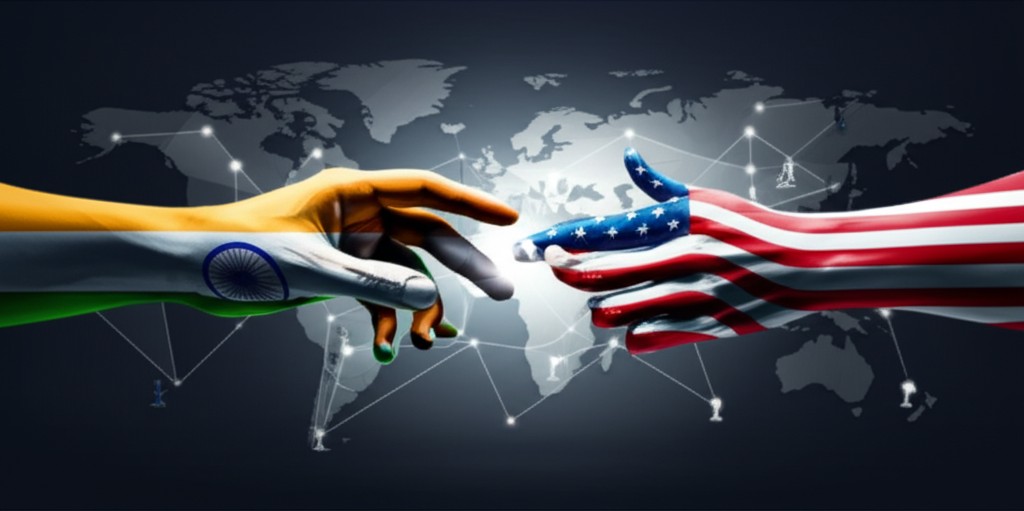
President Trump announced that the United States and India had reached a trade deal. Tariffs would drop from a punishing 50% to a more manageable 18%. The secondary 25% levy over Russian oil purchases would be scrapped. In return, Modi committed to "stop buying Russian oil" and purchase over $500 billion in American energy, technology, and agricultural products.
Commerce Minister Piyush Goyal, not to be outdone by the EU's "mother of all deals" rhetoric, promptly dubbed this the "father of all deals."
The markets rejoiced. GIFT Nifty surged 650 points. Commentators declared victory for Indian diplomacy.
But the real story is simpler and more profound: neither side could afford to keep drifting apart.
The Arithmetic of Necessity
Strip away the bombast, and the logic becomes clear.
For Trump, the calculus is increasingly uncomfortable. In just two weeks since taking office, he has managed to antagonize Canada, threaten Europe with tariffs, and keep China on edge. Adding India—the world's fifth-largest economy and fastest-growing major market—to the list of alienated partners was becoming strategically untenable.
The United States cannot simultaneously have strained relations with the European Union, Canada, Mexico, and India while expecting to contain China. The math doesn't work. Someone had to be moved from the adversary column to the partner column, and India was the obvious candidate.
There's also a domestic dimension Trump understands viscerally: the Indian-American diaspora. In the 2024 presidential election, Indian Americans—traditionally Democratic-leaning—showed a notable shift toward Trump. The community, now over five million strong, is affluent, politically engaged, and increasingly influential in swing states. Keeping India in the penalty box serves no electoral purpose.
For India, the calculation was equally straightforward but required more patience to reveal itself.
New Delhi had already demonstrated it wouldn't be bullied. The EU deal—signed with theatrical timing just days before this announcement—proved India had options. The message to Washington was clear: we don't need you as desperately as you think.
But India isn't foolish enough to believe its own propaganda. Despite the "Look East" rhetoric and the BRICS solidarity and the EU embrace, New Delhi knows that its long-term strategic interests align more naturally with Washington than with Beijing. Both are democracies. Both face a rising China with some apprehension. Both have large, entrepreneurial diasporas that bind them together.
The trust deficit with China runs too deep. The 2020 Galwan clash—as General Naravane's suppressed memoir reportedly details—isn't forgotten. Every infrastructure project Beijing announces in Pakistan or Sri Lanka or Myanmar reminds India why it needs a counterweight.
America, for all its transactional unpredictability under Trump, remains that counterweight.
What India Actually Gave Up
The headlines focus on the Russian oil commitment, and understandably so. India currently imports roughly 1.5 million barrels of Russian crude daily—more than a third of its total oil imports. This isn't just an energy arrangement; it's been a significant cost saving during years of elevated global prices.
But let's be clear-eyed about what "stopping Russian oil purchases" actually means in practice.
First, the deal text hasn't been published. As trade experts have noted, nothing is official until the Federal Register notice appears with dates, tariff codes, and specific terms. The announcement is political theater until the paperwork materializes.
Second, "stopping" could mean many things. A gradual phase-out? A percentage reduction? Exemptions for certain contracts? The Trump administration has shown flexibility on such definitions before—remember the various "waivers" that appeared during the first-term Iran sanctions?
Third, India has been offered an alternative: American oil and, intriguingly, Venezuelan crude. The Venezuela angle suggests Washington is already thinking about how to make the numbers work for New Delhi without Moscow's barrels.
The $500 billion purchase commitment sounds enormous, but spread over several years and across energy, technology, agriculture, and defense, it's less radical than it appears. India was already buying American—LNG, Boeing aircraft, defense systems, agricultural commodities. This formalizes and perhaps accelerates existing trends.
What Trump Actually Gave Up
The reduction from 50% to 18% tariffs is significant but not as generous as it seems.
The 50% figure was always punitive—a negotiating position rather than a sustainable policy. It included a 25% "reciprocal" tariff based on the fiction that India charges 52% average tariffs on American goods (a figure that conflates bound rates, applied rates, and specific product categories in misleading ways). It also included a 25% "secondary" tariff specifically targeting Russian oil purchases.
At 18%, Indian goods remain at a disadvantage compared to pre-Trump levels, but the rate is workable. Indian exporters can compete at 18% in ways they simply couldn't at 50%.
Trump also gave up something less tangible but equally important: the posture of maximum pressure. The "three Fridays" ultimatum—with its implicit demand that Modi personally call to beg—was designed to establish hierarchy. India's refusal to comply, followed by the EU deal, followed by this deal, establishes something different: that New Delhi will negotiate but won't be subordinated.
That's a precedent Trump presumably didn't want to set.
The China Factor No One Mentions
Here's what neither Washington nor New Delhi will say explicitly: this deal is really about Beijing.
Every day that India and America spent in a tariff war was a day that made Chinese strategists smile. The prospect of India drifting toward neutrality—or worse, toward a more Beijing-friendly stance within BRICS—was a genuine concern in certain Washington circles.
India, meanwhile, was watching China's moves with its characteristic strategic patience. The boundary talks that resumed in 2024. The selective de-escalation at certain friction points. The charm offensive toward Indian business delegations.
Beijing has been probing whether the US-India relationship has a price. Whether enough American tariffs and enough Chinese smiles might shift the balance.
This deal is, among other things, an answer to that probe: no.
India may buy Russian oil (or may not, depending on how the fine print reads). India may criticize American positions at the UN. India may maintain its "strategic autonomy" rhetoric. But when the chips are down, New Delhi prefers Washington to Beijing. The trust deficit with China is simply too large to overcome through trade blandishments alone.
The Art of the Possible
With Trump, nothing is ever final. The man who announced this deal could announce its revision next week if something displeases him. The tariff rates could change. The Russian oil provisions could be "reconsidered." New demands could emerge.
This is the nature of dealing with the current American administration, and Indian policymakers know it well.
But here's what's different from the previous deadlock: both sides have now acknowledged they need the relationship to work. The public commitments—from both Trump and Modi—create a floor beneath which the relationship is unlikely to fall. Walking this back entirely would embarrass both leaders in ways neither can afford.
Trump needs wins. He needs to show that his tariff strategy produces results, not just chaos. The India deal—if it holds—is evidence that pressure tactics can lead to agreements, not just alienation.
Modi needs stability. The Indian economy is performing well, but it's not immune to trade disruptions. Having secured the EU deal and now the US deal within a single week, he can claim—with some justification—that India has upgraded its position with both major Western economic blocs simultaneously.
What Comes Next
The next few weeks will reveal whether this is a genuine breakthrough or elaborate theater.
Watch for:
The fine print. When does the Federal Register notice appear? What are the actual terms on Russian oil? Are there phase-in periods, exemptions, review mechanisms?
The implementation. Does India actually reduce Russian crude imports? How quickly? What happens to the refineries configured for Russian grades?
The second act. Trump has shown he views trade deals as ongoing negotiations, not settled agreements. What new demands might emerge once this deal is "done"?
The China response. Beijing will be watching closely. Expect some combination of economic inducements toward India and rhetorical shots at American "bullying."
The Bottom Line
This deal is neither the triumph Indian nationalists will claim nor the capitulation that critics will allege.
It's what happens when two proud, sometimes prickly democracies recognize that the world is too dangerous and too competitive for them to remain at odds. When the alternative to dealing with each other is dealing with China—on terms neither would prefer—pragmatism prevails.
Trump is a dealmaker. By now, it must have been obvious to him that India would not have budged beyond this point—and that pushing harder would only accelerate New Delhi's pivot toward other partners, including potentially Beijing itself.
Modi is a strategist. He knows that theatrical autonomy is less valuable than practical partnerships, and that India's long-term interests require a functional relationship with whoever occupies the White House.
Neither man got everything he wanted. Both got enough to declare victory.
That's not betrayal. That's not surrender. That's diplomacy.
The details will determine whether this moment becomes a genuine reset or merely another chapter in an endless negotiation. But for now, at least, the world's two largest democracies have remembered why they need each other.
And in the current geopolitical climate, that counts for something.