By BarathVector Editorial — 2026-06-12
The Vision of 2047
The aspiration of a "Viksit Bharat" (Developed India) by the centenary of national independence in 2047 is more than a developmental target—it is a generational contract. Reaching this milestone requires India to sustain high single-digit growth for the next two decades, transition to a green economy, and ensure that the fruits of development are equitably distributed across its vast geography.
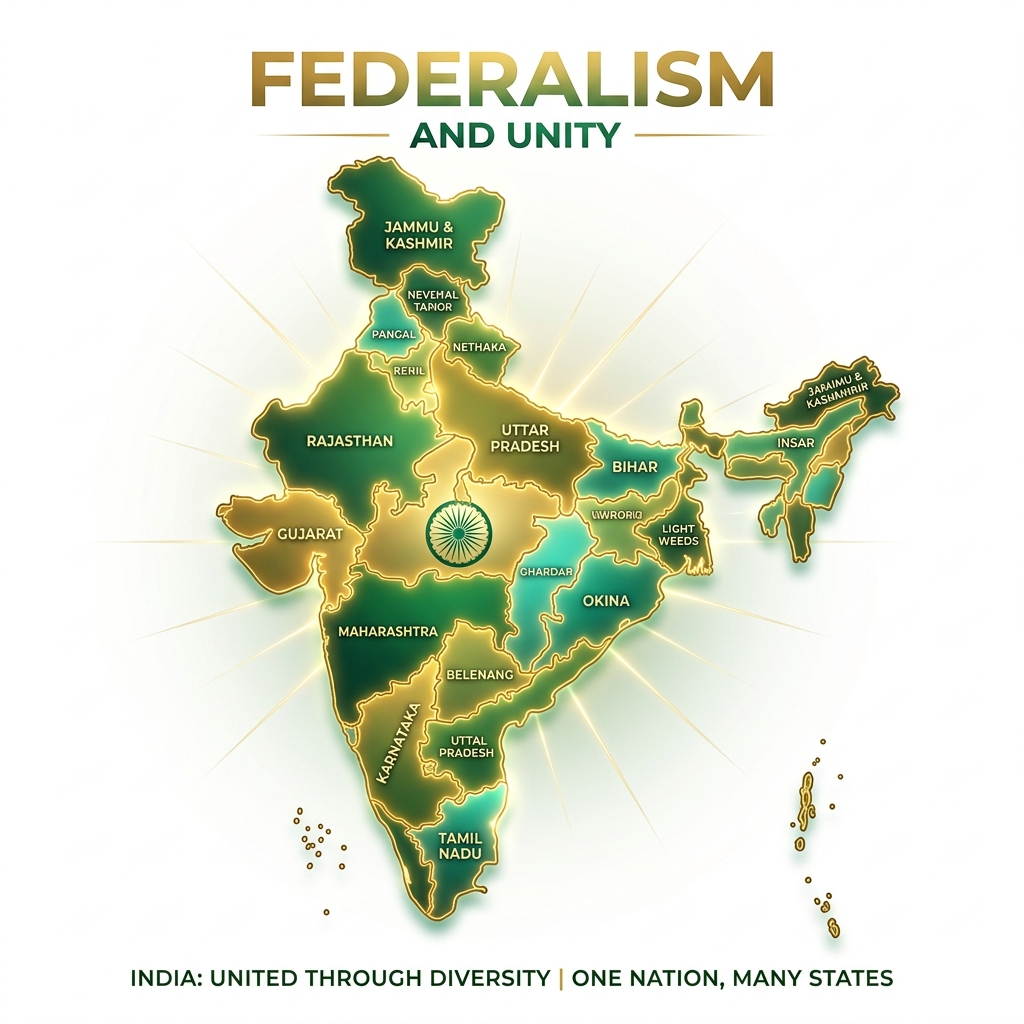
However, the architecture of India's economy is structurally federal. The implementation of policy—from agriculture and education to industrial licensing and public health—occurs primarily at the state level. Consequently, the vision of 2047 cannot be realized through top-down mandates from New Delhi. It requires a collaborative partnership where state governments are not merely implementers of central schemes, but active co-authors of the national development model.
At the 11th Governing Council meeting of NITI Aayog, chaired by Prime Minister Narendra Modi, this federal imperative was placed at the center of the economic agenda. The consensus was clear: the path to developed-nation status must be built on the foundation of cooperative federalism.
Decentralizing the Development Blueprint
NITI Aayog (National Institution for Transforming India) was established in 2015 to replace the Planning Commission, marking a shift from centralized allocation to cooperative policymaking. While the Planning Commission operated on a command-style model, NITI Aayog was designed to act as a policy think tank, providing a platform for states to raise concerns and share best practices.
Yet, structural challenges remain. Critics argue that despite the change in nomenclature, fiscal power remains concentrated at the center, with states often relying on centrally sponsored schemes that may not align with local needs.
For the 2047 vision to succeed, India must deepen cooperative federalism through several key steps:
1. Tailoring Policies to Regional Realities
A uniform policy approach fails in an economy as diverse as India's. The developmental challenges of a coastal manufacturing state like Tamil Nadu are fundamentally different from those of a landlocked agrarian state like Bihar or a mountain state like Himachal Pradesh. NITI Aayog must facilitate regional planning circles where states with similar geographical and economic characteristics can design shared strategies.
2. Strengthening Digital Public Infrastructure (DPI)
The success of India's digital public infrastructure—exemplified by Unified Payments Interface (UPI), Aadhaar, and the Open Network for Digital Commerce (ONDC)—demonstrates the power of open, shared platforms. The center must provide the technology stacks, but states should be empowered to build local public services on top of them. This allows for localized innovation while maintaining national interoperability.
3. Harnessing State-Level Competitive Federalism
Healthy competition among states to attract capital, optimize regulatory processes, and improve governance can drive national progress. NITI Aayog's indices—such as the State Health Index and the Innovation Index—have successfully fostered this competition. However, this must be balanced with "collaborative federalism," where developed states partner with less developed regions to share administrative capacity and technology.
The Fiscal Dimension of Federalism
Cooperative federalism cannot exist without financial devolution. As the Finance Commission deliberates on the devolution formula for tax revenues, the relationship between the center and states must move toward fiscal trust.
States require greater flexibility in deploying funds. While the center should establish safety standards and broad policy objectives, the details of implementation must be left to local bodies. Reducing the rigidity of centrally sponsored schemes and increasing untied grants will allow state administrations to respond dynamically to local issues, leading to more efficient resource allocation.
Furthermore, states must focus on building their own fiscal capacity. Enhancing local revenue collection, reforming municipal finances, and improving the operational efficiency of state-owned entities (such as electricity distribution companies) are essential steps to reduce dependence on central transfers.
A Cooperative Path to Developed-Nation Status
The goal of a developed India by 2047 is achievable, but it requires the mobilization of every tier of government. National progress is the sum of state achievements.
NITI Aayog must continue to evolve as the primary forum for resolving federal friction. By serving as an honest broker between the center and states, facilitating regional planning, and advocating for fiscal flexibility, the institution can turn the slogan of cooperative federalism into an operational reality.
Viksit Bharat is not a project of a single government or a single party; it is a collective national effort. By treating states as equal partners, India can unleash the full potential of its federal diversity, making the road to 2047 a journey of shared progress and prosperity.