By Ramachandran Rajeev Kumar — 2026-05-30
The Monsoon Is Not Weather. It Is State Capacity.
India should stop treating the monsoon as a seasonal mood swing and start treating it as a national audit.
The India Meteorological Department has cut its 2026 southwest monsoon forecast to 90 percent of the long-period average, down from the 92 percent it projected in April. The forecast comes with a model error, as all seasonal forecasts do. It may improve. It may worsen. The distribution of rain will matter more than the all-India number. A country can survive a weak aggregate monsoon if the rain arrives at the right time, in the right districts, over the right crops.
But the warning is real enough to deserve seriousness.
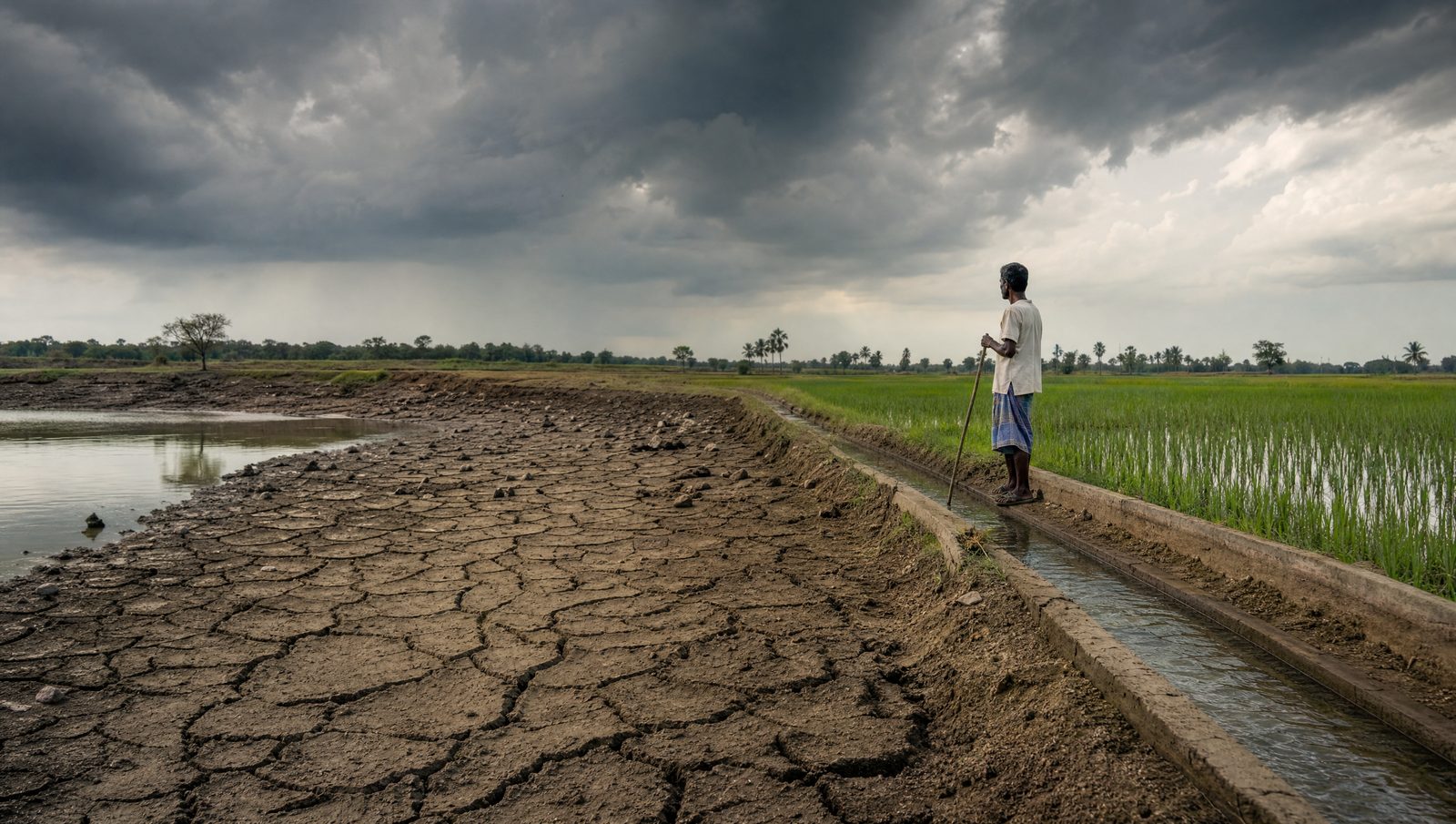
The monsoon core zone, which contains much of India's rain-fed agriculture, is expected to receive below-normal rainfall. June itself is likely to be weak. Maximum temperatures are expected to be above normal over much of the country. El Nino conditions are expected to develop during the season. This is not a small weather note tucked inside the agriculture pages. It is the opening line of India's next state-capacity examination.
If it holds, 2026 would be the weakest monsoon since 2015 — a year many Indians still remember in their grocery bills. One caveat tempers the gloom: the Indian Ocean Dipole, which has historically blunted El Nino's bite over India, is expected to stay neutral this season. The all-India number hides as much as it reveals.
The question is not whether India can pray for rain. The question is whether India can govern before the rain fails.
The Forecast Is A Governance Signal
The technical number is simple: 90 percent of the long-period average. The long-period average for June to September rainfall, calculated on the 1971-2020 period, is 87 centimetres. Below-normal rainfall is not a forecast of national collapse. India has irrigation, buffer stocks, procurement systems, crop insurance, central transfers, state relief machinery and weather advisories. The state is not helpless.
But that is precisely why this matters.
A weak monsoon exposes the gap between policy capacity on paper and delivery capacity on the ground. It asks whether the farmer in Vidarbha receives a useful sowing advisory before he wastes seed. It asks whether a district administration knows which tanks are dry and which villages need tanker planning before WhatsApp outrage starts. It asks whether pulses and oilseeds are treated as food-security crops, or as inflation headlines to be managed after the price spike. It asks whether reservoir operations are coordinated across drinking water, irrigation and hydropower, or left to departments that speak only when the crisis has already arrived.
The monsoon is not only rain. It is coordination.
Food Security Is Not Procurement Alone
India's food-security imagination remains too rice-and-wheat heavy. That made sense in the age of famine anxiety. It does not fully fit the age of nutritional inflation.
Rice is better protected by irrigation and procurement. Wheat is a rabi crop and depends on a different seasonal rhythm. The real pressure points in a weak monsoon year are often pulses, oilseeds, soybean, cotton, sugarcane in stressed zones and fodder. These are not secondary crops for the household budget. Pulses decide protein affordability. Oilseeds shape edible-oil imports. Fodder affects milk prices. Cotton affects rural cash flows. Sugarcane affects water politics.
If the monsoon core zone underperforms, India should expect stress to move through the system in waves: first sowing decisions, then re-sowing costs, then mandi arrivals, then food prices, then household substitutions, then rural consumption. The final inflation number that appears in a Reserve Bank chart is only the last stop. The pressure begins months earlier, in a field where the first sowing failed and the second sowing required credit.
That is why the response cannot begin with retail price controls. It has to begin with agronomy.
The Centre says it has prepared extra seed availability for kharif contingencies. Good. But seed is only useful when matched to district rainfall, soil moisture, crop choice and extension advice. A state-capacity response would push from generic preparedness to district-level crop steering: where to delay paddy, where to shift to millets, where pulses need protection, where fodder banks must be built, where diesel-pump dependence will turn into a debt trap.
Food security is no longer just the ability to procure grain after harvest. It is the ability to prevent the wrong crop from being planted in the wrong place at the wrong time.
Water Is The Real Balance Sheet
India debates fiscal deficits with seriousness. It does not debate water deficits with the same discipline.
Reservoir storage is the hidden balance sheet behind a weak monsoon year. It decides how long cities can avoid cuts, how much irrigation can be released, how much hydropower can run, and how quickly rural stress spills into urban politics. Central Water Commission data is monitored every week. The question is whether the data is used as a command system or treated as a bulletin.
Water management cannot remain an emergency reflex. In a below-normal monsoon year, India needs transparent reservoir dashboards, state-level water-allocation protocols, city demand controls before panic, and serious enforcement against leakage and waste. The politically easy path is to wait, hope, and then announce relief. The responsible path is to ration uncertainty early.
This is where the phrase "national security" belongs.
National security is not only missiles, borders and aircraft. It is whether a country can keep food prices stable, water available, rural incomes alive and social trust intact during a climatic shock. A weak monsoon can do what an enemy cannot: stress millions of households at once. It can weaken purchasing power, raise subsidy demand, complicate monetary policy, reduce hydropower, increase diesel use, hit animal health and force migration from already stressed districts.
That does not make the monsoon an enemy. It makes state capacity the shield.
Inflation Is Politics By Other Means
The Reserve Bank can manage expectations. It cannot make rain.
A weak monsoon does not automatically produce runaway inflation. Timing and distribution matter. Imports, buffer stocks and price intervention can soften the hit. But food inflation has a nasty political quality: it is democratic, immediate and unforgiving. It does not wait for the quarterly GDP release. It arrives in the kitchen.
If pulses rise, the poor reduce protein. If vegetables spike, households substitute down. If fodder tightens, milk follows. If edible oils become expensive, the import bill becomes a household bill. If rural demand weakens, the small-town economy feels it before the macro models do.
This is why India should not wait for CPI to confirm what rainfall maps are already warning. The right response is pre-emptive and boring: import optionality for pulses and edible oils, anti-hoarding enforcement, accurate sowing data, faster crop-insurance triggers, mandi intelligence, fodder planning, and public communication that does not pretend uncertainty is weakness.
Governments often fear admitting risk. Serious governments know that early risk communication is itself a stabilizer.
The Heat Layer
The weak monsoon forecast comes with another warning: a hotter June across much of India.
Heat changes the economic meaning of delayed rain. It increases irrigation demand precisely when water is scarce. It reduces labour productivity. It raises electricity demand for cooling. It stresses livestock. It dries soil moisture faster. It turns a rain shortfall into a livelihood shock.
India's heat-action plans have improved, but too many remain city documents rather than labour documents. The monsoon response must include work-hour guidance, drinking-water points, health alerts, school protocols and protection for outdoor workers. A construction worker in Ahmedabad or a farm labourer in Telangana is not helped by a PDF that never reaches the site.
Climate adaptation is not a seminar. It is delivery.
What Seriousness Looks Like
The Centre and states do not need a new slogan. They need execution in six lanes.
First, district-level sowing advisories must move from suggestion to operational command. Farmers need crop-specific guidance tied to local rainfall, not general monsoon commentary.
Second, seed and fodder reserves must be placed before the panic point. Re-sowing is a liquidity problem as much as an agronomic one.
Third, reservoir management must be made public enough to build trust. Citizens accept discipline more easily when they can see the numbers.
Fourth, pulses and oilseeds must receive early attention. Waiting until prices spike is not policy; it is damage control.
Fifth, crop insurance and relief systems must be prepared for speed. A delayed payout after a failed sowing is not insurance. It is paperwork with sympathy.
Sixth, the government must speak clearly. There is no dishonour in saying: the forecast is uncertain, the risk is real, and the state is preparing.
That sentence would do more for confidence than another round of decorative optimism.
The Indian Test
There is a temptation in every weak monsoon year to turn fatalistic. India is an old civilization, the monsoon is ancient, and the farmer has always watched the sky.
That is the wrong lesson.
The point of a modern republic is to reduce the tyranny of weather. The point of infrastructure is to turn rainfall into storage. The point of science is to turn forecasts into decisions. The point of public administration is to make sure the citizen does not face the climate alone.
A 90 percent monsoon is not destiny. It is a warning.
If India handles it well, the year becomes a proof of seriousness: food prices contained, reservoirs managed, crop choices adjusted, rural demand protected, and public trust strengthened. If India handles it badly, the same forecast becomes a chain reaction: failed sowing, higher food prices, water cuts, rural stress and angry politics.
The difference is governance.
The monsoon will do what it does. The Indian state must now do what it was built to do.
BarathVector covers India's economy, climate, and state capacity. Subscribe for the weekly briefing.