By Ramachandran Rajeev Kumar — 2026-01-13
By Ramachandran Rajeev Kumar
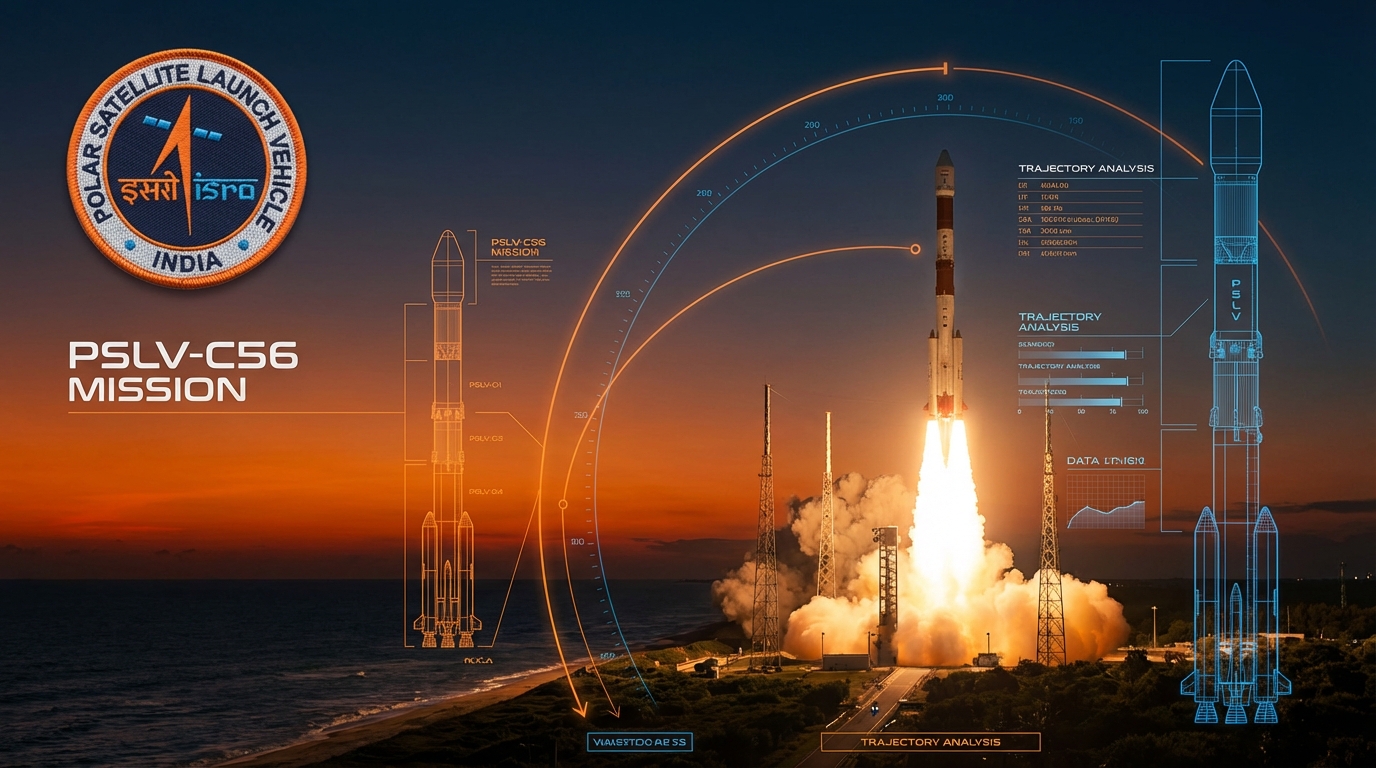
On January 13, 2026, India's Polar Satellite Launch Vehicle (PSLV) encountered an anomaly during the PSLV-C62 mission—the first Indian space launch of the year.
According to ISRO, the mission experienced a third-stage disturbance, prompting an immediate investigation. Details remain sparse as engineers analyze telemetry data, but the anomaly raised concerns given the PSLV's reputation as India's most reliable rocket.
Predictably, the headlines swung between two extremes:
The cheerleaders: "One small problem, nothing to worry about! ISRO is still amazing!"
The cynics: "ISRO's reliability is crumbling! What about Gaganyaan?"
Both are wrong.
The truth is simpler and more constructive: Anomalies are how space agencies get better.
PSLV-C62's third-stage issue is not a catastrophe. It's not a systemic failure. It's a technical challenge that ISRO will investigate, understand, and fix.
This is how engineering excellence is built—not through blind optimism or reflexive criticism, but through rigorous problem-solving.
And ISRO has proven, time and again, that it knows how to solve problems.
The PSLV: India's Workhorse
First, let's establish context: the PSLV is one of the world's most reliable launch vehicles.
Since its first successful launch in 1994, the PSLV has completed over 50 missions with a success rate exceeding 95%. It has launched satellites for India, foreign customers, interplanetary missions (Chandrayaan-1, Mars Orbiter Mission), and even deployed 104 satellites in a single mission (a world record).
The PSLV is the backbone of India's space program. It's reliable, cost-effective, and versatile. It's earned its reputation as India's space workhorse.
So when PSLV-C62 encounters an anomaly, it's news—not because ISRO is unreliable, but because the PSLV rarely has problems.
What Happened: The Third-Stage Disturbance
ISRO's official statement confirmed a "third-stage disturbance" during the PSLV-C62 mission. While full details await investigation, a third-stage issue typically involves:
- Propulsion: Engine ignition failure, fuel flow problems, or combustion instability
- Guidance: Navigation or attitude control errors
- Staging: Separation issues between stages
Third-stage problems are serious because they occur midway through the ascent, when the vehicle is already moving fast and high. If the third stage underperforms or fails, the payload may not reach its intended orbit—or may not reach orbit at all.
But here's what we don't know yet:
- Did the payload reach orbit (even if not the optimal one)?
- Was the anomaly partial (reduced performance) or total (stage failure)?
- What caused the disturbance—mechanical, software, or fuel-related?
ISRO will spend weeks analyzing data, running simulations, and identifying the root cause. This is standard procedure after any anomaly.
And this is exactly what should happen.
Anomalies Are Normal—Even for the Best
Space is hard.
Rockets are controlled explosions traveling at 7-8 kilometers per second. They operate in environments where temperatures swing from -200°C to +2000°C. They carry highly combustible fuels, precise electronics, and complex mechanisms—all of which must work perfectly for the mission to succeed.
Even the best space agencies experience anomalies:
- SpaceX: Multiple Falcon 9 failures in the early 2010s, including a dramatic explosion on the launchpad in 2016. SpaceX investigated, fixed the issues, and went on to dominate commercial spaceflight.
- NASA: The Space Shuttle program had two catastrophic failures (Challenger in 1986, Columbia in 2003), yet NASA learned from both tragedies and continued human spaceflight.
- Russia: Proton rocket failures, Soyuz anomalies, and failed Mars missions. Russia remains a major space power.
- China: Long March rocket failures, including a 2020 launch failure. China continues to build its space station and lunar program.
Anomalies don't define a space program. How you respond to them does.
ISRO has already proven it knows how to respond.
ISRO's Track Record: Bouncing Back From Setbacks
PSLV-C62 is not ISRO's first anomaly. And it won't be the last.
Consider ISRO's history:
GSLV Struggles (2000s)
The Geosynchronous Satellite Launch Vehicle (GSLV), India's heavier rocket, suffered multiple failures in the 2000s due to cryogenic engine issues. Critics declared the program doomed.
ISRO persisted. Engineers redesigned the engine. After years of work, GSLV became operational—and today, it routinely launches heavy satellites.
Chandrayaan-2 (2019)
Chandrayaan-2's lander, Vikram, lost communication during its descent to the Moon and crashed. The mission was deemed a partial failure.
But ISRO didn't give up. It analyzed the failure, redesigned the lander, and successfully landed Chandrayaan-3 on the Moon in 2023—making India the fourth country to achieve a soft landing.
PSLV-C39 (2017)
PSLV-C39 failed to deliver its payload to the correct orbit due to a heat shield separation issue. ISRO investigated, fixed the problem, and returned to successful launches within months.
Pattern: Investigate. Fix. Improve. Return stronger.
PSLV-C62 will follow the same pattern.
The Gaganyaan Question: Should We Be Worried?
The PSLV-C62 anomaly raises an obvious question: What about Gaganyaan, India's human spaceflight program?
Gaganyaan will use the GSLV Mk III (now called LVM3), not the PSLV. So PSLV anomalies don't directly impact Gaganyaan's rocket.
However, reliability culture is transferable. If ISRO identifies a systemic issue—poor quality control, software bugs, procedural lapses—that could affect all ISRO missions, including Gaganyaan.
But there's no evidence of systemic failure. One anomaly in 50+ successful missions is not a pattern. It's an outlier.
What should happen:
- ISRO investigates PSLV-C62 thoroughly (it will)
- ISRO applies any lessons to LVM3 and Gaganyaan systems (it will)
- ISRO conducts additional safety reviews before human launch (it will)
Gaganyaan is years away. There is ample time to ensure reliability. And ISRO knows that human spaceflight demands zero tolerance for preventable failures.
If anything, the PSLV-C62 anomaly is a useful wake-up call: space doesn't forgive complacency.
What ISRO Must Do: Investigate, Learn, Improve
Here's what ISRO should prioritize:
1. Transparent Investigation
ISRO should publish a detailed failure analysis report once the investigation concludes. Transparency builds trust—and helps the global space community learn from India's experience.
SpaceX publishes failure reports. NASA publishes failure reports. ISRO should too.
2. Review Similar Systems
If the third-stage issue is propulsion-related, ISRO should review all PSLV stages, GSLV stages, and upcoming LVM3 missions for similar risks.
If it's guidance-related, review software across all vehicles.
If it's quality control-related, audit manufacturing processes.
One anomaly = one lesson. Multiple anomalies = systemic problem.
3. Don't Rush Return-to-Flight
ISRO should not rush the next PSLV mission to "prove" reliability. Rushing after an anomaly is how small problems become catastrophes.
Take the time needed. Run the tests. Validate the fixes. Then return to flight.
4. Balance Ambition With Rigor
ISRO has an ambitious agenda:
- Gaganyaan (human spaceflight)
- Chandrayaan-4 (lunar sample return)
- Venus mission
- Aditya solar mission
- Space station development
Ambition is good. But ambition without rigor is recklessness.
ISRO must ensure it has the budget, workforce, and infrastructure to execute these missions safely. If that means delaying timelines, so be it.
Better to launch late and succeed than to launch early and fail.
The Bigger Picture: India's Space Ambitions Remain on Track
Let's zoom out.
India's space program has achieved extraordinary success despite operating on a fraction of NASA's budget:
- First Asian nation to reach Mars orbit (on the first attempt)
- Fourth nation to soft-land on the Moon
- World record for most satellites launched in a single mission
- Reliable commercial launch services for global customers
The PSLV-C62 anomaly doesn't erase these achievements. It's a temporary technical setback in a decades-long journey of success.
Compare India's space program to its peers:
- China: Larger budget, more frequent launches, but also more failures
- Japan: Advanced technology, but fewer launches and higher costs
- Europe: ESA is capable but expensive and slow
- Russia: Decades of experience, but aging infrastructure and declining reliability
India's space program remains competitive, cost-effective, and globally respected.
One anomaly doesn't change that.
Conclusion: Trust the Process
When PSLV-C62 encountered a third-stage disturbance, two narratives emerged:
Narrative 1: "ISRO is failing! India's space dreams are crumbling!"
Narrative 2: "No big deal, everything is fine, ISRO is perfect!"
Both are wrong.
The correct narrative is this:
ISRO encountered a technical problem. ISRO will investigate rigorously. ISRO will identify the root cause. ISRO will fix it. ISRO will return to successful launches. And India's space program will continue its upward trajectory.
This is not blind faith. This is confidence based on track record.
ISRO has faced setbacks before—GSLV failures, Chandrayaan-2 crash, PSLV-C39 anomaly—and bounced back every time.
There's no reason to believe PSLV-C62 will be different.
Space is hard. Rockets are complex. Anomalies happen. What matters is how you respond.
And ISRO's response will be what it always is: investigate, learn, improve, succeed.
The PSLV will fly again. Gaganyaan will launch. Chandrayaan-4 will bring back lunar samples. India's space ambitions remain on track.
This isn't cheerleading. It's realism.
ISRO has earned the benefit of the doubt. And it will prove, once again, that setbacks are just pauses before the next leap forward.
Ramachandran Rajeev Kumar is the founder and editor-in-chief of BarathVector. He writes on technology, innovation, and India's scientific achievements.