By Ramachandran Rajeev Kumar — 2026-01-13
By Ramachandran Rajeev Kumar
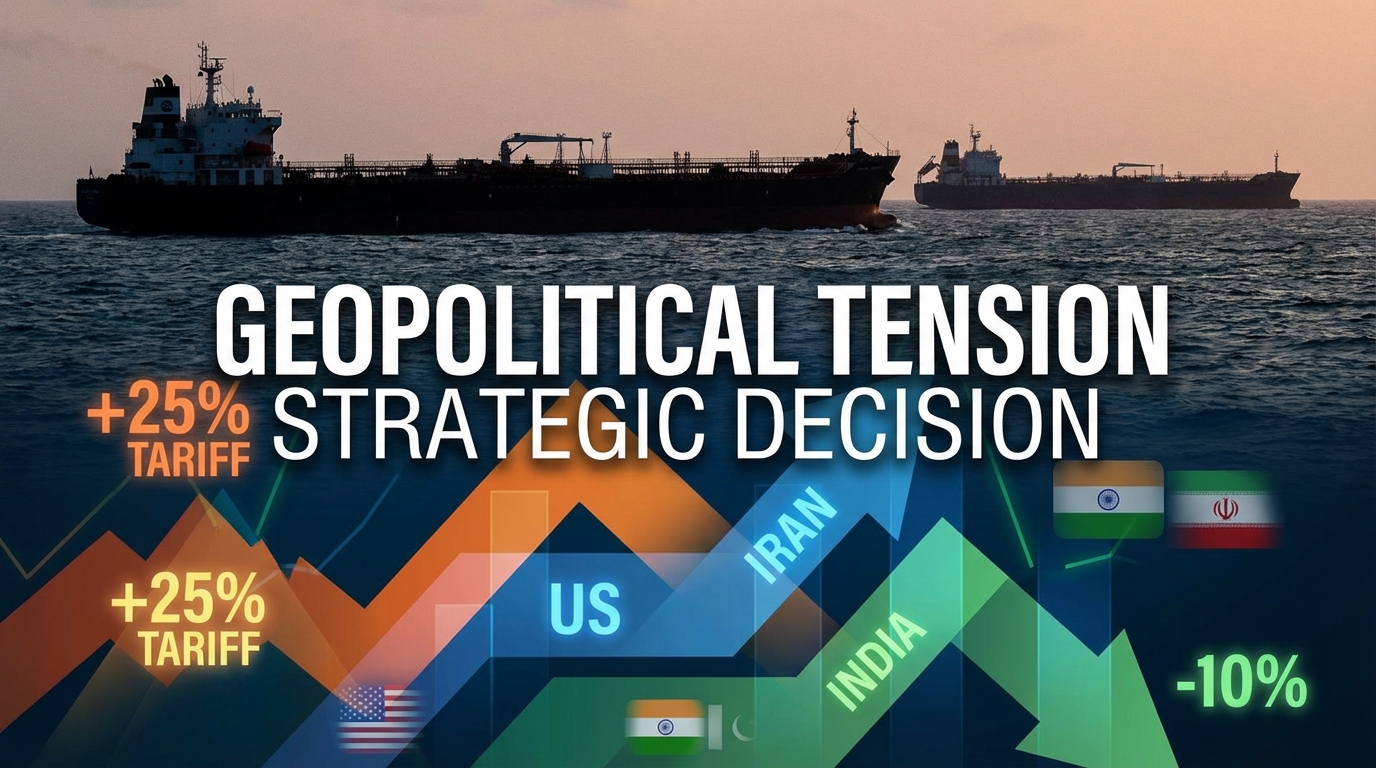
Donald Trump is back with his favorite weapon: tariffs. On January 12, he announced a 25% tariff on "any country" trading with Iran. The threat is characteristically blunt and designed to force compliance through economic pain.
For India, the headlines screamed crisis. "India caught between US and Iran!" "Energy security threatened!" "Trump's tariff trap!"
But here's what the breathless coverage missed: India barely trades with Iran anymore.
Unlike Russia—where India has built deep strategic dependence—Iran is a relationship India has already proven it can walk away from. Trump's Iran tariff isn't the crisis it appears to be. It's a negotiating opportunity disguised as a threat.
And if New Delhi plays it right, India can turn Trump's bluff into a bargaining chip.
The Numbers That Change Everything
Let's start with the data that should calm every panicked analyst.
India's current oil imports from Iran: Approximately zero percent of total crude imports in 2025-26.
Read that again. India, which once depended heavily on Iranian crude, now sources virtually nothing from Tehran. According to trade data, India currently imports negligible volumes from Iran—so small they barely register in official statistics.
Compare this to Russia:
- Russia: 36-37% of India's oil imports (1.14 million barrels per day in December 2025)
- Iran: ~0% of India's oil imports
Russia is India's largest oil supplier. Iran isn't even in the top ten.
So when Trump threatens a 25% tariff on countries trading with Iran, he's essentially threatening India over a trade relationship that has already withered to statistical insignificance.
This is not the Russia problem. This is not even a problem.
Been There, Done That: India Already Pivoted Once
Here's the second fact that should temper the alarm: India has already done this.
When Trump's first administration withdrew from the Iran nuclear deal (JCPOA) in May 2018 and reimposed sanctions on Tehran, India complied. By 2020, India had stopped importing Iranian crude entirely.
The context matters: In 2017-2018, Iran supplied 11% of India's crude oil imports, making it India's third-largest supplier. Iranian oil was attractive—priced at a discount, geographically close, and paid for in rupees rather than dollars (easing India's forex pressure).
But when Trump demanded compliance with sanctions, India—after extracting some concessions and waivers—eventually cut Iranian imports to zero.
The sky didn't fall. India's economy didn't collapse. The energy grid stayed powered.
India simply bought more oil from Saudi Arabia, the UAE, Iraq, and other Middle Eastern suppliers who had spare capacity. It wasn't painless—Iranian crude was cheaper—but it was entirely manageable.
So when Trump now threatens tariffs over Iran trade, he's essentially demanding India do something India already did under his first presidency.
This isn't new. It's a rerun.
The Russia Comparison: Why Iran Is the Easy One
To understand why Trump's Iran tariff is a non-crisis, compare it to the far more difficult Russia situation.
India-Russia ties are deep and strategic:
- Energy: 36% of India's crude oil comes from Russia (massive dependence)
- Defense: 60-70% of India's military hardware is Russian-origin (S-400, frigates, submarines, ammunition)
- Geopolitics: Russia is a counterweight to China in Central Asia and a veto-wielding UNSC member that has historically backed India
If Trump demanded India cut Russian oil imports tomorrow, New Delhi would face an existential dilemma. Where would India find 1.14 million barrels per day of discounted crude? How would India maintain its military if Russian spare parts and upgrades stop flowing? What happens to India's strategic autonomy if it caves to US pressure on Russia?
India-Russia ties are built on decades of strategic convergence, Cold War-era trust, and contemporary interests. Disengaging would be painful, expensive, and geopolitically destabilizing.
India-Iran ties, by contrast, are shallow and transactional:
- Energy: Already near-zero oil imports
- Defense: No significant military ties (unlike Russia)
- Geopolitics: Limited strategic convergence (Iran backs Pakistan on Kashmir, India doesn't need Iran for balance)
Yes, India has the Chabahar port project in Iran (a strategic foothold for Afghanistan access and bypassing Pakistan). But Chabahar is small-scale and largely symbolic. It's not a strategic linchpin.
The bottom line: India can disengage from Iran with minimal pain. It already has.
Disengaging from Russia would cost India tens of billions of dollars and years of strategic recalibration. Disengaging from Iran costs India... almost nothing, because it's already done.
The Alternatives Are Ready
Even if India still imported significant volumes from Iran (which it doesn't), alternative suppliers are standing by.
India currently imports crude oil from around 40 countries, including:
- Saudi Arabia: India's historical anchor supplier
- UAE: Close ties, spare capacity
- Iraq: Major supplier with growing output
- USA: Increasingly supplying LNG and crude to India
Around 53% of India's imported oil comes from Middle Eastern suppliers. These countries have spare production capacity and are eager to expand market share.
When India stopped Iranian imports in 2020, Saudi Arabia and the UAE filled the gap seamlessly. They can do it again—though it's a moot point, since India barely imports from Iran anymore.
The idea that India is "trapped" by Trump's Iran tariff is absurd. India has already escaped the trap.
The Real Trap: Setting Precedent
So if India doesn't depend on Iran, why is Trump even bothering with this tariff threat?
Two reasons:
First, domestic politics. Trump campaigned on maximum pressure against Iran. Threatening tariffs on countries trading with Tehran plays well with his base and pro-Israel constituencies. It costs Trump nothing politically—and if India complies (as it already has), Trump can claim victory.
Second, and more importantly: precedent.
Trump wants to establish that he can use tariffs to force India's hand on geopolitical issues. If India publicly caves on Iran (even though India isn't really caving, since there's nothing to cave on), Trump can claim he forced India to bend.
Then comes the next demand: Russia.
"India complied on Iran, so now comply on Russia. Cut Russian oil imports, or face 25% tariffs on your exports to the US."
That's the real trap. Not the Iran tariff itself, but the precedent it sets.
Trump wants India to establish a pattern: when the US demands, India complies.
How India Should Respond: Turn the Bluff Into a Bargaining Chip
Here's how New Delhi should play this:
Step 1: Publicly Agree to "Reduce" Iranian Trade
India should issue a statement along these lines:
"India has historically maintained trade relations with Iran, but in light of US concerns and in the spirit of our strategic partnership, India commits to ensuring that Iranian trade does not undermine US sanctions objectives. We will review our commercial relationships with Iran to align with India's broader strategic interests."
This sounds like capitulation. It's not. It's India agreeing to do what it's already done—reduce Iranian trade to near-zero.
But by framing it as a concession to Trump, India creates the appearance of giving ground. And appearances matter in negotiation.
Step 2: Extract Concessions
Having "conceded" on Iran, India should immediately ask for something in return:
Option A: Trade Deal "Mr. President, we've accommodated your Iran concerns. Now let's finalize that comprehensive US-India trade agreement you've been discussing. Reduce tariffs on Indian steel, textiles, and pharmaceuticals. Give us better terms on agricultural exports."
Option B: H-1B Visas "We've aligned with your Iran policy. In return, let's resolve the H-1B visa issue. Indian skilled workers contribute immensely to US innovation. Let's expand visa quotas and streamline processing."
Option C: Defense Technology "India has reduced Iran trade as you requested. Now let's deepen defense cooperation. We want co-production agreements for jet engines, advanced drones, and missile systems. Not just purchases—technology transfer."
Step 3: Secure the Chabahar Exception
India should quietly negotiate an exception for the Chabahar port project, framing it as a humanitarian and development initiative (not military or oil-related). The US has previously granted waivers for Chabahar because it serves Afghanistan reconstruction. India should secure a formal exemption.
This gives India strategic depth in Afghanistan and Central Asia while still appearing to comply with US demands.
Step 4: Set the Russia Red Line
Having "compromised" on Iran, India should make clear that Russia is different:
"Iran and Russia are separate issues. Our relationship with Russia is longstanding, multidimensional, and rooted in strategic autonomy. We engage with Russia based on India's interests, not to undermine any country. We expect our partners to respect our sovereign foreign policy choices."
Translation: "We gave you Iran. Don't expect Russia."
By drawing a clear line, India signals that compliance has limits—and that Trump shouldn't mistake India's tactical flexibility on Iran for strategic surrender on Russia.
Why This Works
This strategy works because it converts Trump's threat into India's leverage:
- India gives Trump a "win": Trump can claim he forced India to reduce Iran trade (even though India already did this).
- India extracts real concessions: Trade deals, visas, or defense tech in exchange for doing what India was already doing.
- India protects Russia ties: By conceding on Iran, India buys credibility to hold firm on Russia.
- India avoids setting a precedent of weakness: The message is "India negotiates, not surrenders."
It's diplomatic jujitsu: using the opponent's force against them.
The Bigger Picture: Strategic Autonomy in Practice
Some will argue this strategy is cynical. "Why should India play along with Trump's theater?"
The answer: because strategic autonomy is about outcomes, not posturing.
Strategic autonomy doesn't mean reflexively opposing every US demand to prove India is independent. That's childish. It means making choices that advance India's interests—and sometimes, that means giving ground where it costs nothing to gain leverage elsewhere.
India doesn't trade significantly with Iran. There's no strategic value in defending a non-existent relationship just to prove India won't be pushed around.
But there is strategic value in turning Trump's empty threat into tangible gains—trade concessions, technology transfers, visa reforms—while protecting India's genuinely important relationships like Russia.
That's what mature powers do. They distinguish between symbolic battles and strategic priorities.
The Contrast With Russia: Why This Proves the Point
The Iran case actually strengthens India's Russia position.
By showing flexibility on Iran (where India has minimal stakes), India demonstrates it's not irrationally anti-US or reflexively pro-sanctioned regimes. India engages pragmatically.
This makes India's Russia stance more defensible: "We pivoted away from Iran when it made sense. We're not pivoting away from Russia because it doesn't make sense—strategically, economically, or geopolitically. We make decisions based on India's interests, not blind defiance."
Contrast this with a blanket refusal on both Iran and Russia. That would let Trump paint India as obstructionist. By conceding on Iran, India positions itself as reasonable—making it harder for Trump to justify punishing India over Russia.
Conclusion: Call the Bluff, Take the Win
Trump's 25% tariff threat on countries trading with Iran is a bluff India should call—not by defying it, but by turning it into a bargaining chip.
India barely trades with Iran. Trump is demanding India do something India has already done. This is the definition of an easy concession.
So India should concede gracefully, extract maximum value in return, protect the Chabahar exception, and draw a clear line at Russia.
That's not weakness. It's strategy.
Trump wants to use tariffs to force India's hand. India should use Trump's tariffs to force Trump's hand—on trade, visas, and technology.
The Iran tariff isn't a trap. It's an opportunity.
And India should take it.
Ramachandran Rajeev Kumar is the founder and editor-in-chief of BarathVector. He writes on geopolitics, economics, and India's strategic choices.