By Ramachandran Rajeev Kumar — 2025-12-15
In the annals of world history, there are relationships forged in blood and those forged in mutual respect. The India-Russia partnership belongs firmly to the latter category—a rare example of two major civilizations that have interacted for centuries without a single episode of antagonism. Yet this relationship, blessed with such historical fortune, remains one of the great unrealized potentials of the 21st century.
The question is not whether India and Russia should deepen their partnership. The question is why, despite every logical argument in its favour, this partnership has not yet transformed into the economic and strategic powerhouse it could be.
A History Without Enmity
When the Russian merchant Afanasy Nikitin set foot on Indian soil in 1468—a full three decades before Vasco da Gama—he came not as a conquistador but as a curious traveller. His chronicle, The Journey Beyond Three Seas, reads not as a blueprint for colonisation but as a meditation on the wonders of a distant land. This sets the tone for everything that followed.
Unlike the British, French, Portuguese, and Dutch who came to India with commercial exploitation and eventual subjugation as their goals, Russia remained a distant friend—geographically separated by the vast Central Asian steppes, yet culturally curious and politically sympathetic. During the so-called "Great Game" of the 19th century, when the British Empire obsessed over Russian designs on India, the irony was lost on the colonisers: for Indian nationalists, Russia was not a threat but a potential liberator, a counterweight to British dominance.
This historical absence of conflict created something precious—a reservoir of trust that has proven remarkably durable.
The watershed moment came on August 9, 1971, when the Indo-Soviet Treaty of Peace, Friendship and Cooperation was signed. When India faced the prospect of a two-front war during the Bangladesh liberation struggle, with the United States brazenly sailing the Seventh Fleet into the Bay of Bengal to intimidate New Delhi, it was the Soviet Union that provided the strategic umbrella. That act of solidarity is seared into Indian strategic memory.
Five decades later, despite the collapse of the Soviet Union, despite India's embrace of economic liberalisation and closer ties with the West, despite Western pressure over Ukraine—Indians continue to view Russia as one of the few nations they can genuinely trust.
The Paradox of Unrealized Potential
Here lies the great contradiction of India-Russia relations: two nations with perfect complementarity, bound by historical trust, yet failing to convert this into transformative economic partnership.
Consider the fundamentals. Russia possesses the world's largest landmass—17.1 million square kilometres of territory containing some of Earth's richest deposits of natural gas, oil, minerals, timber, and fresh water. Its scientific tradition has produced more Fields Medal mathematicians than any country except the United States and France. Its engineering prowess in nuclear energy, space technology, and defence systems remains world-class.
India, meanwhile, is home to 1.4 billion people—the largest population on Earth, with a median age of just 28. It produces more engineers annually than any nation. Its IT services industry dominates global markets. Its pharmaceutical sector supplies affordable medicines to the world. Its entrepreneurial energy, once unleashed from colonial mental shackles, has created a startup ecosystem valued at over $450 billion.
On paper, this is a match made in heaven. In reality, bilateral trade was stuck at a mere $10 billion until 2022—less than India's trade with far smaller economies.
The surge to $68.7 billion in FY 2024-25 is impressive but deeply lopsided. India exports less than $5 billion to Russia while importing over $60 billion—almost entirely oil and gas. This is not partnership; this is dependency with extra steps.
The Intellectual Powerhouses
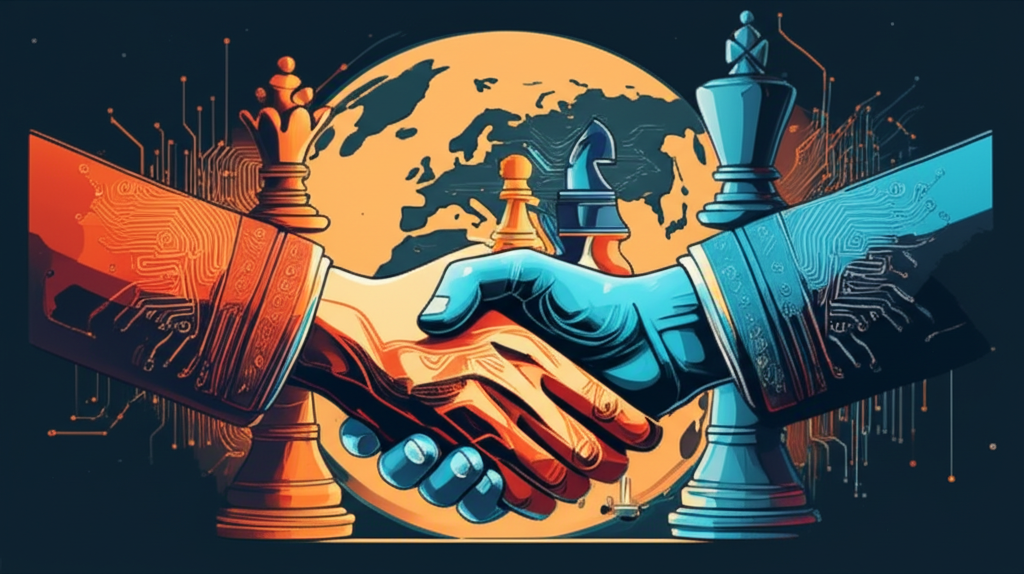
Perhaps nothing illustrates the complementary genius of these two nations better than their dominance in two fields that demand the highest cognitive abilities: chess and software engineering.
Russia has produced 256 chess grandmasters—more than the next two countries combined. From Garry Kasparov to Anatoly Karpov, from the Soviet chess schools that dominated the 20th century to today's elite players, Russia's chess infrastructure has no parallel. This is not coincidence. It reflects a society that values mathematical rigour, strategic depth, and the patient cultivation of intellectual excellence.
India, once a chess backwater, has risen to fifth in global grandmaster rankings with 64 GMs—and the trajectory is steeply upward. In December 2024, 18-year-old Gukesh Dommaraju became the youngest world chess champion in history, defeating Ding Liren to bring the crown to India. He is not an outlier. Behind him stand Praggnanandhaa, Arjun Erigaisi, and Nihal Sarin—a quartet of young Indian grandmasters who have stormed the world elite, products of a chess revolution sweeping the nation.
Combined, India and Russia account for 320 grandmasters—approximately 15% of all grandmasters on Earth, from just two nations representing 18% of the world's population. When these two chess cultures collaborate rather than merely compete, the intellectual output could be formidable.
The pattern repeats in software engineering. According to HackerRank's global analysis, Russia ranks first in the world for algorithmic programming—the deep, mathematical core of computer science. Russian programmers outperform every other nation when it comes to the complex problem-solving that underlies artificial intelligence, cryptography, and advanced systems design. Meanwhile, India possesses the world's largest pool of software talent by volume, with millions of engineers driving the global IT services industry.
The complementarity is striking: Russian depth plus Indian scale. Russian algorithmic brilliance plus Indian software implementation prowess. Imagine joint development centres where Russian mathematicians and Indian engineers collaborate on AI systems, quantum computing applications, and cybersecurity solutions. The output would rival anything emerging from Silicon Valley or Shenzhen.
These are not soft cultural observations. They reflect measurable cognitive infrastructure—education systems, societal values, and institutional investments that produce world-class intellectual output. Any partnership that fails to leverage this combined brainpower is leaving its most valuable resource on the table.
The Colonial Shadow
To understand why India has not seized the Russia opportunity with both hands, one must confront an uncomfortable truth: eight decades after independence, India remains psychologically colonised.
The British did not merely extract wealth from India. They systematically dismantled the indigenous education system—which had produced the mathematical concept of zero, advances in metallurgy, and sophisticated governance structures—and replaced it with a system designed to produce clerks and sepoys. Thomas Macaulay's infamous 1835 Minute on Education explicitly aimed to create "a class of persons Indian in blood and colour, but English in tastes, in opinions, in morals, and in intellect."
This system succeeded beyond the coloniser's dreams. Even today, the Indian elite measures success by Western metrics. An IIT graduate's dream is a job at Google, not at ISRO. A young professional aspires to an MBA from Harvard, not mastery of emerging technologies. The national discourse is shaped by English-language media that often parrots Western perspectives uncritically.
This mental colonisation explains why India's strategic community instinctively looks West, why Indian businesses fear US secondary sanctions more than they desire Russian opportunities, why Indian students flock to American universities despite visa humiliations while ignoring world-class Russian institutions where they would be welcomed.
The irony is profound. India seeks technology transfer from nations that carefully guard their crown jewels while a country willing to share nuclear and space technology is treated as a secondary partner.
The Rupee "Problem" That Is Actually a Solution
Western analysts speak of the "rupee trap"—Russia's accumulation of billions in Indian rupees that cannot be easily converted to dollars. This framing reveals more about dollar-centric thinking than about economic reality.
Consider an alternative framing: Russia has accumulated a massive fund denominated in the currency of a nation with 1.4 billion people, a $4 trillion economy growing at 7% annually, and a services sector eager for new markets. This is not a trap. This is an opportunity—if both nations possess the imagination to seize it.
The solution is elegantly simple: Russia should spend those rupees on Indian excellence.
Indian workers—engineers, doctors, nurses, construction workers, IT professionals—could transform Russian cities while being paid in rupees deposited directly into Indian bank accounts. Russia gets the labour it desperately needs; Indian workers get employment at wages three to four times domestic levels; the rupees circulate back into the Indian economy; no dollars are required.
Indian IT companies could establish development centres in Russia, hiring Russian mathematicians and physicists whose brilliance is legendary. The output—world-class software, AI systems, cybersecurity solutions—would represent the best of both civilisations. Payments would flow in rupees, strengthening the currency while building Indian corporate presence in the Russian market.
Indian pharmaceutical companies could supply Russia's healthcare system—generics at a fraction of Western prices, manufactured to global standards. Indian medical tourism could serve Russian patients seeking affordable quality care. Indian telemedicine could reach underserved Russian communities.
The key insight is this: trade need not be balanced in goods alone. Services, labour mobility, and investment flows can create equilibrium. Two nations that trust each other should be willing to hold each other's currencies—and use them.
Building the Third Pole
The 21st century is being shaped by the rivalry between two poles: the United States and its Western allies on one side, China on the other. For much of the developing world, the choice is between Washington's rules-based order (which often seems designed to preserve American primacy) and Beijing's infrastructure loans (which often seem designed to create dependency).
India and Russia, acting together, could offer a third way.
Consider the combined weight: 1.64 billion people, over 20 million square kilometres of territory (the largest land area of any potential bloc), strategic nuclear arsenals that guarantee sovereignty, complementary economies spanning services and resources, and zero historical antagonism to overcome.
The Russia-India-China (RIC) triangle is often discussed, but the real leverage lies in the India-Russia relationship. For India, the strategic imperative is ensuring Russia does not become a Chinese vassal—a junior partner whose actions are constrained by Beijing's interests, particularly concerning India's Himalayan frontier. For Russia, the imperative is diversifying its Asian pivot beyond China, maintaining strategic independence, and accessing markets and capabilities China cannot provide.
A robust India-Russia partnership serves both nations' interests in maintaining multipolarity. It also offers the Global South an alternative to the binary choice between American and Chinese patronage.
The Path Forward: Radical Imagination Required
What would a truly transformed India-Russia partnership look like? Here is a vision that requires political will more than financial investment:
One million Indians in Russia by 2035. Not tourists, but workers, students, professionals. Indians building Russian infrastructure, staffing Russian hospitals, running Russian IT systems, studying at Russian universities. A diaspora that becomes the human connective tissue of the partnership, paid in rupees, sending remittances home, creating demand for direct flights and shipping routes.
A joint education revolution. Fifty Indo-Russian universities offering dual degrees. Russian taught in a thousand Indian schools; Hindi and English taught freely across Russia. Ten million students exchanging between the nations by 2040, creating a generation that thinks naturally of partnership.
Complete financial independence from the dollar. All bilateral trade settled in rupees and rubles. A bilateral clearing union that makes sanctions irrelevant. Cross-listing of companies on each other's stock exchanges. Joint investment funds deploying Russia's rupee reserves into Indian infrastructure with returns flowing back to Moscow.
Joint technology development that bypasses Western IP control. Combined R&D in artificial intelligence, quantum computing, space technology, nuclear energy. Indian software prowess plus Russian mathematical depth creating solutions neither could achieve alone.
Agricultural integration that ensures food security for both. Indian agribusinesses developing the Russian Far East's vast agricultural potential. Food processing plants serving both domestic markets and Asian exports. Two nations that will never worry about food supply regardless of global disruptions.
The Choice Before Us
The India-Russia partnership is not about nostalgia for the Soviet era. It is not about anti-Western sentiment. It is about hard-headed strategic calculus: two nations with no conflicting interests, perfect economic complementarity, and historical trust choosing to build something greater than either could achieve alone.
The United States built its global dominance on the strength of the Atlantic alliance. China is building its influence through the Belt and Road Initiative. India and Russia have the opportunity to create something different—a partnership of equals, respecting each other's sovereignty, leveraging each other's strengths, offering the world an alternative to the binary choices of the current era.
The Russian Far East is closer to Delhi than London is. The Chennai-Vladivostok maritime corridor is operational. The International North-South Transport Corridor through Iran offers a land route that bypasses Western-controlled chokepoints. The infrastructure for transformation exists or is being built.
What is lacking is imagination—the willingness to think beyond inherited frameworks, to see opportunities where others see obstacles, to build new institutions rather than complain about exclusion from old ones.
Afanasy Nikitin's journey five centuries ago was an act of imagination—a merchant from Tver daring to venture beyond the known world to discover India's wonders. The India-Russia partnership of the 21st century requires similar imagination: the willingness to venture beyond the comfortable assumptions of dollar dominance, Western alignment, and colonial mentalities to discover what two great civilisations can build together.
The symphony remains unfinished. It is time to compose the remaining movements.
This analysis draws on research from the Observer Research Foundation, FIDE chess statistics, HackerRank programming rankings, and official bilateral trade data from the Indian Embassy in Moscow.