By BarathVector Editorial — 2026-03-18
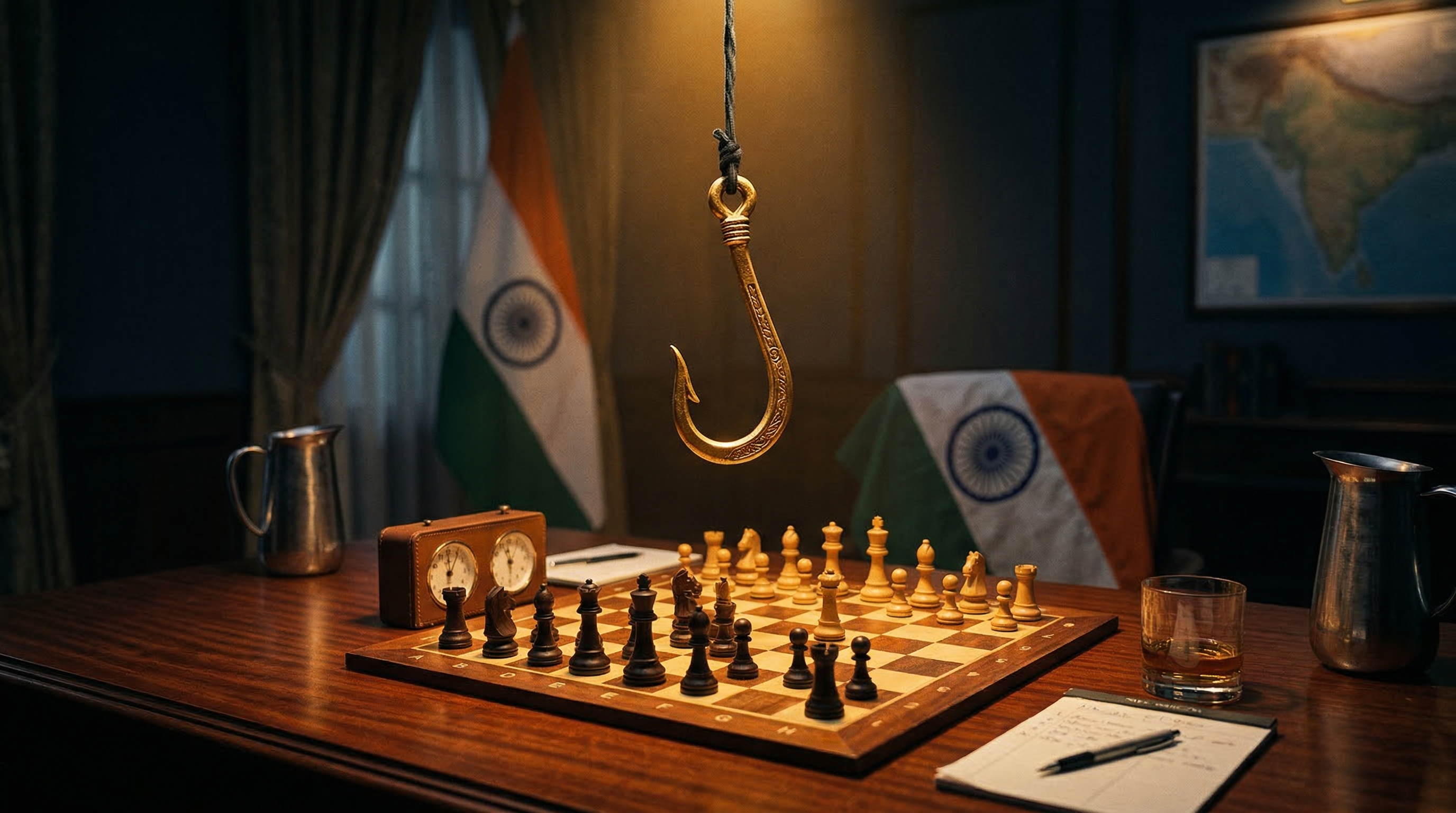
The phone calls are flattering. The op-eds are generous. From Helsinki to Washington, a curious consensus has emerged: Narendra Modi should mediate the Iran war.
Finland's President Alexander Stubb told reporters on March 17 that India could serve as a "neutral broker," citing Jaishankar's diplomatic track record. Retired US Colonel Douglas MacGregor declared that Modi is the only leader with the stature to broker peace. The UAE's former envoy to India, Hussain Hassan Mirza, went further -- "a single call from PM Modi to Netanyahu and Iranian leaders can stop the war."
Flattering, certainly. But flattery in diplomacy is rarely free. And the price tag on this particular compliment could cost India decades of carefully accumulated strategic capital.
The Uninvited Mediator
Here is the first uncomfortable truth: neither Iran nor the United States has formally asked India to mediate.
When Finland suggests India should "get involved," that is not a mandate -- it is a suggestion from a country that has no skin in the Persian Gulf. When a retired American colonel nominates Modi on a podcast, that is not a diplomatic channel -- it is a media trial balloon that costs Washington nothing and risks everything for New Delhi.
Mediation that is not requested by the principals is not mediation. It is theatre. And theatre played on a stage where Operation Epic Fury has already destroyed Iranian nuclear sites and military installations is theatre with live ammunition.
The history of uninvited mediators is not kind. Turkey's early interventions in the Syrian civil war earned it neither peace nor gratitude. Japan's back-channel attempts with Iran in 2019 ended with a tanker attack in the Gulf of Oman while Prime Minister Abe was still in Tehran. The mediator who arrives without an invitation leaves without an agreement -- and often without the reputation they walked in with.
India's credibility is not a commodity to be spent on auditions. If the principals want a mediator, they know where South Block is.
The Exhaustion Calculus
The second uncomfortable truth: this war has an expiry date, and it has nothing to do with goodwill.
Since Operation Epic Fury began on February 28, Iran has launched 21 confirmed attacks on merchant vessels in the Strait of Hormuz. Tanker traffic has dropped by 70 percent. The oil production of Kuwait, Iraq, Saudi Arabia, and the UAE has collectively fallen by at least 10 million barrels per day -- the largest supply disruption in the history of global oil markets. Brent crude has surged from $70 to over $110 per barrel.
Neither side can sustain this indefinitely. Iran's infrastructure is degrading under sustained airstrikes. The US and Israel are burning political capital at a rate that no domestic constituency can absorb forever. Both want an off-ramp, but their objectives diverge sharply: Tehran wants sanctions relief and security guarantees; Washington wants behavioural change from the regime without granting it legitimacy.
The gap between these positions is narrowing -- not from diplomatic breakthroughs, but from sheer exhaustion. Wars end when the cost of fighting exceeds the cost of conceding. That calculation is underway in both capitals right now, and it requires no Indian facilitation.
India's strategic patience here is not passivity. It is the recognition that exhausted parties make better negotiating partners than proud ones. Let the calculus mature.
The BRICS Escape Hatch
The third uncomfortable truth: the pressure on India to "pick a side" is a trap, and BRICS is both the problem and the solution.
Two weeks into the conflict, BRICS has issued no joint statement. The reason is structural: Iran and the UAE are both BRICS members, and they are on opposite sides of the war. China is leveraging the vacuum to question India's diplomatic positioning. India, as BRICS chair, is being squeezed from every direction.
But here is the escape hatch that India's diplomatic establishment understands better than its critics: New Delhi can condemn "war" and "civilian suffering" in perfectly calibrated generic language without naming an aggressor. This is not cowardice -- it is the grammar of multilateral diplomacy that has served India since Nehru's non-alignment doctrine.
Tehran's demand that India specifically condemn US-Israel aggression is itself a trap. Accepting that framing would shatter India's positioning with Washington and Tel Aviv. Rejecting it explicitly would poison the Chabahar relationship and threaten oil access. The BRICS platform offers India the syntactic shelter to express concern without expressing alignment -- and that is precisely what Indian diplomacy has been doing, calling for "dialogue and de-escalation" rather than condemnation.
The critics who call this fence-sitting misunderstand the geometry. India is not on the fence. India is on the balcony, watching both sides burn furniture, waiting for the moment when the room is cold enough for everyone to want a conversation.
The Hug That Does Not Matter
The fourth uncomfortable truth: the Modi-Netanyahu photograph is tactically embarrassing but strategically irrelevant.
Yes, Modi's visit to Israel in early March, with its warm optics and strong words of support, has "diminished India's stature in the eyes of the world," as The Diplomat noted. The image of the two leaders embracing while Iranian cities burned is, diplomatically speaking, suboptimal.
But India-Israel partnership is structural, not sentimental. Defence technology, intelligence-sharing, agricultural innovation, cybersecurity -- these are hardware relationships that survive photograph cycles. Iran knows this. Iran has always known this.
What Iran cares about is not hugs but hard currency. India's oil purchases, the Chabahar port project, and India's willingness to maintain economic engagement despite US secondary sanctions -- these are the ledger items that Tehran tracks. And on this ledger, India has been pragmatic: freeing three seized Iranian tankers in exchange for safe passage of Indian vessels through the Strait demonstrates the transactional realism that actually governs this relationship.
The hug makes for uncomfortable Twitter threads. The tanker swap makes for functional diplomacy. Iran can tell the difference, even if commentators cannot.
The Hormuz Truth
The fifth and most important uncomfortable truth: whoever controls Iran after this conflict ends, the Strait of Hormuz remains structurally suspect.
Twenty percent of global oil supply transits through a chokepoint that one determined regional actor can throttle with mines, drones, and fast boats. This was true before February 28. It will be true after the ceasefire. It will be true if the regime changes, if it does not change, or if it changes into something worse.
The real strategic play for India is not mediation glory -- it is energy diversification at a pace that makes Hormuz dependency a historical footnote rather than a permanent vulnerability. Every rupee spent on diplomatic prestige in the Gulf is a rupee not spent on solar manufacturing capacity, strategic petroleum reserves, or alternative shipping routes through the Cape of Good Hope.
India imports roughly 85 percent of its crude oil, and a significant portion transits through Hormuz. The current crisis, with Brent above $110 and climbing, is imposing a cost on the Indian economy that no ceasefire photo-op will recover. The structural answer is not to become the Gulf's favourite mediator -- it is to become the Gulf's least dependent customer.
The Case for Patience
India's greatest diplomatic asset is not its military, its economy, or its population. It is patience.
The exhausted parties will eventually need a venue, a facilitator, and a face-saving framework. When that moment arrives -- and it will arrive, because wars between unequal powers always produce negotiations -- Delhi will be a natural choice. Not because Modi was nominated on a Finnish news channel, but because India will have maintained relationships with both sides, avoided the credibility cost of a failed mediation attempt, and positioned itself as the adult in a room full of combatants.
Let them come to Delhi. Not because India is passive, but because India understands something that the flattery chorus does not: the mediator who is invited holds power. The mediator who volunteers surrenders it.
The phone calls from Helsinki are flattering. The op-eds from Washington are generous. India should accept the compliment, decline the assignment, and wait for the formal invitation that exhaustion will inevitably produce.
That is not isolationism. That is realpolitik.