By Ramachandran Rajeev Kumar — 2025-12-30
Rs 79,000 Crore Defence Mega-Buy: India's Military Gets a Year-End Upgrade
By Ramachandran Rajeev Kumar
On December 29, 2025, Defence Minister Rajnath Singh chaired a meeting of the Defence Acquisition Council (DAC) that approved procurement proposals worth Rs 79,000 crore.
That's approximately $9.3 billion in a single meeting.
The approvals cover the Indian Army, Navy, and Air Force, with a clear emphasis on two themes: indigenous manufacturing and countering emerging threats from drones, long-range missiles, and asymmetric warfare.
Here's what India's military is getting and why it matters.
What Got Approved
For the Indian Army
| System | Purpose |
|---|---|
| Loiter Munition System | Precision strikes on tactical targets |
| Low-Level Lightweight Radars | Detecting small drones and UAVs |
| Long-Range Guided Pinaka Rockets | Extended artillery range (120km) |
| Integrated Drone Detection & Interdiction System Mk-II | Counter-drone warfare |
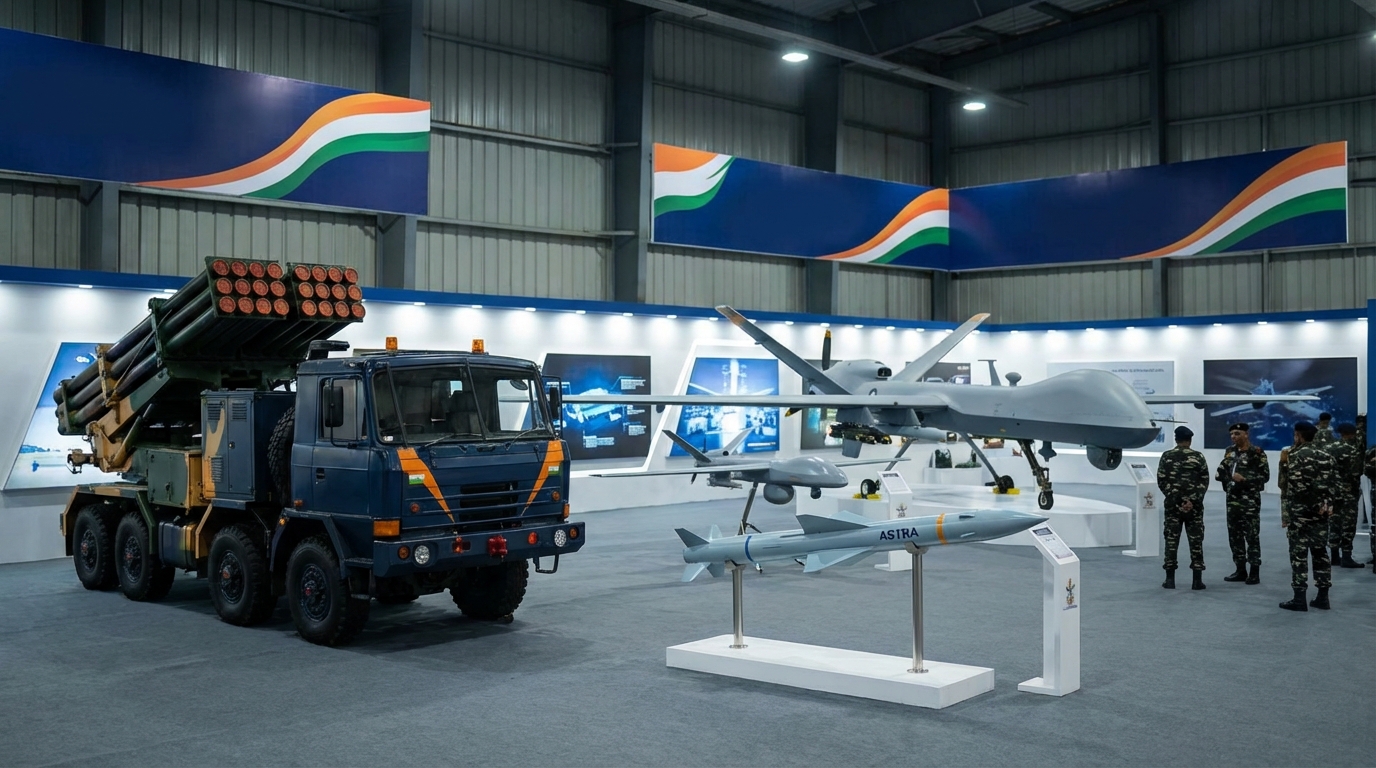
The Pinaka Upgrade deserves special attention. Hours after the DAC approval, DRDO successfully tested the Pinaka Long Range Guided Rocket (LRGR-120) at Chandipur, Odisha. The new variant extends strike range from 80km to 120km with improved accuracy.
This isn't just an incremental upgrade. The 120km Pinaka can now strike targets deep behind enemy lines, including command posts, logistics hubs, and artillery positions that were previously out of reach.
Loiter Munitions (sometimes called "kamikaze drones" or "suicide drones") represent a new capability for the Indian Army. These weapons can loiter over a battlefield for extended periods, identify targets, and strike with precision. They've proven devastatingly effective in recent conflicts, from Ukraine to Nagorno-Karabakh.
India is late to this game. Israel, Iran, Turkey, and even non-state actors have deployed loiter munitions effectively. The DAC approval signals India is finally catching up.
For the Indian Navy
| System | Purpose |
|---|---|
| Bollard Pull Tugs | Ship and submarine maneuvering in harbors |
| HF Software Defined Radios (Manpack) | Secure communications |
| HALE RPAS (Lease) | High-Altitude Long-Endurance surveillance drones |
The HALE Drones are the headline item. High-Altitude Long-Endurance Remotely Piloted Aircraft Systems can fly at altitudes above 40,000 feet for 24+ hours, providing persistent surveillance over vast ocean areas.
India's maritime domain awareness has gaps. The Indian Ocean is enormous, and monitoring Chinese naval activity, submarine movements, and potential threats requires persistent surveillance that manned aircraft cannot provide economically.
Leasing HALE drones (rather than buying) is a pragmatic approach. It gets the capability operational quickly while indigenous alternatives are developed.
For the Indian Air Force
| System | Purpose |
|---|---|
| Astra Mk-II Missiles | Beyond Visual Range air combat (200+ km) |
| SPICE-1000 Long Range Guidance Kits | Precision bombing |
| Full Mission Simulator | Pilot training |
| Automatic Take-off Landing Recording System | Flight data and safety |
The Astra Mk-II is the crown jewel of this approval.
India's current air-to-air missile, the Astra Mk-I, has a range of 80-110km. The Mk-II variant extends this beyond 200km, putting India in the elite club of nations with truly long-range air combat missiles.
For context: China's PL-15 missile has a reported range of 200-300km. The Astra Mk-II brings India to parity.
Long-range air-to-air missiles change aerial combat dynamics. They allow fighters to engage targets before entering the enemy's missile envelope. In a potential conflict, IAF jets equipped with Astra Mk-II could engage PLAAF fighters from distances where the enemy cannot effectively respond.
Series production is expected to begin in July 2026, with full deployment by 2027-28.
SPICE-1000 Kits convert conventional "dumb" bombs into precision-guided munitions. They're particularly useful against hardened targets, bunkers, and infrastructure. The IAF has used earlier SPICE variants effectively; this is an expansion of a proven capability.
The Atmanirbhar Bharat Angle
Defence Minister Rajnath Singh explicitly linked these approvals to the Atmanirbhar Bharat (self-reliant India) initiative.
What's being made in India:
- Pinaka rockets and launchers: Developed by DRDO, manufactured by Tata Advanced Systems, L&T, and others
- Astra missiles: Developed by DRDO, manufactured by Bharat Dynamics Limited (BDL)
- Drone detection systems: Multiple Indian startups and established firms
- Software Defined Radios: BEL and private sector partners
What's being imported or licensed:
- SPICE-1000 guidance kits: Israel's Rafael Advanced Defense Systems
- Some components for HALE drones: Likely American or Israeli origin
The government's stated goal is 75% indigenous content in defence procurement by 2027. This batch of approvals moves in that direction, though critical components still come from abroad.
A technology transfer milestone: On May 30, 2025, DRDO signed a licensing agreement with NIBE Limited for Pinaka production. This transfers know-how to the private sector, building India's defence industrial base.
What This Means Strategically
China Deterrence
The bulk of these acquisitions are relevant to the China front:
- 120km Pinaka rockets can hit Chinese positions across the Line of Actual Control
- Astra Mk-II gives the IAF an edge in potential aerial engagements
- HALE drones improve surveillance of Chinese naval activity in the Indian Ocean
- Counter-drone systems address the threat of Chinese UAVs in border areas
Since the Galwan clash of 2020, India has been steadily building capabilities aimed at deterring Chinese adventurism. This approval continues that pattern.
Pakistan Considerations
The Loiter Munition Systems and long-range artillery upgrades are equally relevant on the western front. Pakistan has invested heavily in drones and missile systems; India needs matching capabilities.
Emerging Threats
The emphasis on counter-drone systems reflects lessons from recent conflicts. Drones have changed warfare. Cheap, expendable UAVs can overwhelm traditional air defenses. India's military is clearly taking this threat seriously.
The Timeline
It's important to understand what "Acceptance of Necessity" (AoN) means.
AoN is the first stage of India's defence procurement process. It means the military has formally stated a need for these systems. It does not mean contracts have been signed or money has been spent.
The full process:
Acceptance of Necessity (AoN)✓ Done- Request for Proposal (RFP) to vendors
- Technical and commercial evaluation
- Contract negotiation
- Contract signing
- Delivery and integration
For complex systems, this process can take 2-5 years. Some of the equipment approved yesterday may not reach frontline units until 2028-2030.
The government has been trying to compress these timelines, but defence procurement remains slow. The AoN is a green light, not a delivery date.
The Budget Question
Rs 79,000 crore is a large number, but it's spread across multiple years and multiple projects. India's defence budget for FY2025-26 is approximately Rs 6.2 lakh crore. The acquisitions approved yesterday represent roughly 12-13% of a single year's budget, but the spending will occur over several fiscal years.
Defence spending as a percentage of GDP has actually declined in recent years, from about 2.5% to around 1.9%. China spends approximately 1.7% of a much larger GDP, giving it roughly 3-4x India's defence budget in absolute terms.
The Rs 79,000 crore approval is significant, but India remains in a catching-up mode relative to China's military modernization.
What's Missing
Not everything the military wants made it through:
- Fighter jets: No new approvals for additional Rafale or indigenous Tejas orders (though these are in separate pipelines)
- Submarines: The Navy's submarine shortage remains acute; no new approvals in this batch
- Aircraft carriers: Long-discussed third carrier not in this approval
The DAC meeting focused on systems that can be delivered relatively quickly and fill immediate capability gaps. Larger, more expensive platforms will come in future approvals.
The Bottom Line
The Rs 79,000 crore DAC approval is a year-end capstone to India's defence modernization efforts in 2025.
What it signals:
- India is serious about countering drone threats
- Long-range strike capability is a priority
- Indigenous manufacturing is progressing (though not complete)
- China remains the primary threat being planned for
What it doesn't signal:
- Immediate delivery of these systems
- Closing the gap with China anytime soon
- A fundamental shift in India's defence posture
The military is getting useful tools. Whether those tools translate to actual deterrence depends on training, doctrine, and the willingness to use them if necessary.
For now, India's armed forces end 2025 with approved shopping lists that will keep them busy through the rest of the decade.
The Defence Acquisition Council met on December 29, 2025, and approved Acceptance of Necessity for proposals totaling Rs 79,000 crore. Actual procurement will follow standard defence acquisition procedures.