By Ramachandran Rajeev Kumar — 2026-06-23
Hormuz Is Testing India's Strategic Autonomy
India's answer to Hormuz is not choosing camps. Diplomacy buys time, but reserves, refining flexibility, alternate routes and fertilizer capacity buy security.
By Ramachandran Rajeev Kumar
India does not need a new slogan for West Asia. It needs a harder spine behind the slogan it already uses.
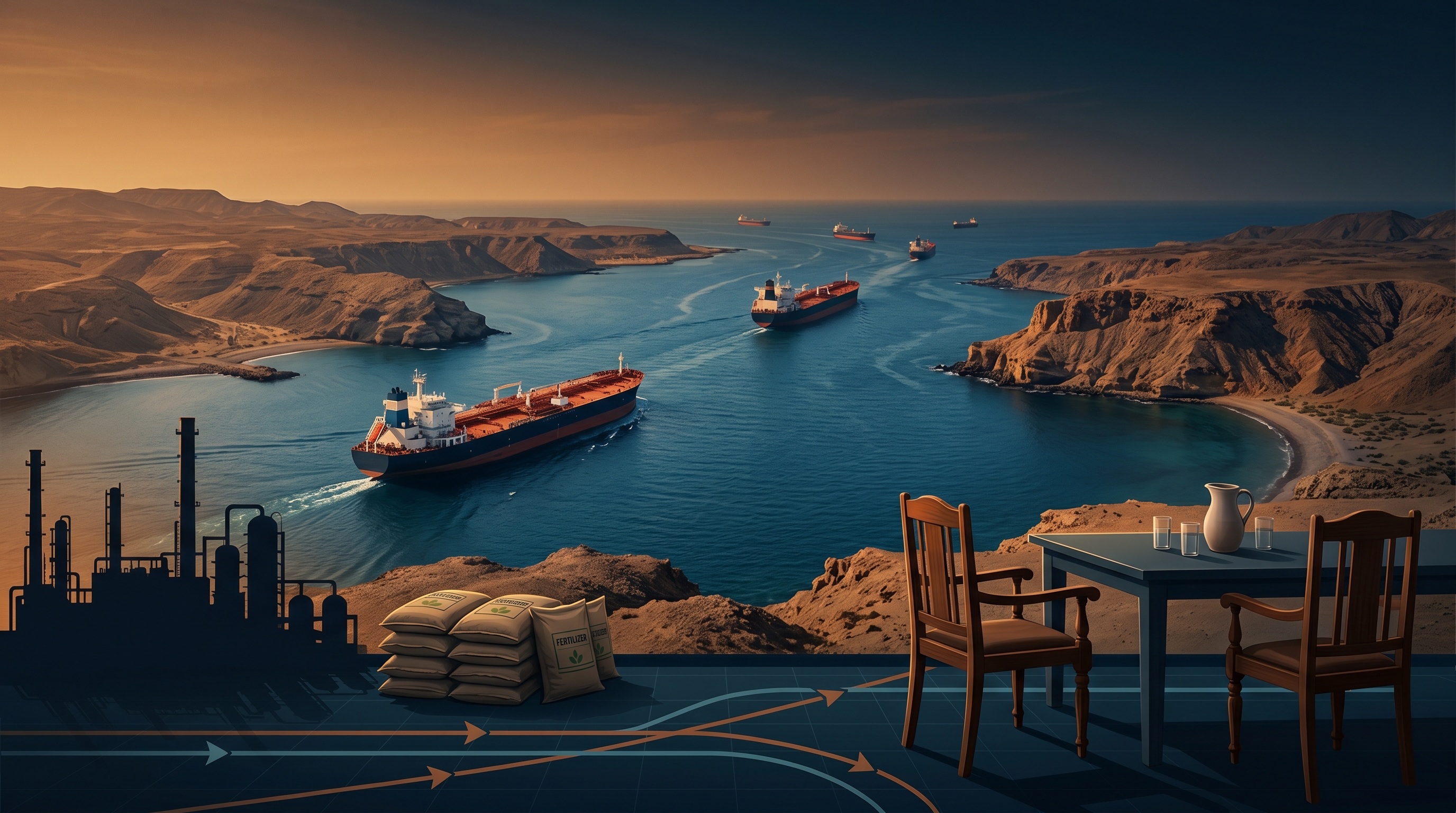
The Strait of Hormuz returned to the headlines Tuesday as reports described traffic recovering, Iran insisting on control of the waterway and Prime Minister Narendra Modi again calling for dialogue and diplomacy while assuring smooth supplies of oil, gas and fertilizer. India Today, News18, News On AIR and The Times of India all treated the same anxiety from different angles: a distant maritime throat can still reach the Indian household, the Indian farm and the Indian refinery.
That is the first lesson. Hormuz is not only a foreign-policy story. It is a price story, a fertilizer story, a rupee story and a test of whether strategic autonomy is backed by material capacity.
Diplomacy buys time
India's instinct in West Asia is correct. It cannot afford a performative foreign policy that turns every crisis into a loyalty test between Washington, Tehran, Tel Aviv and the Gulf capitals. Millions of Indians work in the Gulf. Indian refiners depend on stable energy flows. Indian farmers depend on fertilizer supply chains. Indian diplomacy has to speak to everyone because Indian interests pass through everyone.
That is why the official language of dialogue and diplomacy matters. It keeps channels open. It lowers the cost of not taking sides. It tells energy suppliers that India is not looking to turn a shipping crisis into ideological theatre.
But diplomacy is not the same as insulation. It can buy time. It cannot manufacture spare capacity at the moment a tanker route is threatened.
Capacity buys security
The harder question is what India does with the time diplomacy creates.
A country that imports large quantities of energy cannot pretend it is immune to a narrow waterway. A country that uses gas and imported inputs in fertilizer cannot pretend that shipping lanes are abstract. A country that watches the rupee under pressure cannot separate energy shocks from currency stress. These are not separate desks. They are the same vulnerability seen from different ministries.
India's strategic autonomy becomes real only when it is built into reserves, routes and production capacity.
That means strategic petroleum reserves deep enough to soften short shocks. It means refineries that can handle varied crude grades instead of depending too heavily on narrow supply patterns. It means long-term contracts that do not trap India in one geography. It means ports, pipelines and shipping insurance plans that can adjust before panic pricing begins.
It also means fertilizer security. Energy crises rarely stop at petrol pumps. They move into farm input costs, government subsidies and food inflation. If Hormuz becomes expensive, Indian farmers can feel it before they can explain it.
Autonomy is not neutrality
Strategic autonomy is sometimes mocked as a refusal to choose. That is a shallow reading. For India, autonomy is not moral laziness. It is a method of protecting national interest in a world where most great powers ask others to absorb costs for their own decisions.
India should not let any capital turn its energy security into a bargaining chip. That includes friendly capitals. It also includes adversarial ones. The point is not to be equidistant from everyone. The point is to be dependent on no one more than necessary.
Hormuz shows why that distinction matters. If India is forced into a binary diplomatic posture, it loses room to negotiate. If India lacks energy and fertilizer resilience, it loses room to negotiate even faster.
A mature foreign policy needs both: open channels and domestic capacity.
The household is the final test
News18 framed part of the question around whether cheaper petrol could come to India if the crisis eases. That is the public version of the same strategic issue. Ordinary Indians experience West Asia through fuel prices, transport costs, food inflation and government fiscal pressure.
A calm Strait of Hormuz can lower anxiety. It cannot erase the deeper fact that Indian prosperity still runs through fragile external arteries. Each crisis should therefore be treated not only as an emergency to manage but as a planning audit.
Did reserves cover the risk? Did importers have options? Did fertilizer supply remain steady? Did shipping costs surge? Did the rupee need extra defense? Did households feel the pass-through?
Those questions matter more than whether one week ends with relief.
Build before the next crisis
The Indian state has become better at crisis balancing. That deserves credit. But the next stage is less glamorous: storage tanks, flexible contracts, shipping alternatives, fertilizer capacity, grid transition and public communication that tells citizens what is being protected and why.
A country of India's size should not confuse a successful diplomatic posture with a solved strategic problem. Hormuz will not be the last chokepoint to remind India that geography still rules the global economy.
The conclusion is simple. India should keep talking to every side in West Asia. It should also build so that every side knows India cannot be squeezed easily.
Diplomacy buys time. Capacity buys security. Strategic autonomy needs both.