By Ramachandran Rajeev Kumar — 2025-12-27
Gold's Unstoppable Rally: Why the Yellow Metal Won't Stop Climbing
By Ramachandran Rajeev Kumar
The numbers are staggering.
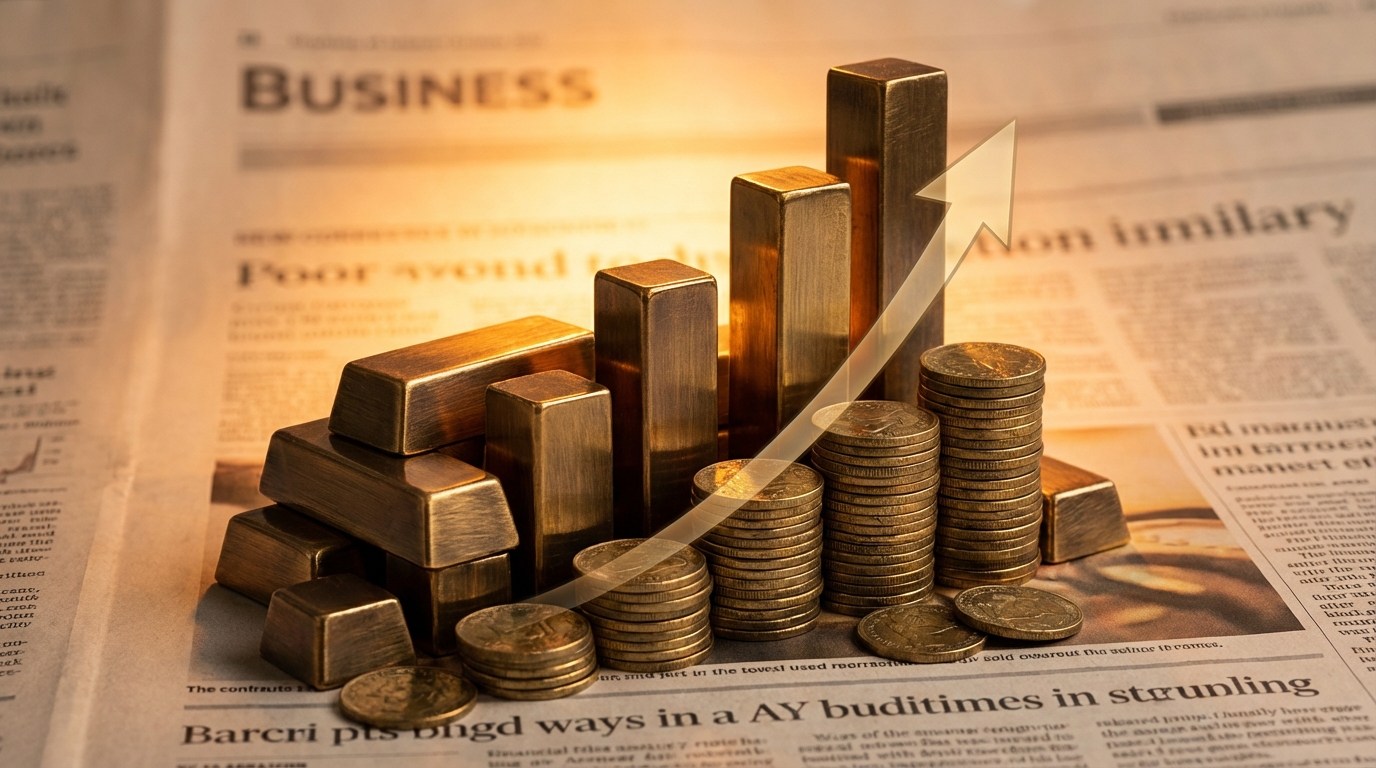
On December 27, 2025, 24-karat gold touched Rs 1,41,382 per 10 grams in Delhi. That's up from approximately Rs 78,000 at the start of the year. A stunning 81% surge in twelve months, the biggest annual jump in the yellow metal's history.
Gold has notched over 50 all-time highs in 2025 alone. Every time analysts predict a correction, the rally simply continues. Every dip is bought. Every record is broken.
What exactly is happening?
The Perfect Storm
Five forces have converged to create what may be remembered as the golden year of the century.
1. Central Banks Are Hoarding
The most significant driver isn't retail investors or jewelry demand. It's central banks.
Since 2022, central bank gold purchases have more than doubled their 2015-2019 average. Their share of total gold demand has surged from 12% in the mid-2010s to nearly 25% in 2024-2025.
The trigger? The West's response to Russia's invasion of Ukraine.
When Western nations froze over $300 billion of Russian foreign reserves and excluded Russia from SWIFT, central banks in China, India, Turkey, and other nations drew an uncomfortable conclusion: dollar-denominated assets are vulnerable to political risk.
If the world's reserve currency can be weaponized, what's the alternative? Gold. The only asset that is no one's liability, that cannot be frozen by sanctions, that has maintained value for 5,000 years.
Russia, China, and India have been particularly aggressive buyers. This isn't speculation. This is strategic reserve diversification by sovereign nations.
2. Geopolitical Chaos
Every major conflict and tension point in 2025 has pushed investors toward gold:
- The ongoing Ukraine war with no resolution in sight
- Escalating Japan-China tensions in the Pacific
- The Trump administration's aggressive trade policies creating global uncertainty
- Middle East instability
- Venezuela's political crisis
Gold is the ultimate "fear trade." When the world feels unstable, investors flee to the asset that has survived every empire, every war, every currency collapse in human history.
2025 has provided plenty of fear.
3. The Dollar's Weakness
The U.S. Dollar Index has been sliding, down roughly 8% year-to-date at points during 2025. A weaker dollar makes gold cheaper for foreign buyers, boosting global demand.
But it's not just the exchange rate. There's a deeper concern: is the dollar's role as the world's reserve currency sustainable?
America's $36+ trillion national debt, persistent fiscal deficits, and the weaponization of the dollar in geopolitical conflicts have raised questions. Not about whether the dollar will collapse tomorrow, but whether alternatives should be diversified into.
Gold is the primary beneficiary of this hedging instinct.
4. Inflation Hasn't Been Tamed
Despite central banks' aggressive rate hikes in 2022-2024, inflation remains sticky across much of the world. Food prices, energy costs, housing, all remain elevated from pre-pandemic levels.
Gold has historically been an inflation hedge. When paper money loses purchasing power, gold maintains its value. Whether this is rational or simply traditional, the behavior persists.
The Federal Reserve's rate cuts in late 2024 and 2025 added fuel. Lower rates mean lower opportunity cost of holding gold (which pays no interest), making the yellow metal more attractive.
5. Indian Wedding Season and Festive Demand
India remains the world's largest gold consumer, and cultural factors cannot be ignored.
The wedding season of 2025 saw robust demand. Festivals like Diwali, Dhanteras, and Akshaya Tritiya drove purchases. Even at record prices, Indian households continue to buy gold, viewing it as both auspicious and a store of value.
This demand floor provides consistent support for prices.
The Numbers in Perspective
Let's contextualize what 2025's gold rally means:
| Metric | Value |
|---|---|
| 24K Gold (Dec 27, 2025) | Rs 1,41,382 / 10g |
| 22K Gold (Dec 27, 2025) | Rs 1,29,600 / 10g |
| 2025 Annual Return | ~81% |
| All-Time Highs in 2025 | 50+ |
| Jan 1, 2025 Price | ~Rs 78,000 / 10g |
For context, the Nifty 50 returned approximately 10-12% in 2025. Fixed deposits offered 6-7%. Real estate appreciation varied by location but rarely exceeded 10-15%.
Gold crushed every traditional asset class.
Who's Buying?
The buying is broad-based:
Central Banks: As discussed, sovereign wealth accumulation continues at record pace. China's People's Bank of China, the Reserve Bank of India, and Turkey's central bank have been prominent buyers.
Institutional Investors: Gold ETFs globally have seen massive inflows. Hedge funds and family offices are increasing gold allocations as portfolio insurance.
Retail Investors: In India, despite record prices, retail demand remains strong. The cultural attachment to gold transcends price sensitivity.
High Net Worth Individuals: The ultra-wealthy are quietly accumulating physical gold and gold-backed instruments as a hedge against systemic risks.
What the Skeptics Say
Not everyone is bullish. The bear case includes:
Prices are Overextended: Any asset that rises 81% in a year is vulnerable to profit-taking. Technical analysts point to overbought indicators.
Real Rates Could Rise: If central banks pause rate cuts or inflation reignites, real interest rates could rise, reducing gold's attractiveness.
Dollar Rebound: If U.S. economic outperformance continues, the dollar could strengthen, pressuring gold.
Crypto Competition: Bitcoin and other cryptocurrencies compete for the "digital gold" narrative among younger investors.
No Yield: Unlike stocks (dividends) or bonds (interest), gold produces no income. In a portfolio, it's dead weight unless prices rise.
These are valid concerns. Yet they've been voiced throughout 2025, and gold has continued climbing.
What Comes Next?
J.P. Morgan projects gold could reach $5,000 per ounce by end of 2026, approximately 90% higher from current levels. That would translate to roughly Rs 2.7 lakh per 10 grams in India, assuming stable exchange rates.
The World Gold Council notes that the structural drivers, central bank diversification, geopolitical uncertainty, and inflation hedging, show no signs of reversing.
However, markets are unpredictable. A sudden resolution of major conflicts, aggressive Fed tightening, or a global risk-on rally could trigger corrections.
What Should Indian Investors Do?
For the average Indian investor, consider:
Don't Chase Returns: Buying after an 81% rally is not the same as buying at the start. Price matters.
Maintain Allocation Discipline: Financial advisors typically recommend 5-15% of portfolio in gold, not as a speculation but as insurance.
Choose the Right Vehicle: Physical gold has making charges and storage costs. Gold ETFs (like Goldbees) offer liquidity and transparency. Sovereign Gold Bonds offer 2.5% annual interest plus gold price appreciation.
Long-Term Perspective: Gold is a generational asset. If you're buying for a daughter's wedding 20 years hence, current prices matter less than you think.
Don't Sell Family Gold for Speculation: If you own inherited gold, think twice before selling to "book profits." The sentimental and cultural value often exceeds the financial.
The Bigger Picture
Gold's 2025 rally is not just a market phenomenon. It's a signal.
It signals that investors worldwide are nervous about the stability of the existing financial order. It signals distrust in paper currencies. It signals preparation for scenarios that most would prefer not to contemplate.
Whether this caution proves warranted or excessive, only time will tell.
For now, the yellow metal continues its ancient job: preserving wealth when everything else seems uncertain.
At Rs 1.41 lakh per 10 grams, gold is expensive by historical standards.
By the standards of what may lie ahead, it might still be cheap.
Markets can remain irrational longer than you can remain solvent. This analysis is for informational purposes only and does not constitute investment advice.