By Ramachandran Rajeev Kumar — 2026-05-01
Eighteen Percent: How India Won the Best Tariff in Trump's Map
Read the comparative geometry, not the headline.
The Indian press, the Indian political class, and Indian industry spent most of February 2026 arguing about whether the new India–United States trade framework was a victory or a surrender.
It was both. And neither.
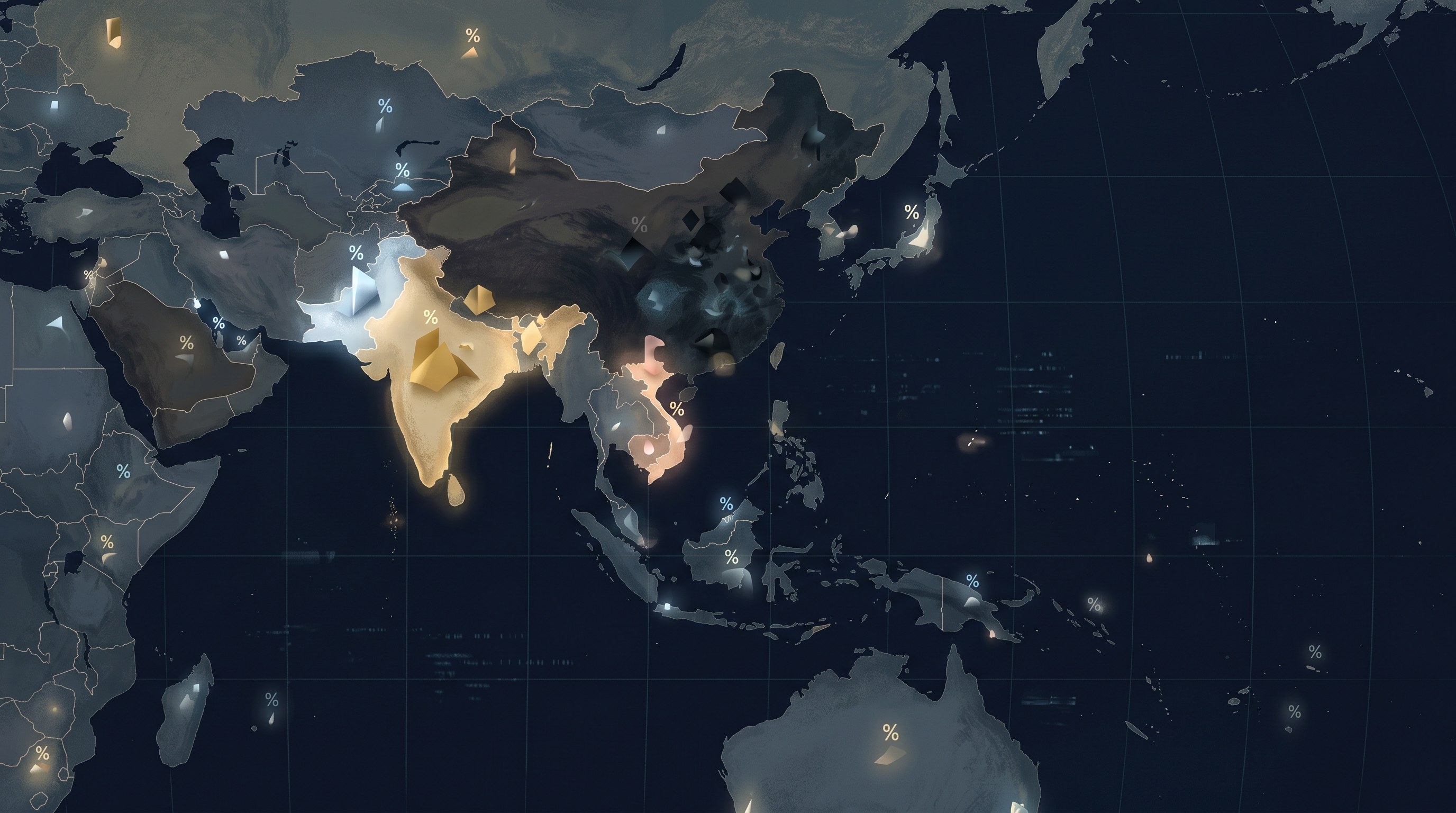
What it was, on the comparative map of who got what tariff treatment from the second Trump administration, is the best single bilateral outcome in Asia. Eighteen percent on Indian goods entering the United States. That is the headline number. The argument is everywhere else.
The numbers, side by side
Here is the comparative landscape after the spring 2026 round of Trump tariff settlements:
| Country | Tariff Rate | Date Settled |
|---|---|---|
| India | 18% | February 2026 |
| Pakistan | 19% | January 2026 |
| Vietnam | 20% | December 2025 |
| Bangladesh | 20% | January 2026 |
| China | Tiered, ranges 25–55% | Multiple rounds |
| Mexico | Punitive specific-product tariffs | Active |
Eighteen percent is not a low tariff. It is, in the Trump-era trade architecture, a relative win. That distinction is the entire story, and the Indian commentary that has missed it has been arguing about the wrong thing.
What the deal actually contains
The framework released in February 2026 covers most goods categories. The headline points:
- Industrial goods — capped at 18 percent. Down from threatened rates that ranged from 25 to 50 percent in Trump's earlier 2025 statements
- Pharmaceuticals — partial carve-outs for generic active pharmaceutical ingredients used in US healthcare supply chains; this matters because India makes them and the United States cannot easily substitute
- Information technology services — outside the goods tariff schedule entirely; the H-1B and L-1 visa caps were touched only marginally in the parallel immigration deal, which is a different file
- Agriculture — this is the bruise. India agreed to lower its own protective tariffs on certain US agricultural exports, including specific dairy, almond, and apple products. Indian farmers' organisations protested loudly, and the protests have not ended. The political cost in rural India is real
The tariff arithmetic on India's exports is what changed. The political arithmetic on India's own protective regime also changed. The latter is what hurts.
The Pakistan comparison
The most politically loaded comparison in Indian commentary is Pakistan at nineteen percent. One percentage point above India.
This is not a minor detail. It is the United States explicitly signalling, through the tariff geometry, that India has earned a slightly better deal than its primary regional rival. In a region where every diplomatic gesture is read for hierarchical implication, a one-point gap is meaningful.
Pakistani commentary has been quieter than Indian commentary on this point, for obvious reasons. But the comparison was not accidental on the US side. The State Department signalled in private briefings that the small India advantage was deliberate — a recognition of India's larger market, its strategic importance, and Modi's personal negotiating relationship with Trump.
Whether one believes that account or treats it as post-hoc rationalisation, the operational fact remains: India's tariff is one point lower than Pakistan's. That margin will compound across thousands of product lines and billions of dollars in trade flow over the next decade.
The Vietnam and Bangladesh comparison
This one is harder for Indian opinion to absorb because Indian opinion has spent decades treating Vietnam and Bangladesh as competitors in the global garment, footwear, and light-manufacturing race.
Both got 20 percent. India got 18.
Combined with India's larger domestic market, deeper supply chains, and the manufacturing scale-ups in textiles and electronics that have happened over the last five years, this two-point advantage is structurally significant for the Indian export base. Indian textile industry associations have been quieter about this than they should be — partly because they are still calculating what it means, partly because acknowledging the advantage would require them to also acknowledge that the deal was not all bad.
The structural read: India's manufacturing export base just got a measurable, sustained pricing edge over its two closest Asian comparators in the categories where the categories overlap. This is not a one-cycle effect. This is the next decade.
What India gave up
The framework was not free. The visible costs:
- Agricultural concessions — Indian dairy, certain horticulture, almonds, and apples now face less protective Indian import tariffs. The political pain in rural India is acute and ongoing
- Russian oil clarity — India agreed to a graduated reduction in Russian crude purchases over a defined timeline, with carve-outs that protect Indian refining margins. The optics are a concession; the operational reality is closer to formalising what was happening anyway
- Dispute settlement architecture — the deal includes a US-favoured arbitration mechanism that some Indian trade lawyers consider unfavourable
- Currency understanding — informal commitments around rupee management that the Reserve Bank of India has not publicly confirmed or denied
The cost ledger is not nothing. It is also not catastrophic. The trade-off was eighteen percent on the export side — and the export side is where the bulk of Indian growth from US trade actually lives.
The bigger picture
Trump's tariff architecture is, viewed from a distance, a reorganisation of the global trade map by negotiating power rather than by rules. The countries that show up willing to bargain, that have something to offer, and that hold their negotiating positions get better deals. The countries that don't, don't.
India showed up. India bargained. India had something to offer — market size, strategic alignment, the ability to absorb US agricultural exports, the ability to walk away. India landed at 18 percent.
The countries that lectured Trump about WTO rules from podiums in Geneva are still negotiating. The countries that walked into the Oval Office with a list and a willingness to trade walked out with deals.
The deal was not a victory. It was a competently negotiated loss minimisation under conditions that Indian negotiators did not choose. And in the comparative geometry, it was the best loss minimisation in Asia.
That is the right way to read it. Anything else is rhetoric.
BarathVector covers Indian trade and economic policy across all bilateral and multilateral fronts. Subscribe for the weekly briefing.