By Ramachandran Rajeev Kumar — 2026-01-15
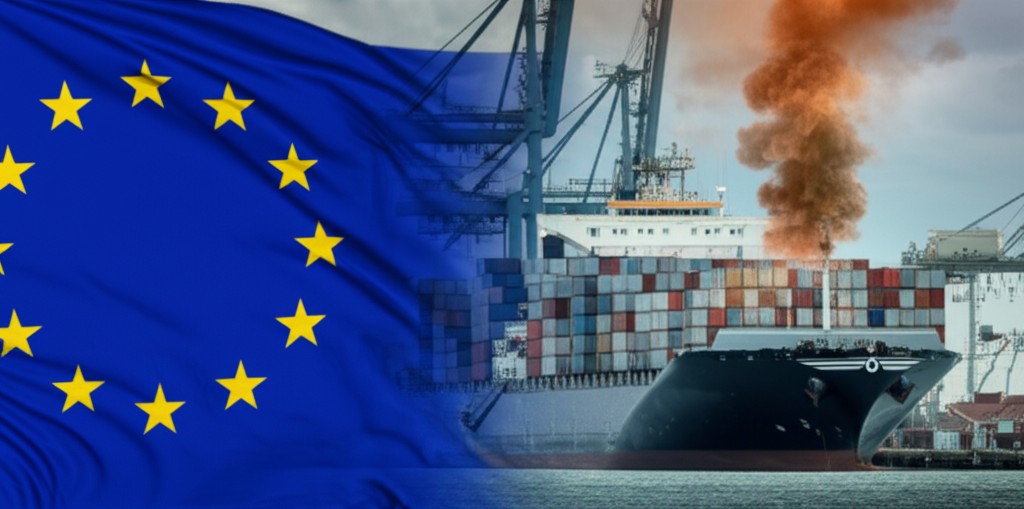
On January 1, 2026, the European Union's Carbon Border Adjustment Mechanism (CBAM) entered into force, marking the first fully operational border carbon adjustment policy to charge costs based on the emissions intensity of imported goods.
For India, the arithmetic is stark: CBAM could impact an estimated $9.5 billion of Indian exports, particularly in iron, steel, aluminum, cement, and fertilizers. The iron and steel sector alone constitutes 90% of CBAM-exposed exports, with 23% of all Indian iron and steel exports going to the EU.
India's response has been predictable: cry foul, claim protectionism, call it unfair. At COP30 in November 2025, India joined China and Saudi Arabia in criticizing CBAM as protectionist and introducing unfair trade barriers. The argument is familiar: "You industrialized on coal for 200 years. Now you tax us for catching up?"
But here's the uncomfortable truth: CBAM is protectionism. And India's complaint strategy won't work.
The real question isn't whether CBAM is fair—it isn't. The question is whether India will keep playing victim, or build its own carbon club and turn the tables.
How CBAM Works: Carbon Accounting Meets Trade Policy
CBAM targets six carbon-intensive sectors: iron and steel, aluminum, cement, fertilizers, electricity, and hydrogen. Starting 2026, EU importers must buy and surrender CBAM certificates corresponding to CO₂ emissions embedded in their imports, priced in line with the EU's carbon market—currently around €70-€100 per tonne of CO₂.
The calculation is simple: Embedded Emissions (tonnes CO₂) × EU ETS Certificate Price (€/tonne) - Any Carbon Price Already Paid = CBAM Cost
Here's where India gets hit hard: India's carbon emission intensity for iron and steel (2kg CO₂e/$) is significantly higher than the EU average (0.16kg CO₂e/$)—approximately 12.5 times more carbon-intensive. Why? Coal power. India's steel industry runs on cheap coal-fired electricity. Europe's runs on cleaner grids.
Wood Mackenzie estimates CBAM certificates could increase the cost of exported steel to the EU by about 56% for India (compared to 49% for China) by 2034. Indian steel exporters face a brutal choice: cut prices by 15-22% to absorb the tax burden, or lose market share.
For sectors like cement and fertilizers, profit reductions could reach 6.6-6.7%. These aren't rounding errors—they're business-destroying margins.
The Protectionism Reality: Climate Policy With Trade Benefits
Let's be clear: CBAM is climate policy designed to give European producers a competitive advantage. That's not a conspiracy theory—it's by design.
The EU argues CBAM prevents "carbon leakage"—companies moving production to countries with weaker climate rules. Fair enough. But CBAM conveniently achieves two goals simultaneously:
- Reduces global emissions (the stated goal)
- Protects European steel, cement, and aluminum industries from cheaper imports (the unstated benefit)
Is this WTO-compatible? The EU maintains CBAM is designed to be compatible with WTO rules. But legal scholars note that CBAM could encounter difficulties by treating foreign-produced goods differently and affording protection for domestic industry.
Russia has already filed a formal WTO dispute consultation in May 2025—the first legal challenge to CBAM. But here's the problem: the WTO currently lacks a functioning Appellate Body. Even if India wins a WTO case, enforcement is nearly impossible.
So complaining to the WTO is like filing a lawsuit in a court with no judges. It feels productive, but changes nothing.
India's Complaint Strategy: Morally Right, Strategically Useless
India's argument has moral weight: Europe industrialized on coal for two centuries, built wealth, and now imposes carbon costs on developing nations trying to catch up. It's climate colonialism with better PR.
But moral arguments don't win trade wars. And that's what CBAM is—a trade war dressed in green.
At COP30, developing countries contested CBAM on multiple grounds: inadequate environmental effectiveness, unilateral nature, alleged protectionist intent, questionable trade law compatibility, and extra-territorial impacts.
All valid critiques. None of which will make Europe back down.
Why? Because Europe has leverage. The EU is India's third-largest trading partner. India needs European markets more than Europe needs Indian steel. As long as that asymmetry exists, complaining is just noise.
The Hidden Opportunity: India's Carbon Market
Here's what India isn't talking about loudly enough: CBAM has a built-in escape clause.
If India can prove it has already paid a carbon price domestically, the corresponding amount can be deducted from CBAM costs. Translation: If India creates its own carbon pricing system and charges Indian steel producers for emissions, Europe reduces the CBAM bill.
India launched its Carbon Credit Trading Scheme (CCTS) in 2023, which has already been recognized by the EU as an eligible carbon pricing mechanism. Research shows that if India's carbon market reaches 25% of the EU's internal carbon price, the CBAM burden could decline by 42%, falling to €480 million.
This is huge. India can:
- Charge Indian producers a carbon price (say, €25/tonne)
- Collect that revenue domestically (instead of sending it to Europe via CBAM)
- Reduce CBAM costs by 42% (from €826M to €480M)
- Reinvest carbon revenues in green steel, renewable energy, worker retraining
Instead of paying Europe for India's emissions, India keeps the money and uses it to decarbonize. That's not victim-playing. That's strategy.
The Bigger Play: India Should Build Its Own Carbon Club
But India shouldn't stop at defensive carbon pricing. It should go on offense: Create a counter-CBAM with the Global South.
Imagine an India-led carbon club with China, ASEAN, Brazil, and South Africa:
- Unified carbon pricing system (say, €30/tonne across member states)
- Mutual recognition of carbon prices (no double-charging between members)
- Collective negotiating power with the EU and US
- Green technology sharing (solar, batteries, green steel R&D)
- Joint WTO challenge if needed (strength in numbers)
This wouldn't be protectionism disguised as climate policy—it would be climate policy that also happens to strengthen trade ties among developing economies. The difference matters.
If the EU wants access to India's $3.7 trillion economy, it negotiates with the carbon club. If the US wants to sell LNG to India, it deals with the carbon club. Suddenly, leverage shifts.
The Steel Sector Dilemma: Modernize or Die
India's steel industry is at a crossroads. Indian steel exports to Europe could decline significantly after CBAM's launch. The Steel Secretary has acknowledged CBAM will impact India's exports to Europe.
But here's the opportunity: CBAM forces what India should have done anyway—modernize steel production.
India's steel is 12.5x more carbon-intensive than Europe's not because Indian engineers are incompetent, but because the industry runs on outdated coal-based blast furnaces. Transitioning to:
- Electric arc furnaces (powered by renewables)
- Green hydrogen-based direct reduced iron (DRI)
- Carbon capture on existing blast furnaces
...would make Indian steel competitive under CBAM and open doors to green steel premiums globally. Japan, South Korea, and the US are all moving toward green steel procurement. India can lead or follow.
The Indian government should:
- Subsidize green steel R&D (not just complain about CBAM)
- Mandate emission standards for new steel plants (phase out coal-based expansion)
- Create a "green steel export zone" with tax incentives for low-carbon production
- Partner with European buyers on long-term green steel contracts
Fighting CBAM is a losing battle. Beating it by out-innovating Europe on green steel? That's a winning strategy.
The WTO Gambit: Useful Theater, Not a Solution
India will likely join Russia's WTO challenge to CBAM. It should. Not because it will win, but because legal challenges buy time and create negotiating leverage.
But India shouldn't delude itself: The WTO lacks a functioning Appellate Body. Even a favorable ruling is unenforceable. The real game is political—forcing Europe to negotiate exemptions, phase-in periods, or recognition of India's carbon market.
The EU won't abandon CBAM because of a WTO ruling. But it might adjust CBAM to avoid a trade war with a market of 1.4 billion people. That's the leverage India should use—not moral outrage, but economic reality.
The Choice: Victim or Builder?
CBAM is here. It's protectionist. It's unfair. And complaining about it won't change anything.
India has two paths:
Path 1: Keep Playing Victim
- Complain at every COP summit
- File WTO disputes that go nowhere
- Watch steel exports decline 15-22%
- Lose €826 million annually to CBAM
- Cede green steel market leadership to China
Path 2: Build a Counter-Strategy
- Expand India's carbon market to reduce CBAM burden by 42%
- Keep carbon revenues domestic (€346M saved annually)
- Lead a Global South carbon club
- Modernize steel with green tech and subsidies
- Turn CBAM pressure into green steel opportunity
The second path requires political will, investment, and coordination. But it also transforms India from a rule-taker to a rule-shaper.
Europe built CBAM because it could. India should build its own carbon architecture for the same reason. Not out of revenge, but out of strategic necessity.
The question isn't whether CBAM is climate policy or protectionism. It's both. The question is whether India will keep complaining about the rules, or start writing its own.
The steel sector is watching. The Global South is watching. And Europe is betting India will choose outrage over action.
Prove them wrong.
Sources:
- EU CBAM Official Page
- CBAM Full Implementation (Euronews)
- CBAM Impact on India: $9.5B Exports (CSEP Analysis)
- India's Steel Sector CBAM Vulnerability (ScienceDirect)
- Indian Steel Exports Could Decline Significantly (GMK Center)
- Russia Files WTO Dispute on CBAM (WTO)
- India's Carbon Market Reduces CBAM Burden 42% (CSEP)
- CBAM WTO Compatibility Analysis (SSRN)