By Ramachandran Rajeev Kumar — 2026-01-27
The Five-Day Dream: 800,000 Bank Workers Strike for What RBI Already Has
By Ramachandran Rajeev Kumar
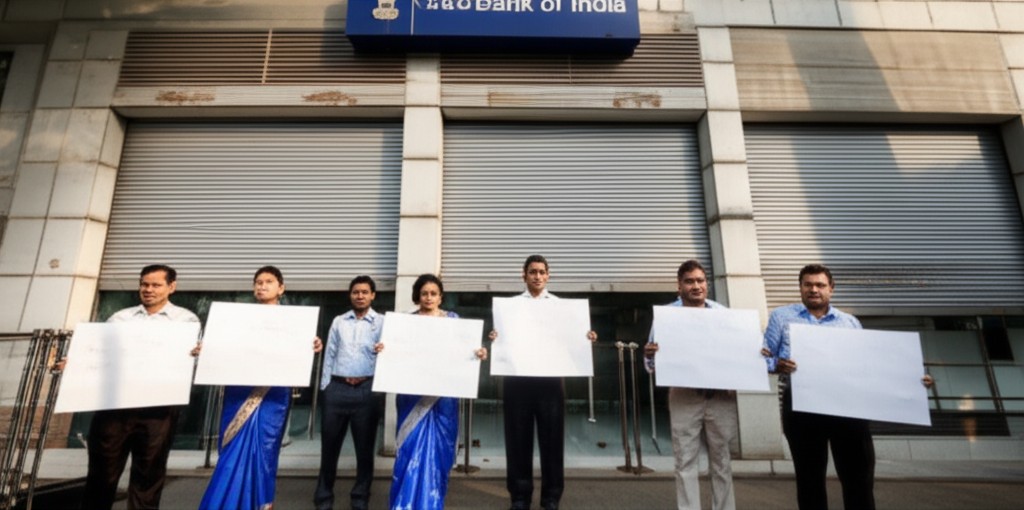
On January 27, 2026, more than 800,000 bank employees across India did something unusual: they stayed home.
The United Forum of Bank Unions (UFBU), an umbrella body of nine unions representing officers and employees of public sector banks, called a nationwide strike. Their demand is neither revolutionary nor unprecedented. They want what millions of government employees already have: a five-day work week.
The timing was strategic. Coming immediately after Republic Day (January 26, a national holiday) and a Sunday (January 25), the strike created a three-day banking blackout. Cash deposits, withdrawals, cheque clearances, and administrative work ground to a halt at branches of State Bank of India, Punjab National Bank, Bank of Baroda, and other public sector lenders.
Private banks—HDFC, ICICI, Axis, Kotak—remained open. The contrast was stark.
The Demand
Bank employees currently work six days a week, with the second and fourth Saturdays designated as holidays. The first, third, and fifth Saturdays remain working days.
The unions want all Saturdays off.
This isn't a new demand. It was reportedly agreed upon during the 12th Bipartite Settlement signed with the Indian Banks' Association (IBA) in March 2024. A memorandum of understanding was signed in December 2023. The IBA recommended the proposal to the government.
Twenty-two months later, the government notification hasn't come.
"We have been patient," UFBU leaders say. "The agreement exists. The recommendation exists. What doesn't exist is the political will to implement it."
The Irony
Here's what makes the strike particularly pointed: the Reserve Bank of India, which regulates public sector banks, already operates on a five-day week.
So does the Life Insurance Corporation (LIC). So does the General Insurance Corporation (GIC). So do stock exchanges. So do most central government administrative offices, which shifted to five-day weeks in 1985.
The employees who process your bank transactions work more days than the employees who regulate them.
"RBI officials enjoy their Saturdays," one striking employee told reporters. "We're asking for the same treatment. We're not asking for anything extra."
The Compensation Offer
UFBU isn't demanding something for nothing. The unions have agreed that employees will work an additional 40 minutes per day from Monday to Friday if all Saturdays become holidays.
The math works out:
- Current: 6 days × approximately 7 hours = 42 hours per week
- Proposed: 5 days × 8 hours 20 minutes = 41 hours 40 minutes per week
The unions argue this maintains productivity while improving work-life balance. The man-hours remain roughly equivalent.
Why the Government Hesitates
The government's reluctance appears rooted in optics rather than economics.
Public sector banks serve 70% of India's banking customers. Many of these customers—farmers, small traders, daily wage workers—find Saturdays convenient for banking. The political calculus is simple: inconvenienced customers vote; satisfied employees don't necessarily.
There's also the broader narrative. At a time when India projects itself as a 24/7 economy, reducing bank operating days feels like a step backward. Never mind that digital banking has transformed how most transactions occur. Never mind that private banks have maintained customer satisfaction with five-day branch operations supplemented by robust digital services.
The symbolism matters more than the substance.
The Impact
For customers who needed branch services today, the strike was an inconvenience. For those who planned around the Republic Day weekend, it was an unwelcome extension of the holiday.
But the broader impact is limited. ATMs continued operating. Internet banking worked. Mobile apps functioned. UPI transactions—India's digital payment revolution—proceeded uninterrupted.
The strike revealed an uncomfortable truth: for most urban, digitally connected customers, branch banking is increasingly optional. The 800,000 employees on strike may be fighting for something that matters deeply to them but matters less and less to the customers they serve.
This doesn't diminish the legitimacy of their demand. It does raise questions about the future of branch banking itself.
The Larger Question
The five-day week debate in banking reflects a broader tension in India's economy.
On one side: employee welfare, work-life balance, mental health, the recognition that burnt-out workers are less productive workers. Studies consistently show that reducing working days while maintaining hours improves productivity and reduces errors—important in an industry where errors can be costly.
On the other side: customer convenience, competitive pressure, the sense that India cannot afford to slow down when it's racing to become a developed economy by 2047.
Both arguments have merit. Neither is entirely right.
What's missing from this debate is imagination. The binary choice between "more days for employees" and "more access for customers" assumes these goals are incompatible.
They aren't.
What Happens Next
The conciliation meeting on January 23 failed to produce results. The strike proceeded as planned. The government remains silent on when—or whether—it will notify the five-day week.
UFBU has not announced further strike action, but the threat remains. If the government continues to delay, more disruptions will follow.
For now, 800,000 bank employees have made their point. Whether anyone in power is listening remains unclear.
Tomorrow, they'll return to work. They'll process your transactions on Tuesday, Wednesday, Thursday, Friday—and on the first, third, and fifth Saturdays of February.
The five-day dream continues.
Related: The Seven-Day Republic: A Modest Proposal - Why the answer isn't fewer days, but smarter scheduling.